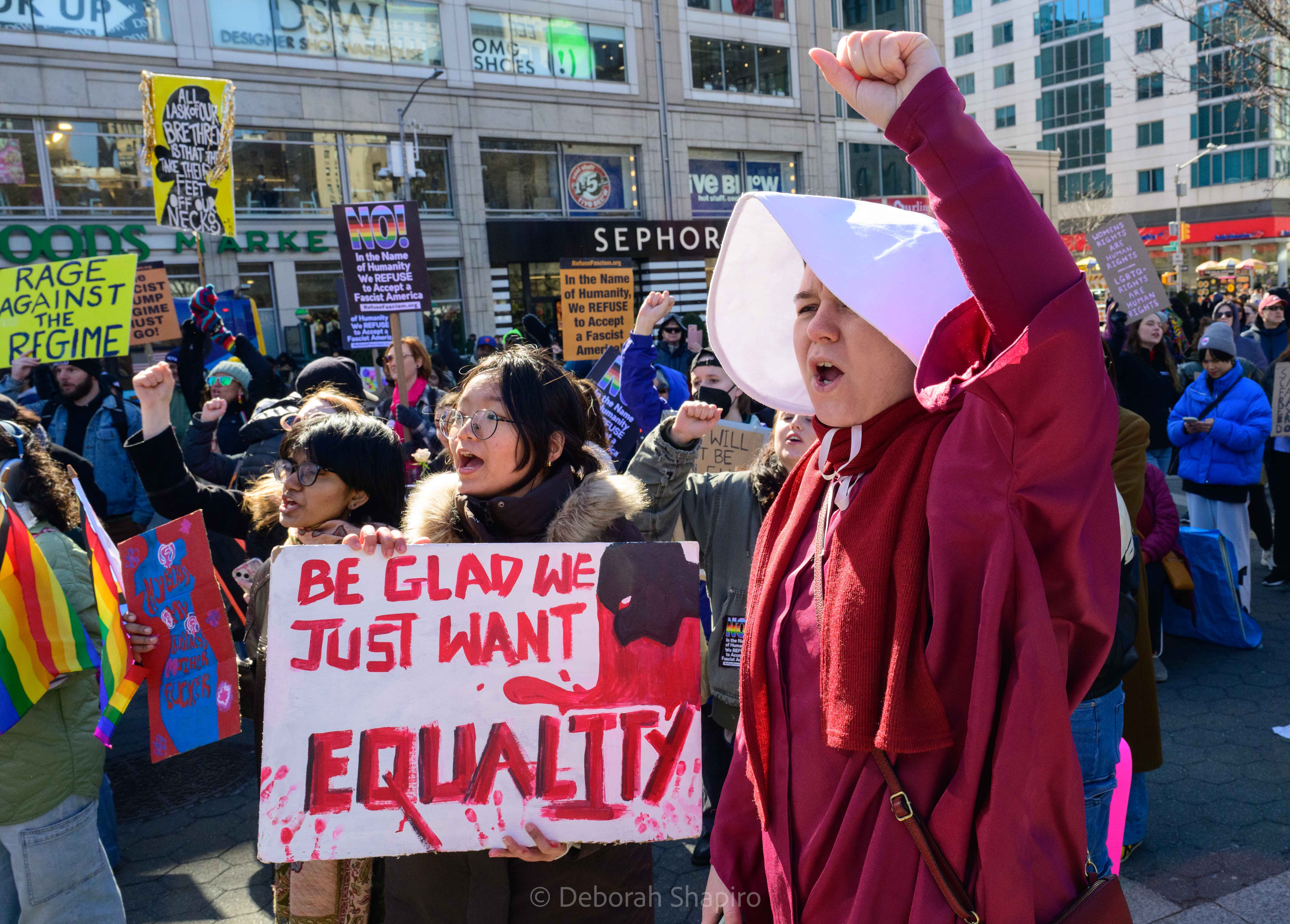
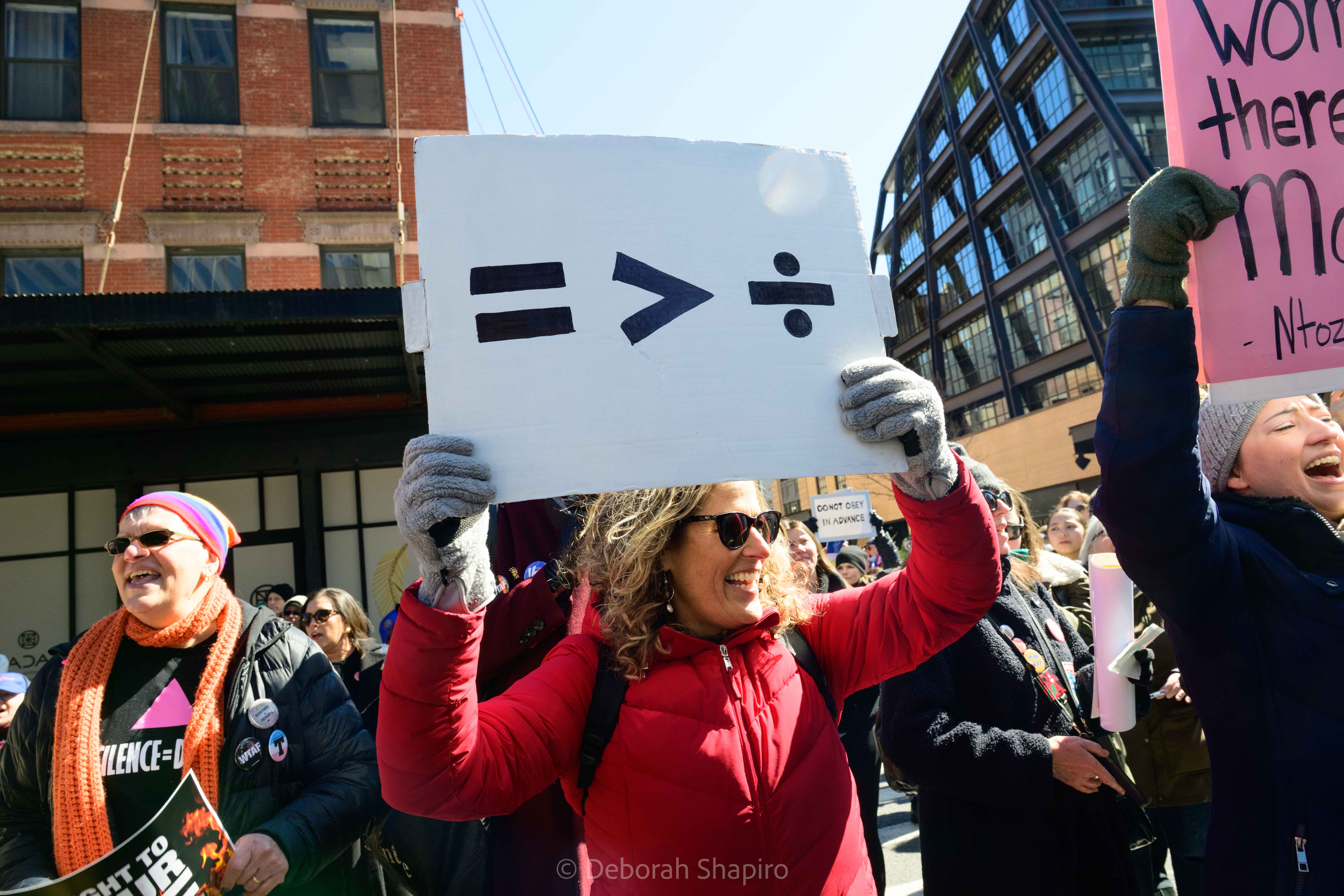
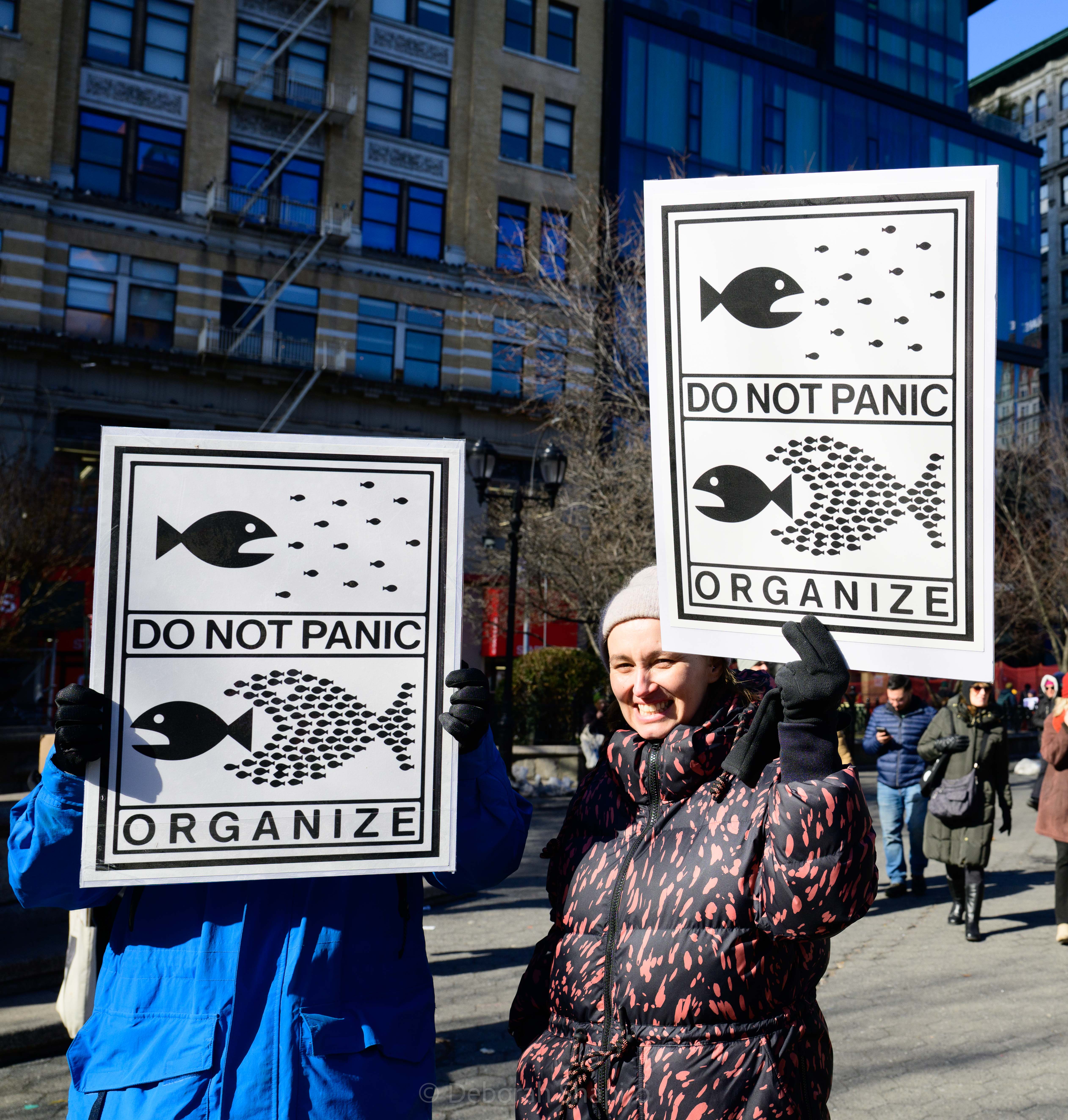
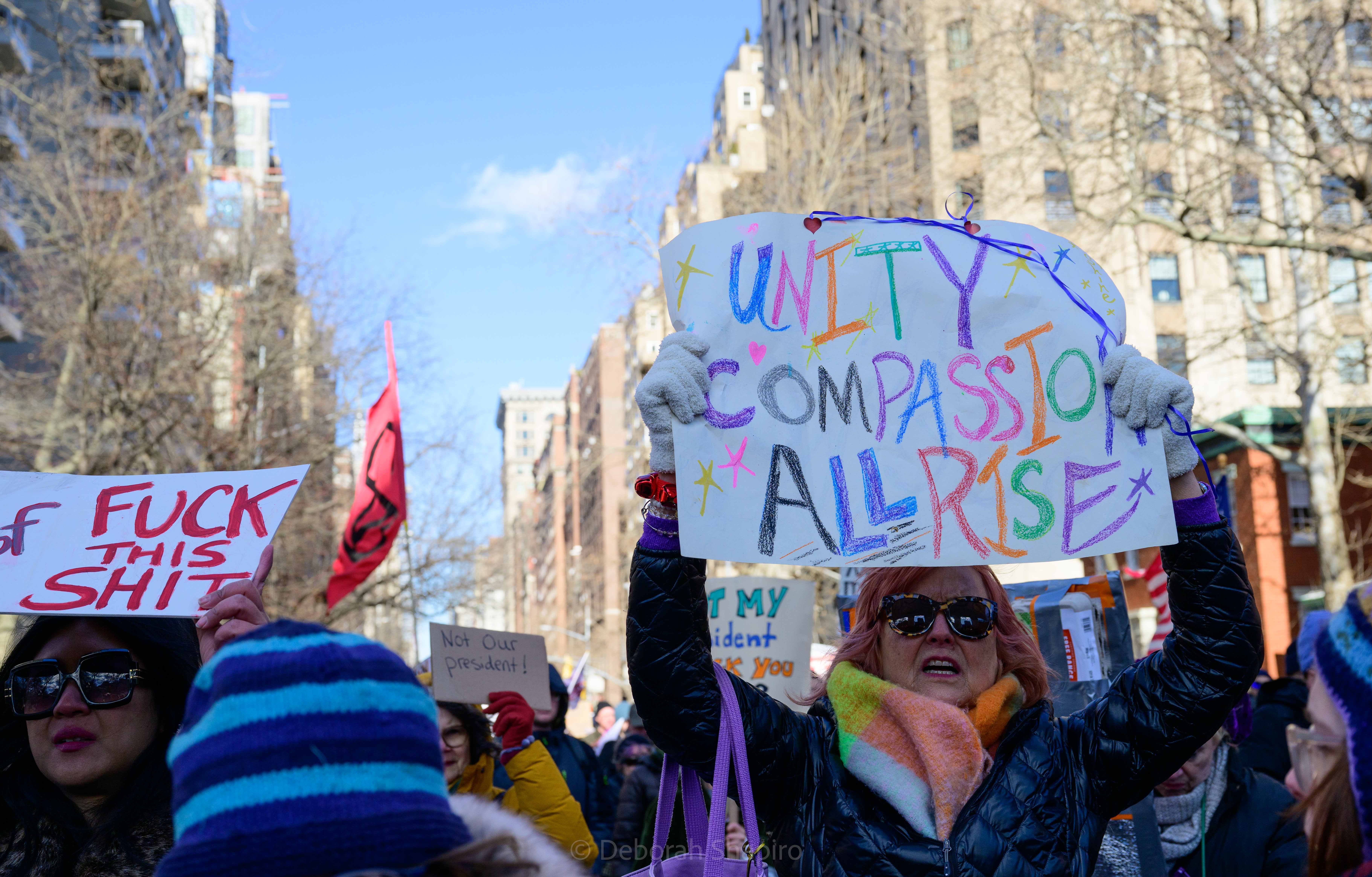
On March 8, 2025 there were at least three different demonstrations in downtown Manhattan. After photographing the protest at the Tesla dealership in the Meatpacking section, I went to Union Square to cover the end of the International Women’s Day protest. Thousands of demonstrators gathered in support of women’s equality in a demonstration that lasted over three hours.
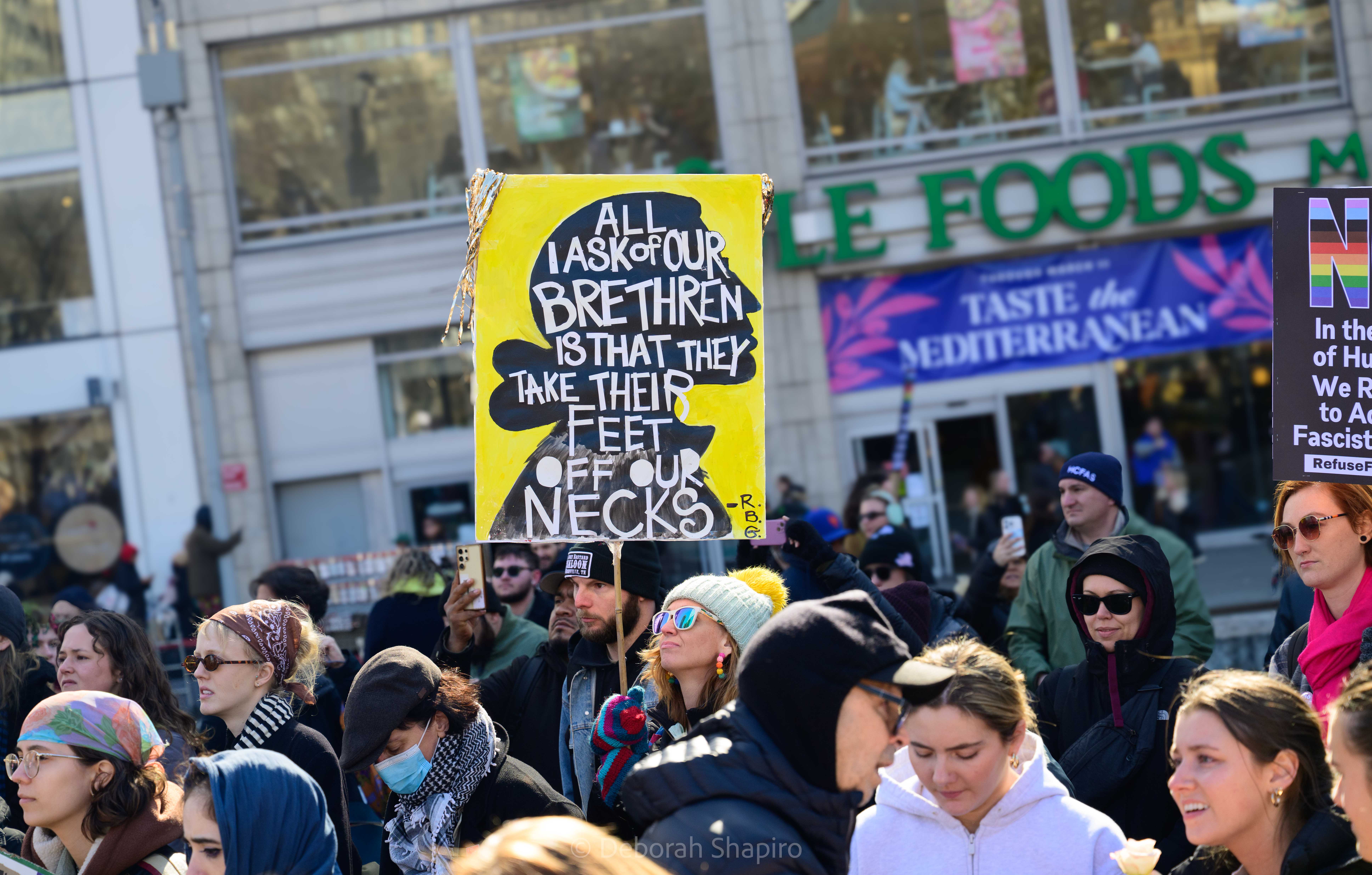
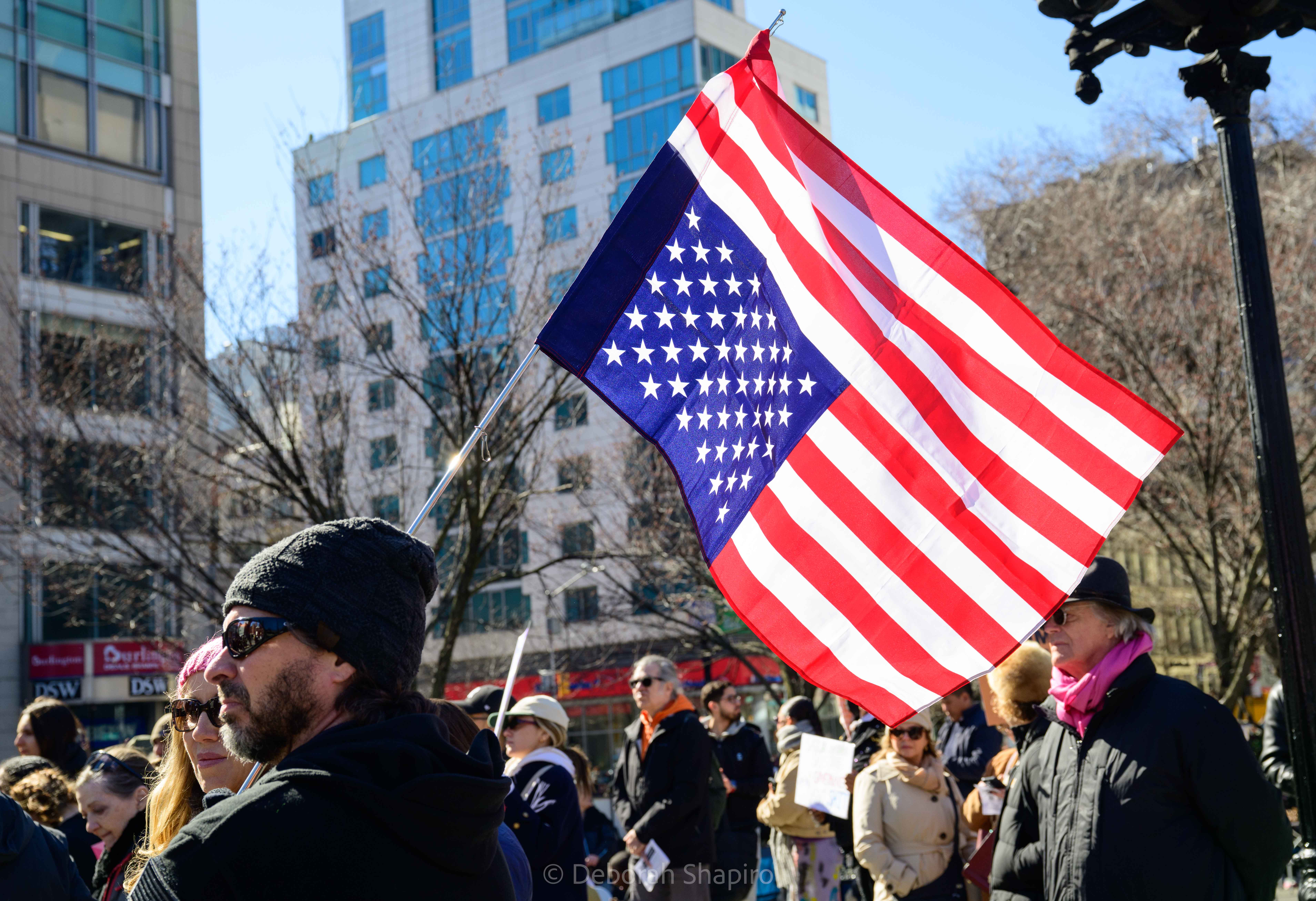
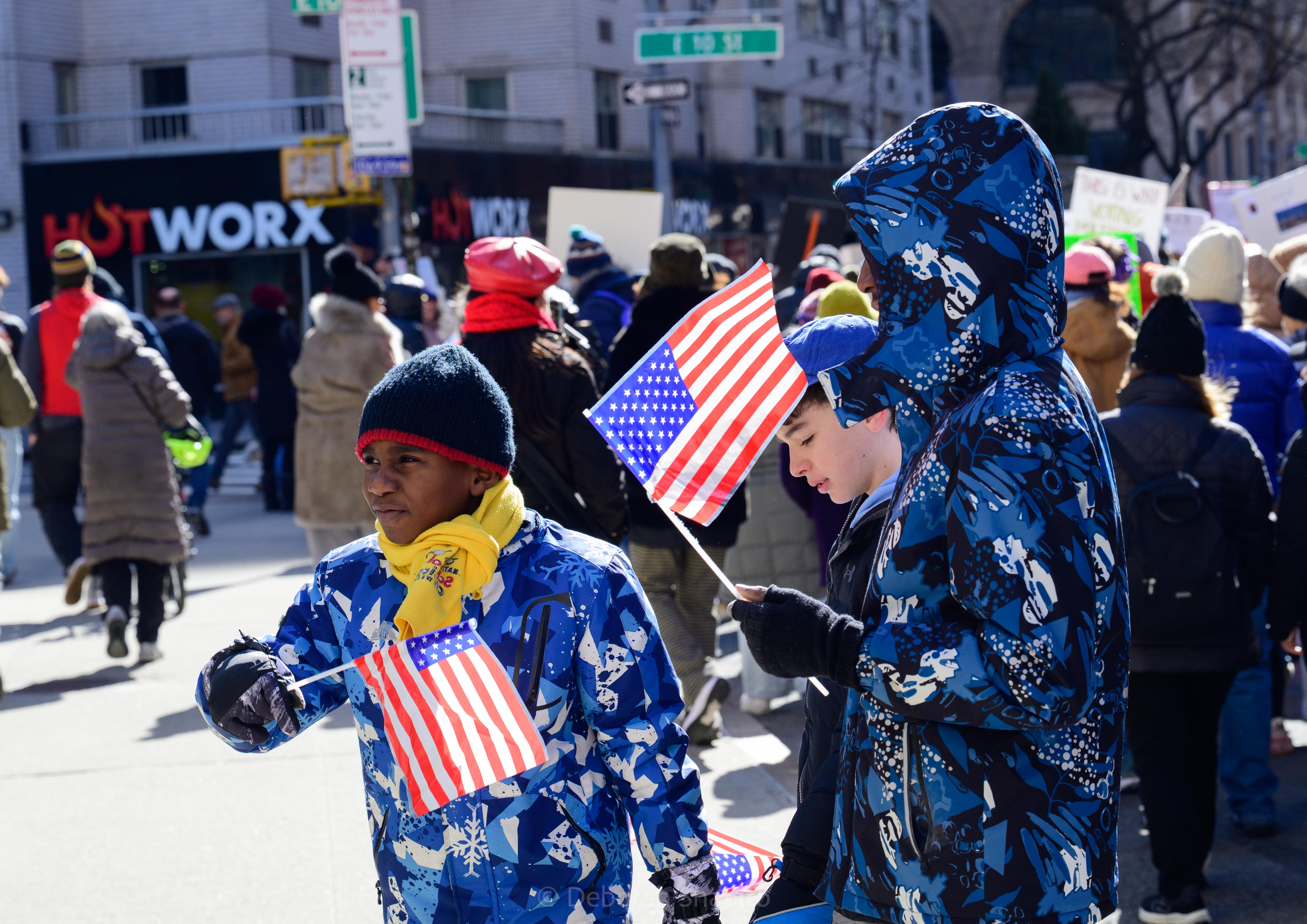
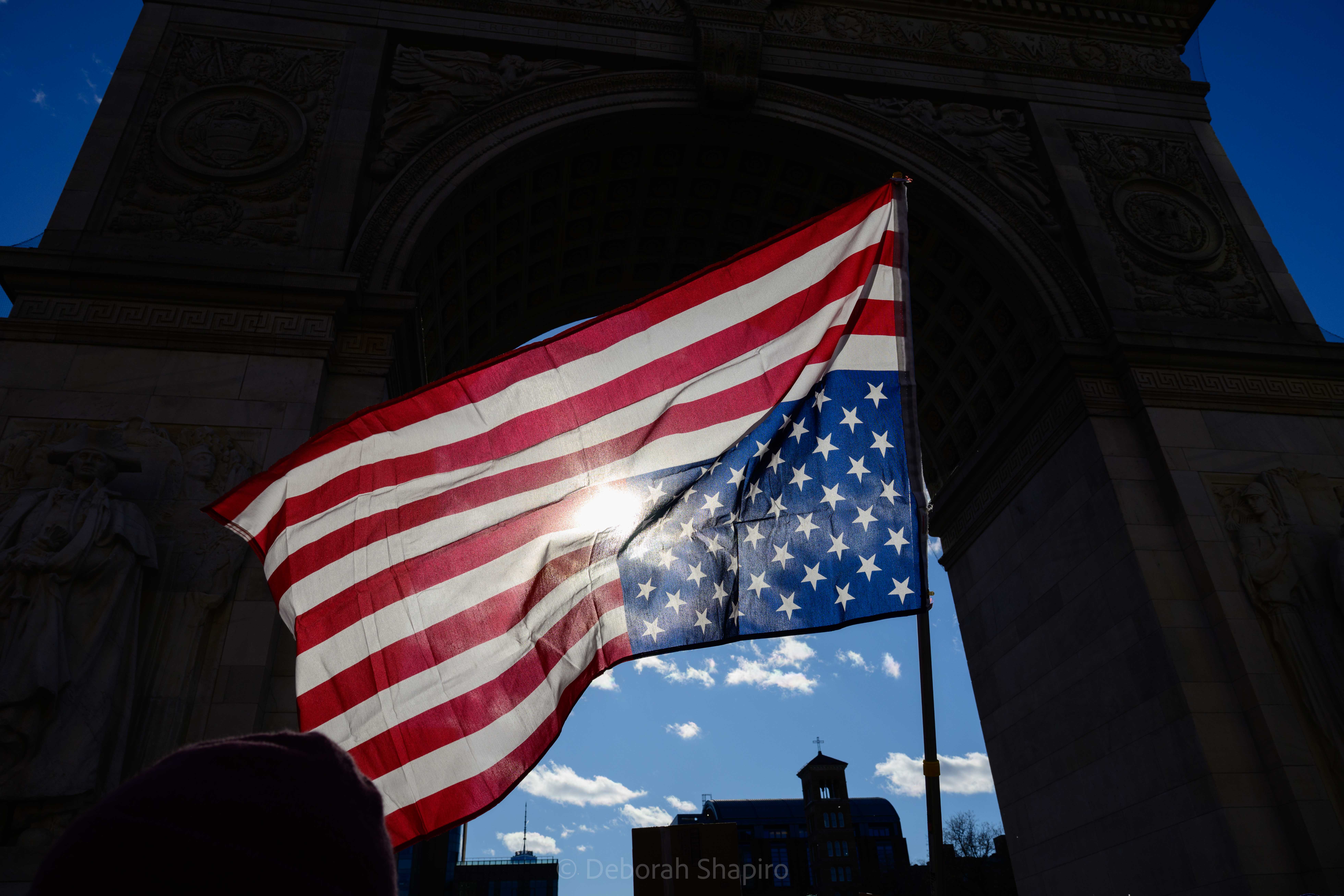
Some demonstrators dressed in costumes from The Handmaid’s Tale The quote is from the late Supreme Court Justice Ruth Bader GinsburgFlying the American flag upside down is a sign of distress
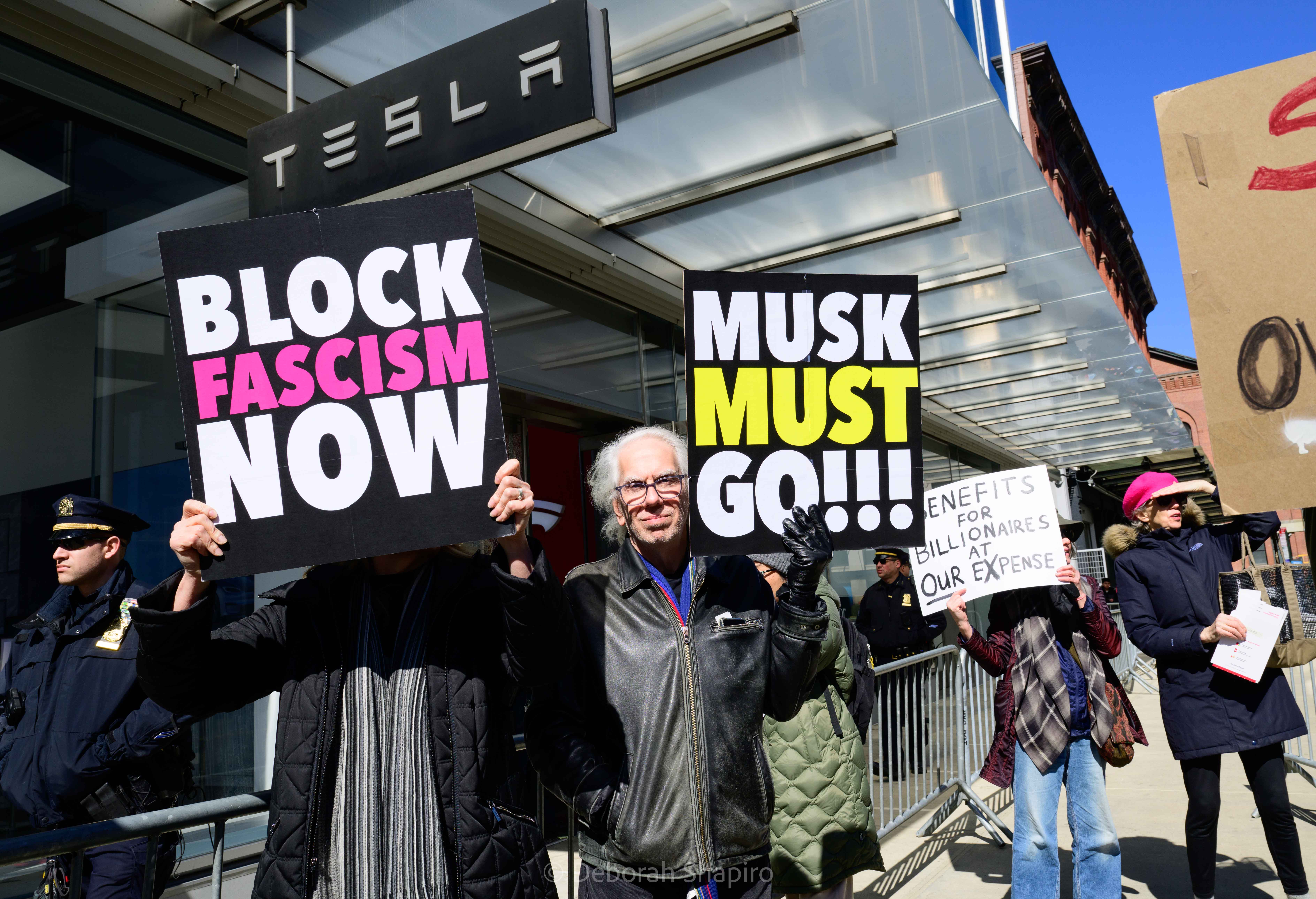
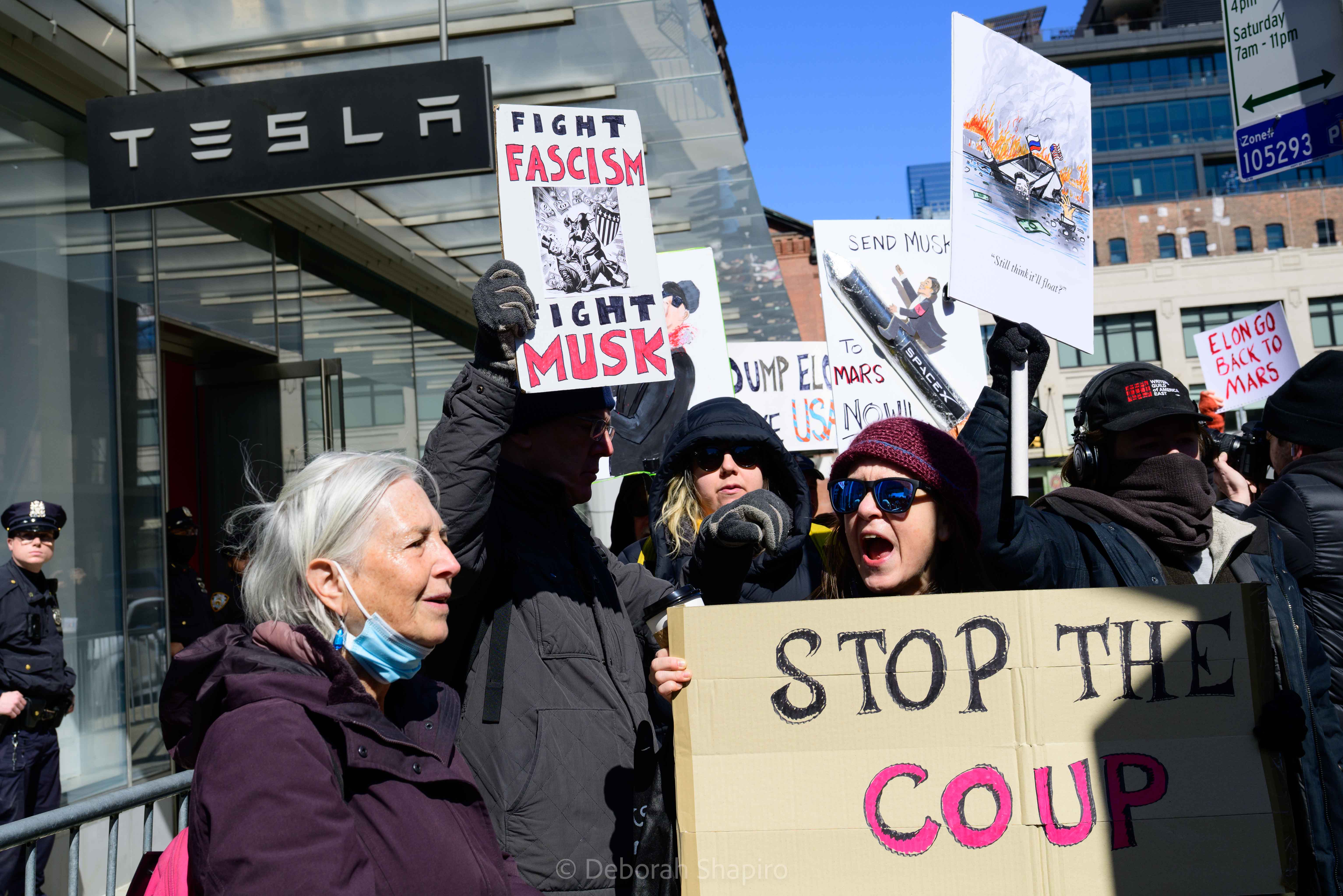
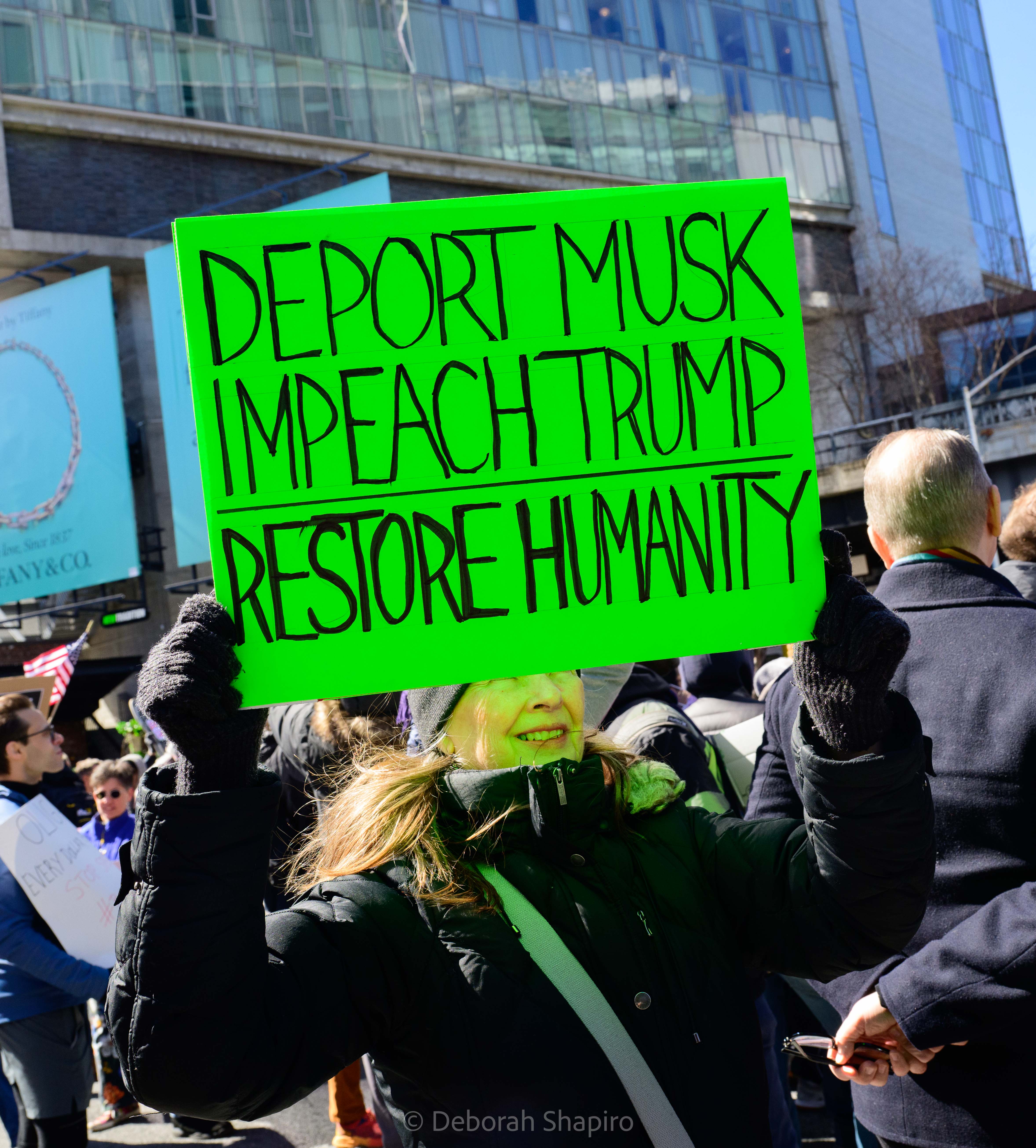
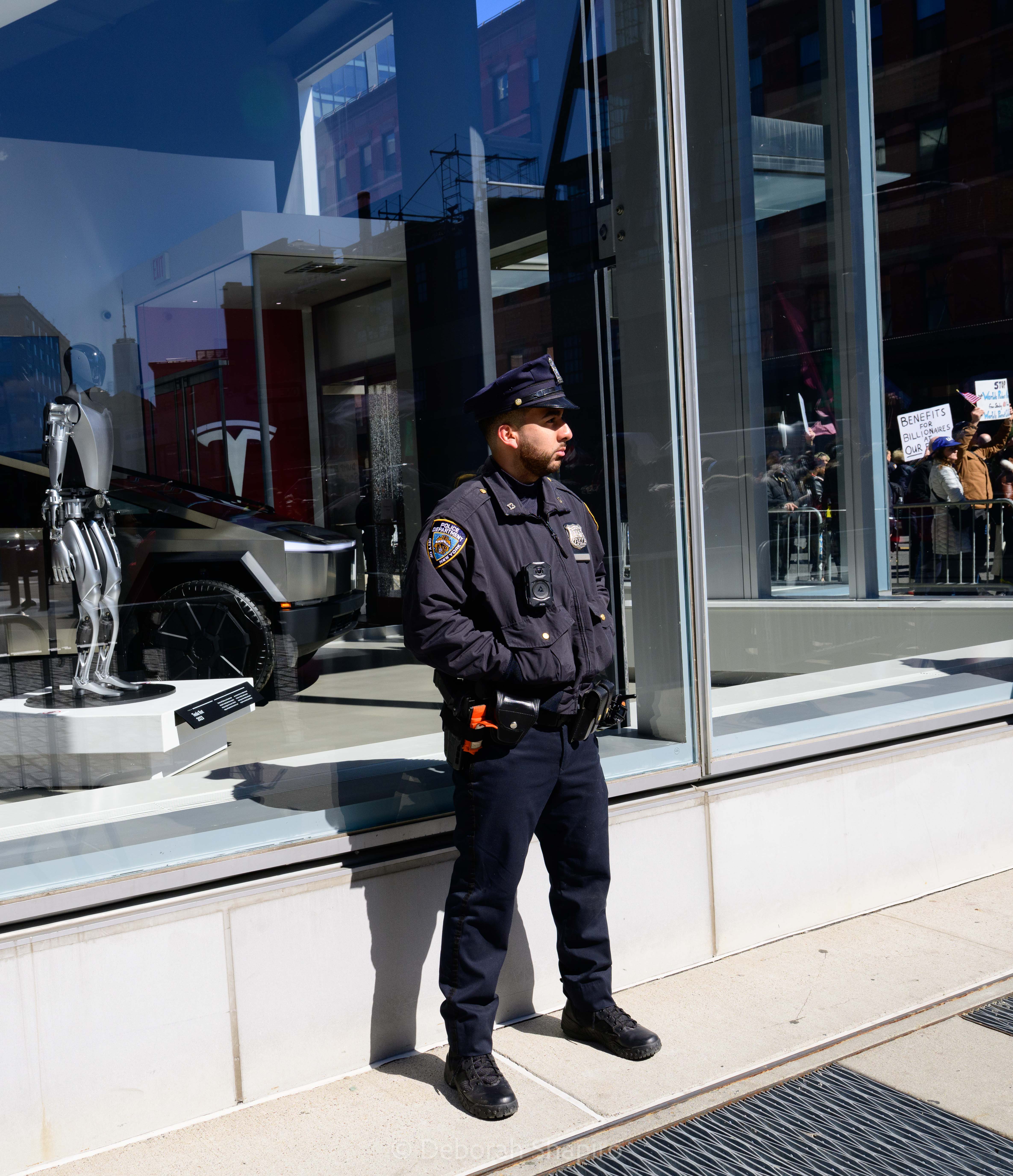
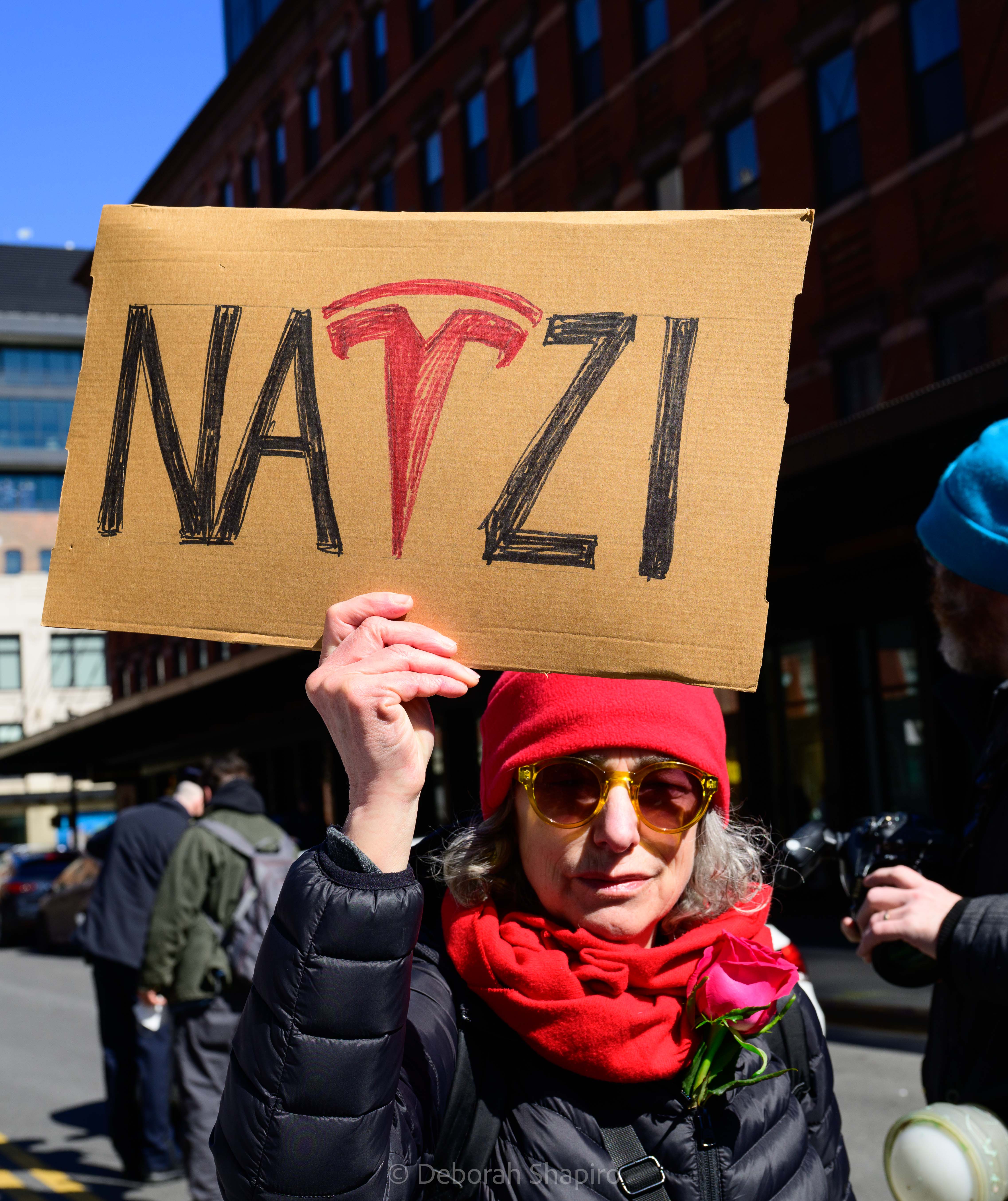
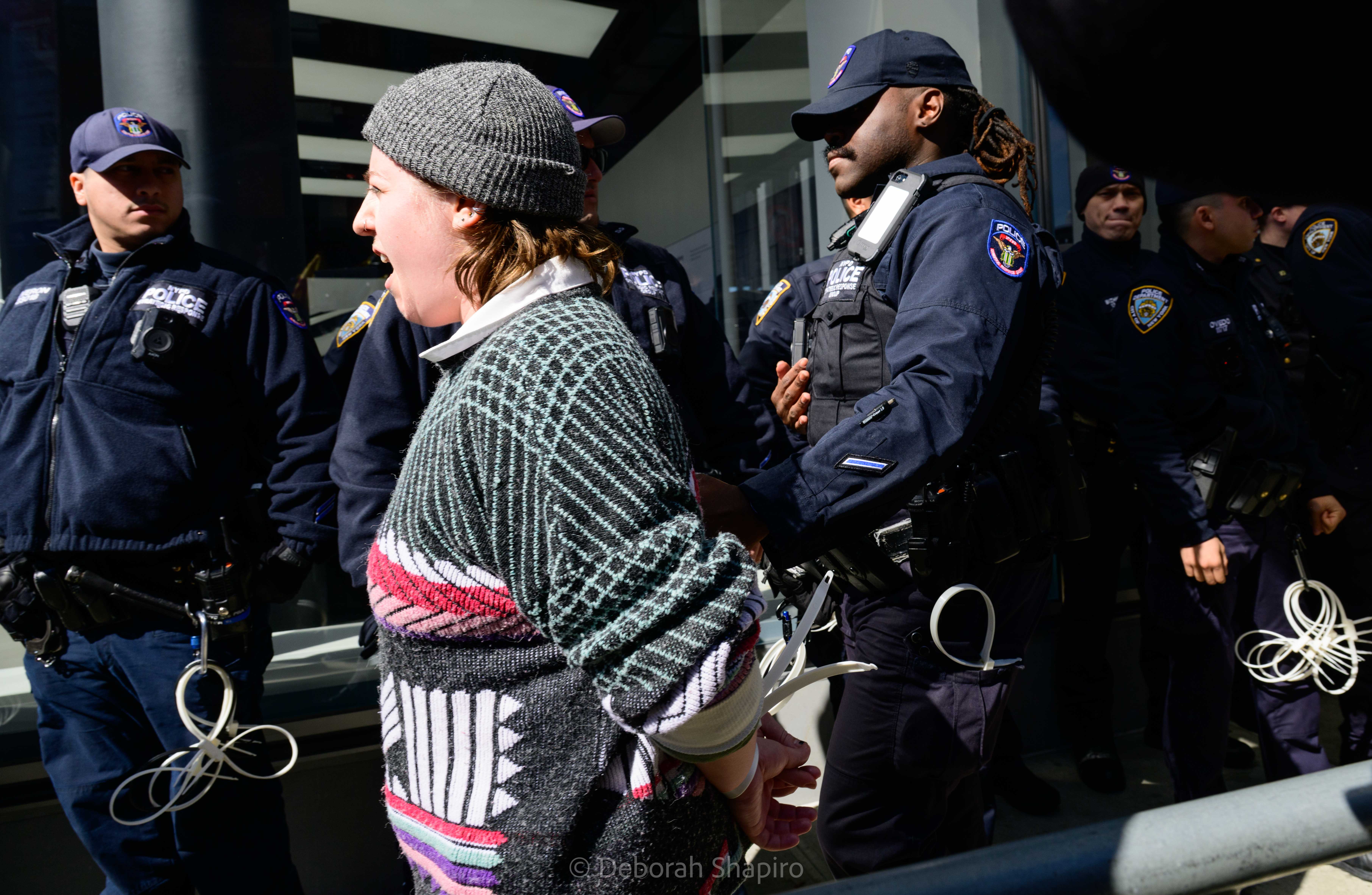
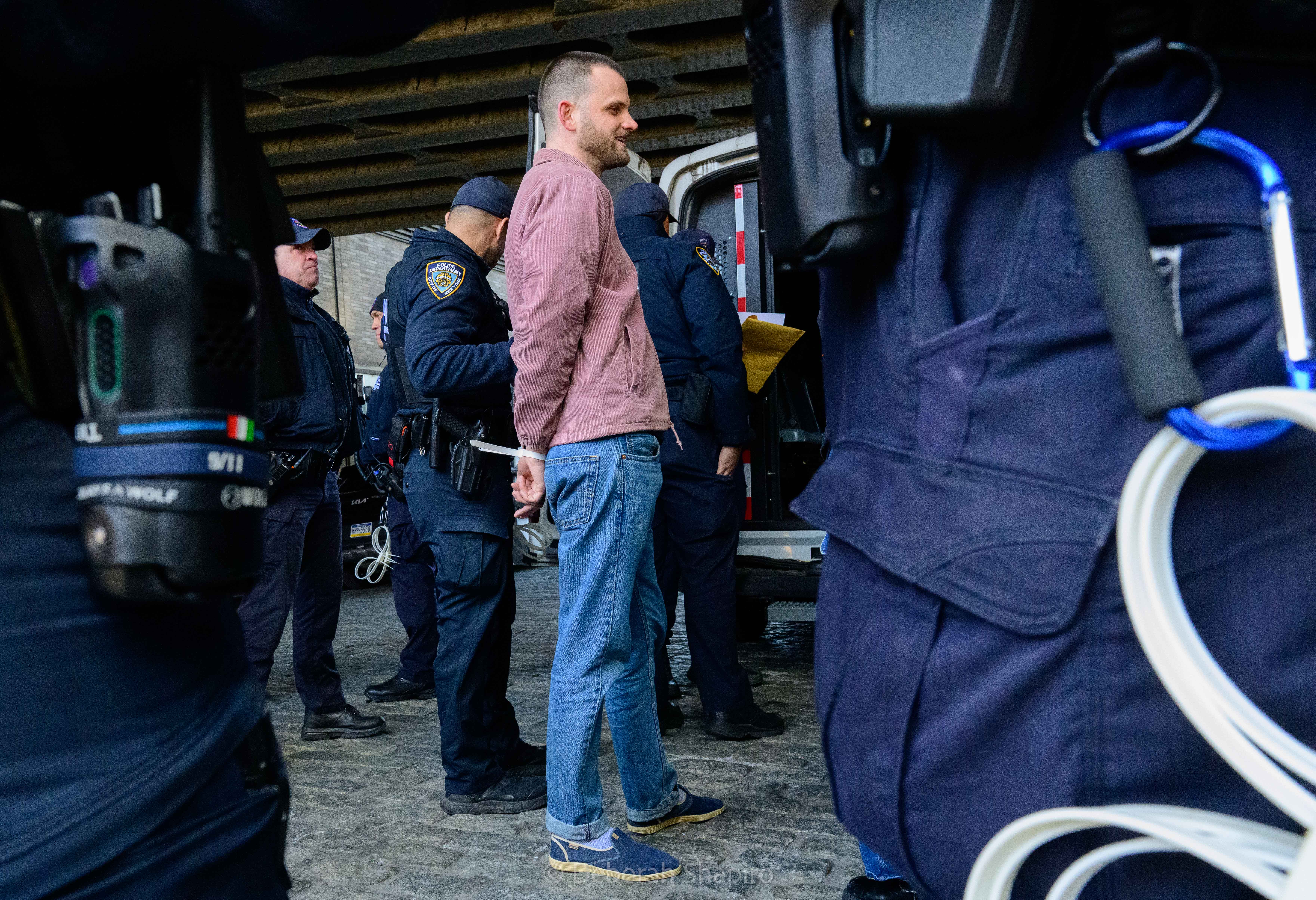
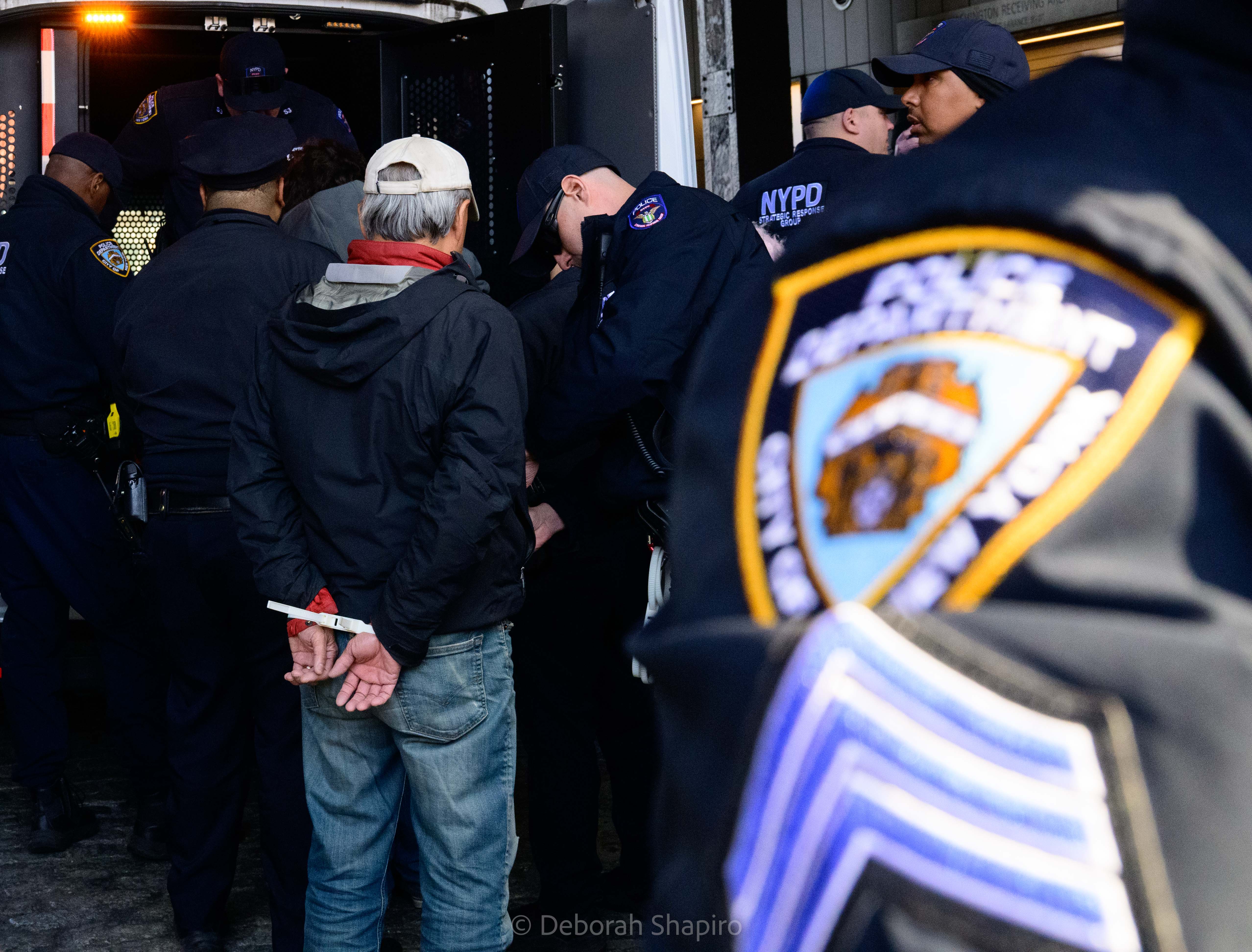
On March 8, 2025 a crowd of several hundred people gathered at the Tesla Dealership to protest Elon Musk’s actions in the Trump administration. The protest was peaceful, but a small group of people rushed past police lines into the showroom and were quickly arrested. There was no violence.
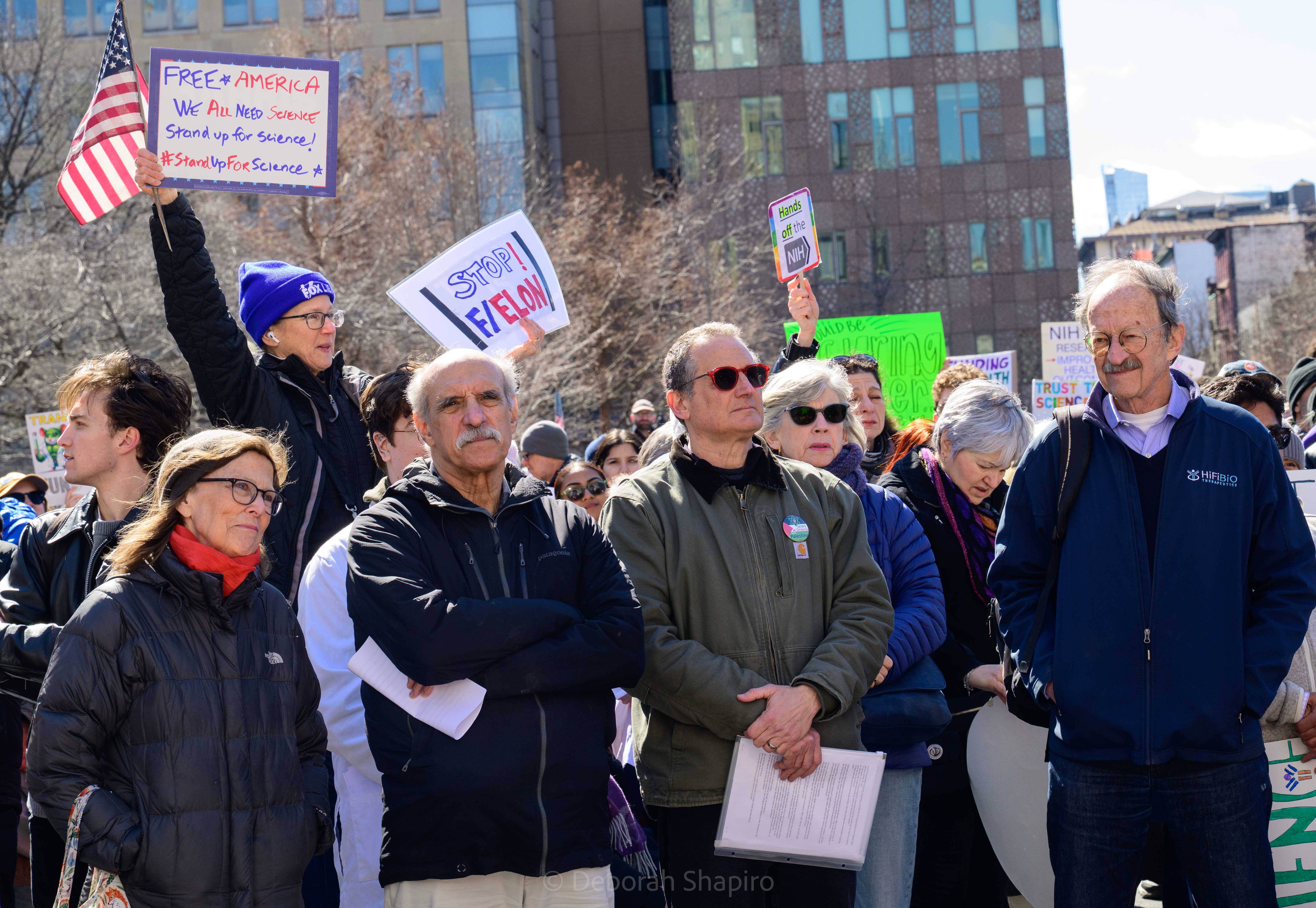
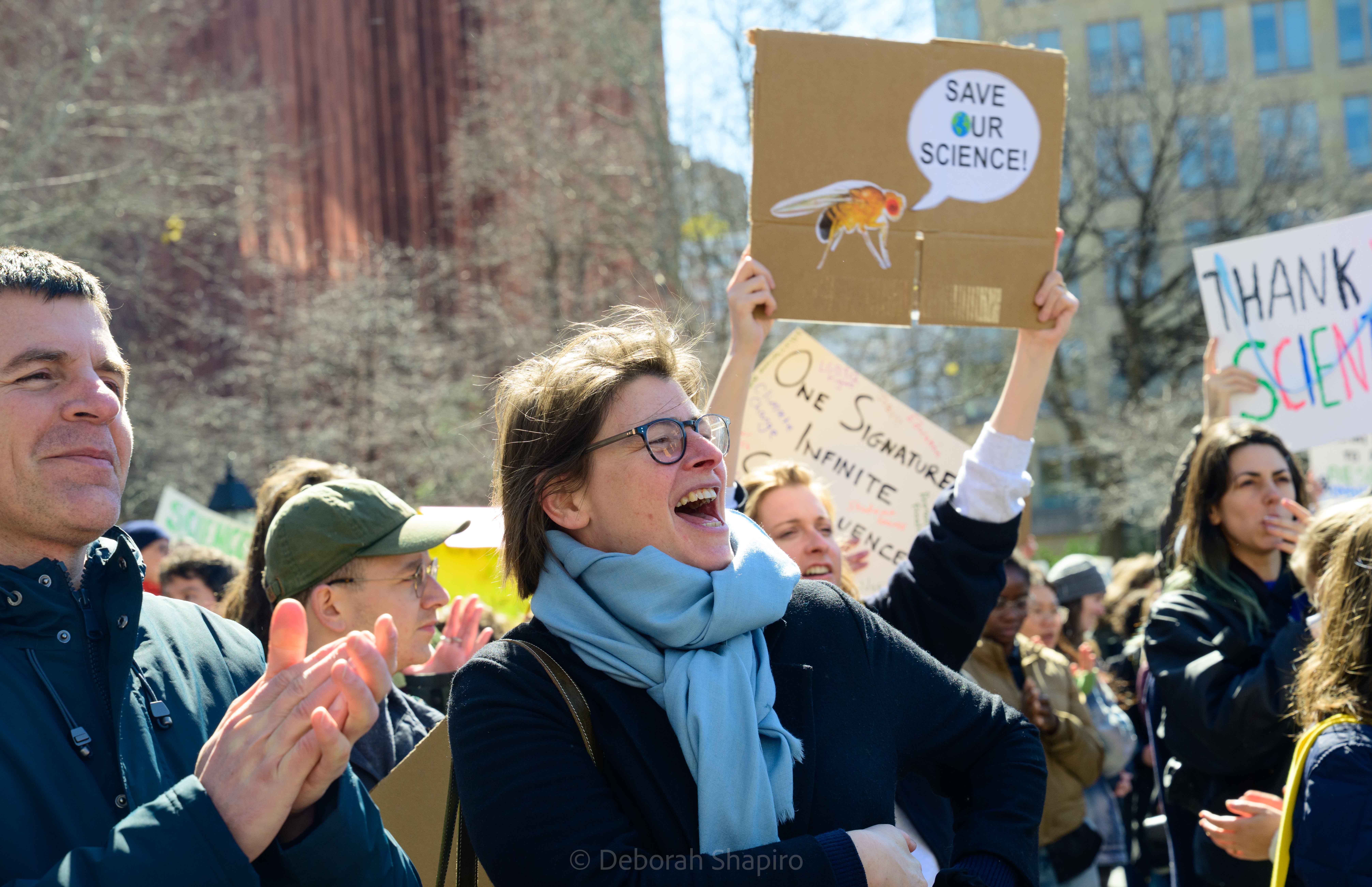
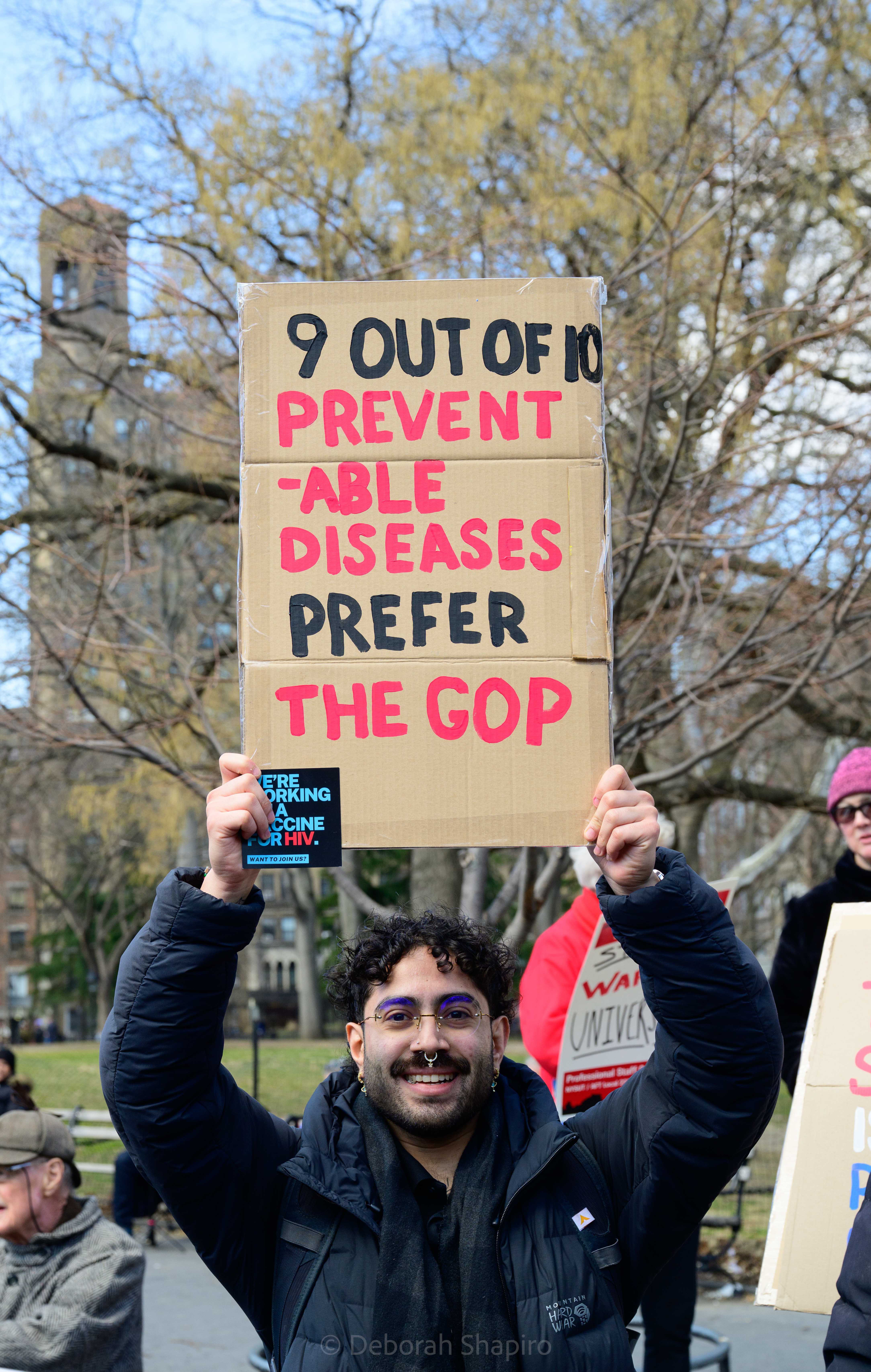
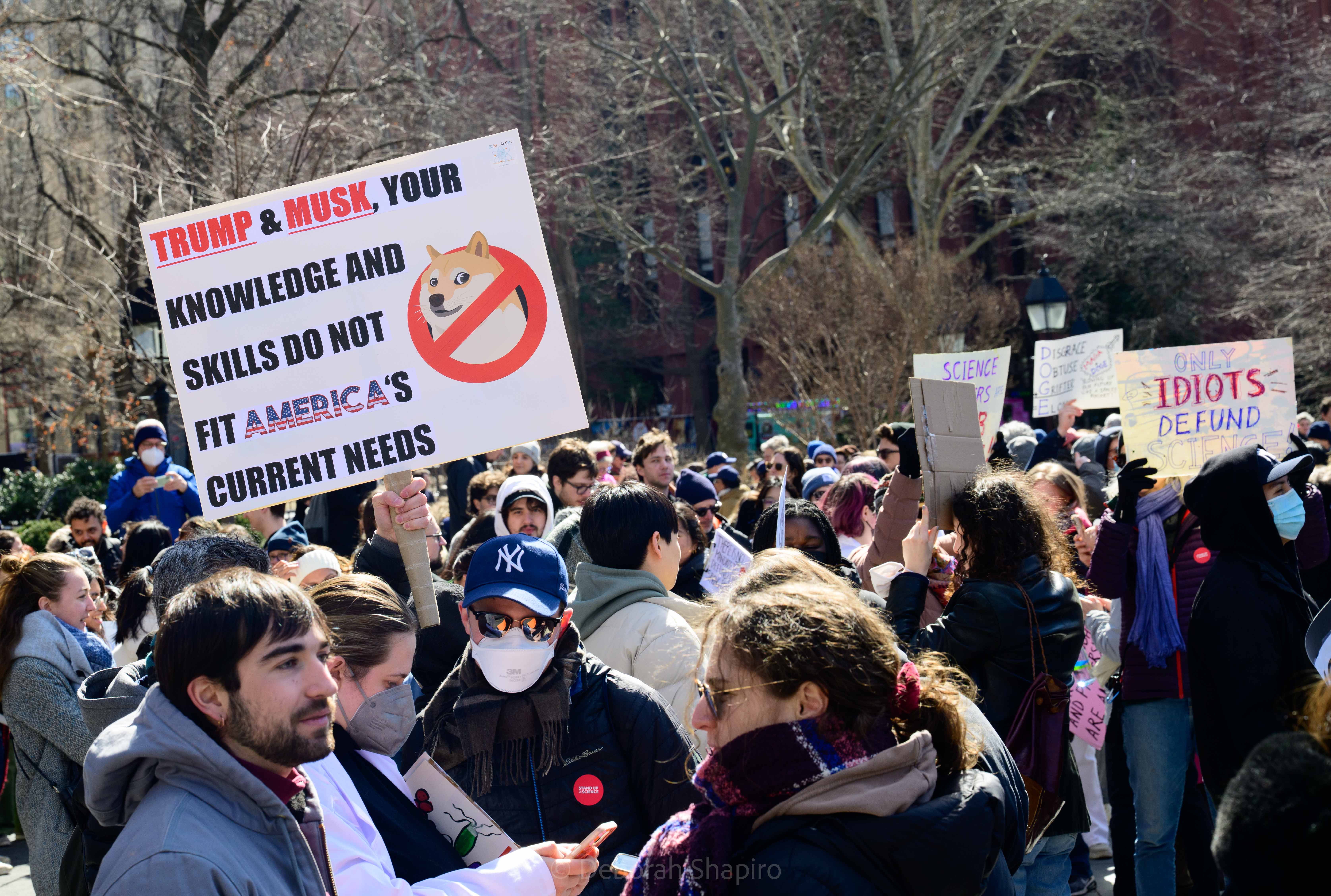
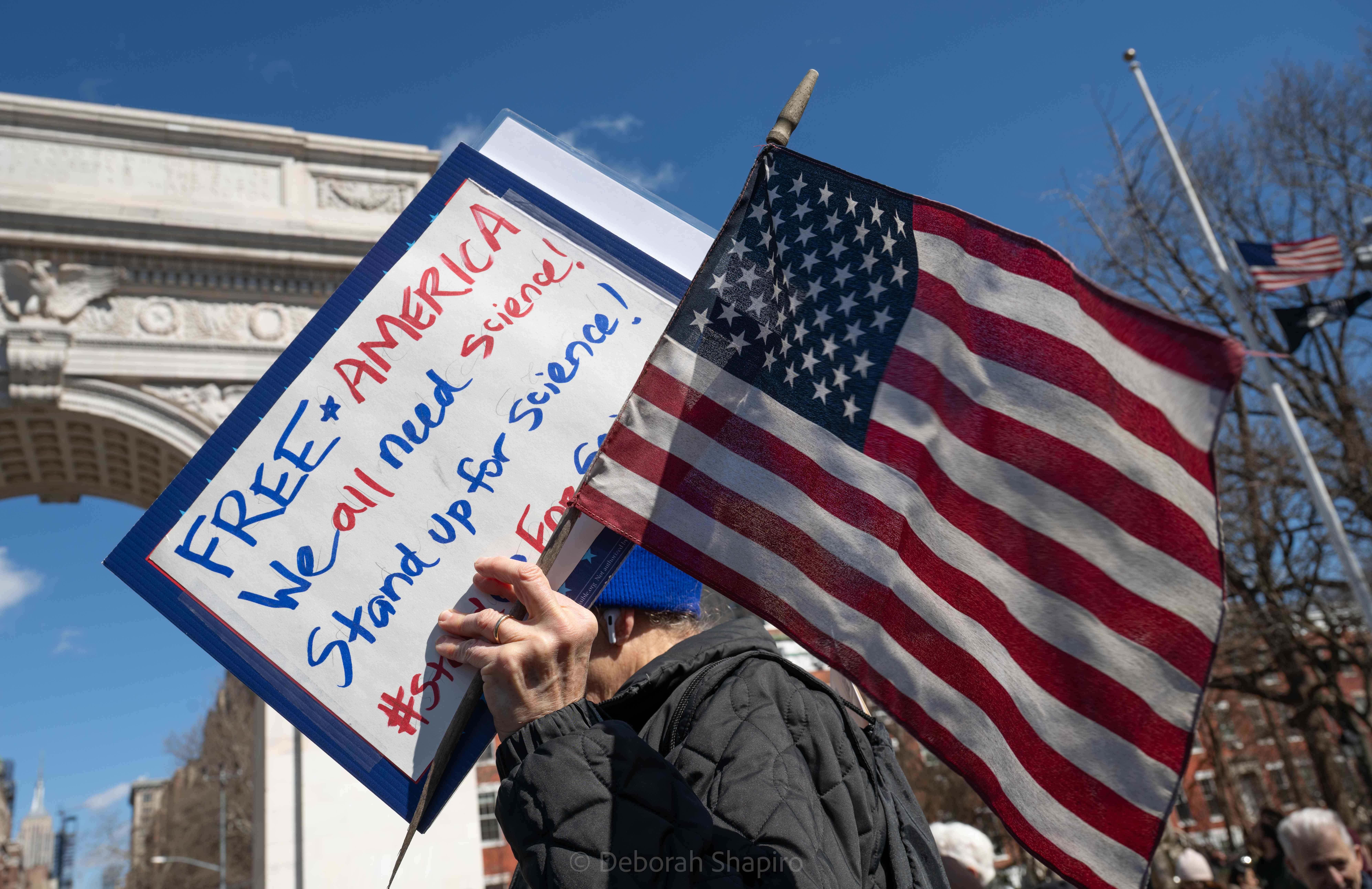
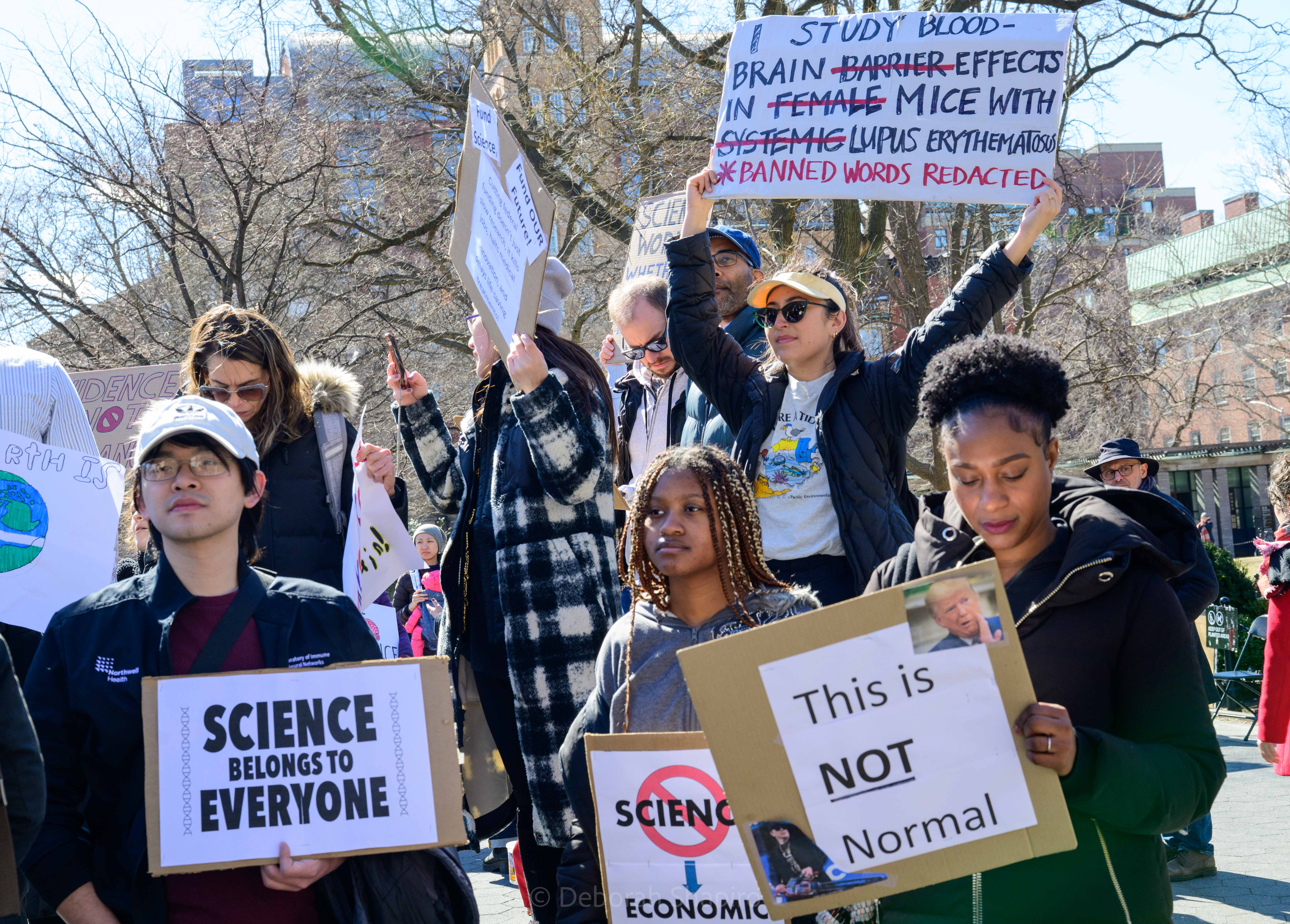
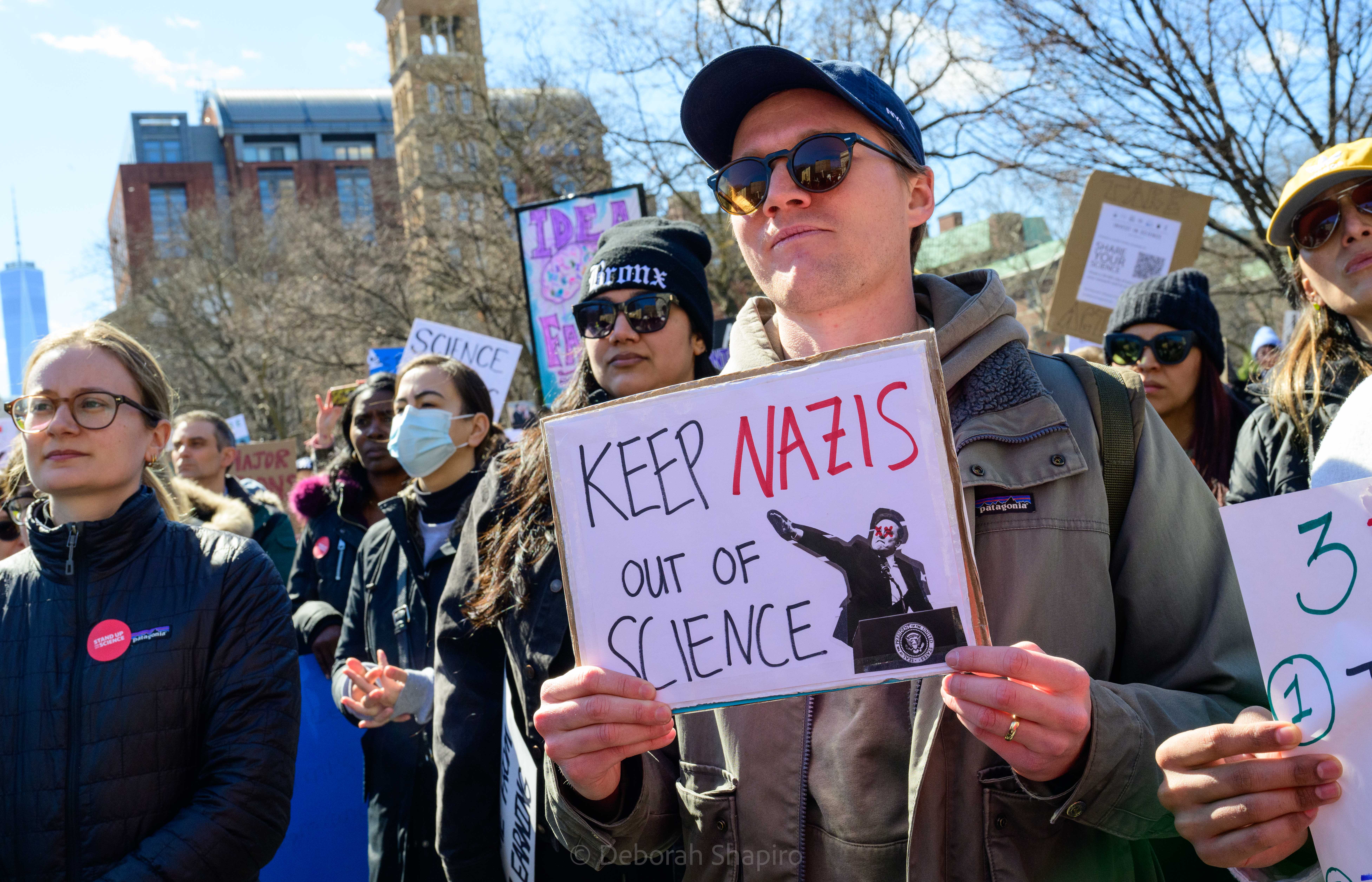
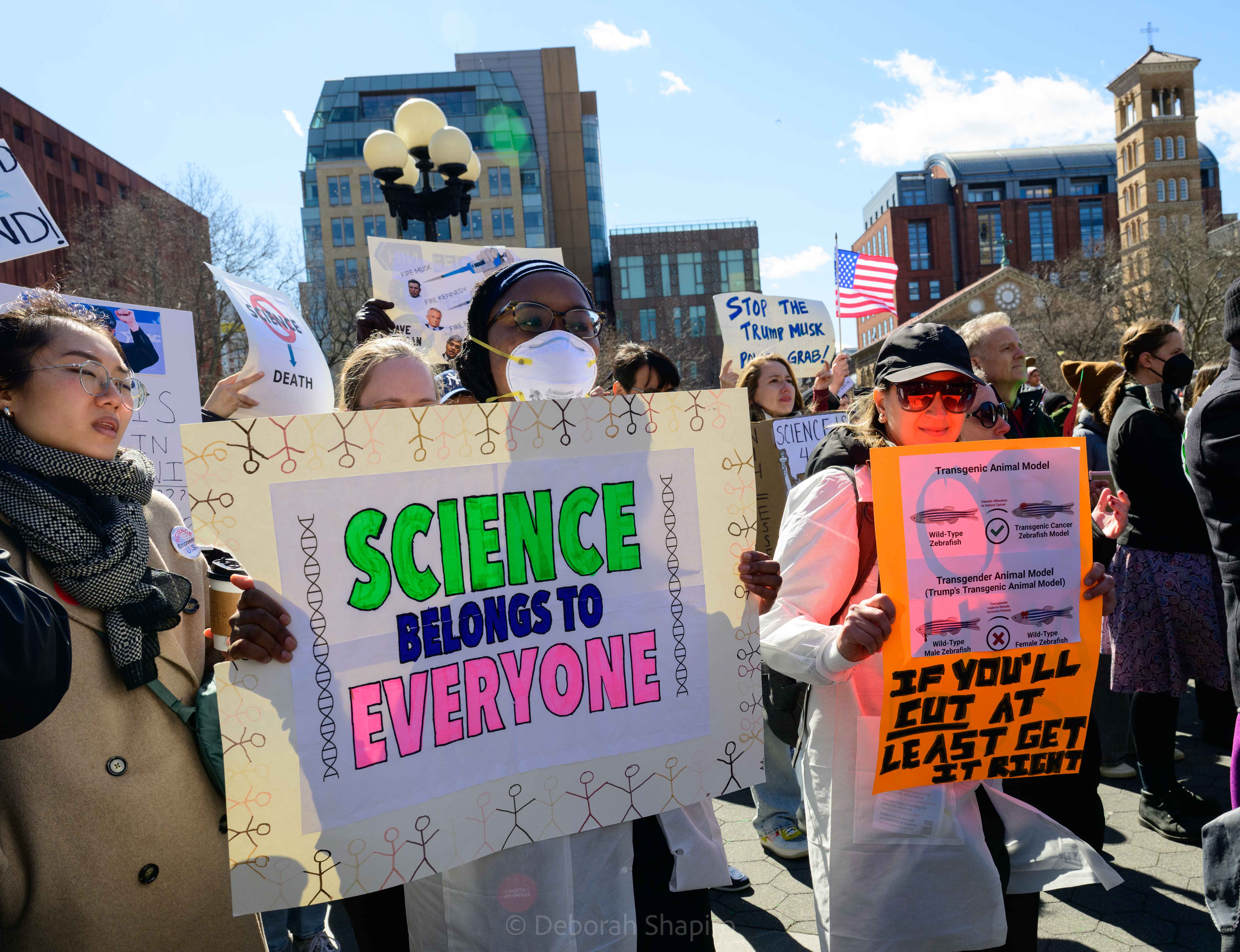
With the threat of significant Federal funding cuts to major scientific and medical institutions across the country, people rallied in multiple cities to support science. At the rally in Washington Square Park, two Nobel Prize winning scientists addressed the crowd of mostly young researchers whose futures and careers are in danger.
Dr. Martin Chalfie, second from left, and Dr. Harold Varmus, far right, wait to address the crowd. Both are Nobel Prize winning scientists.
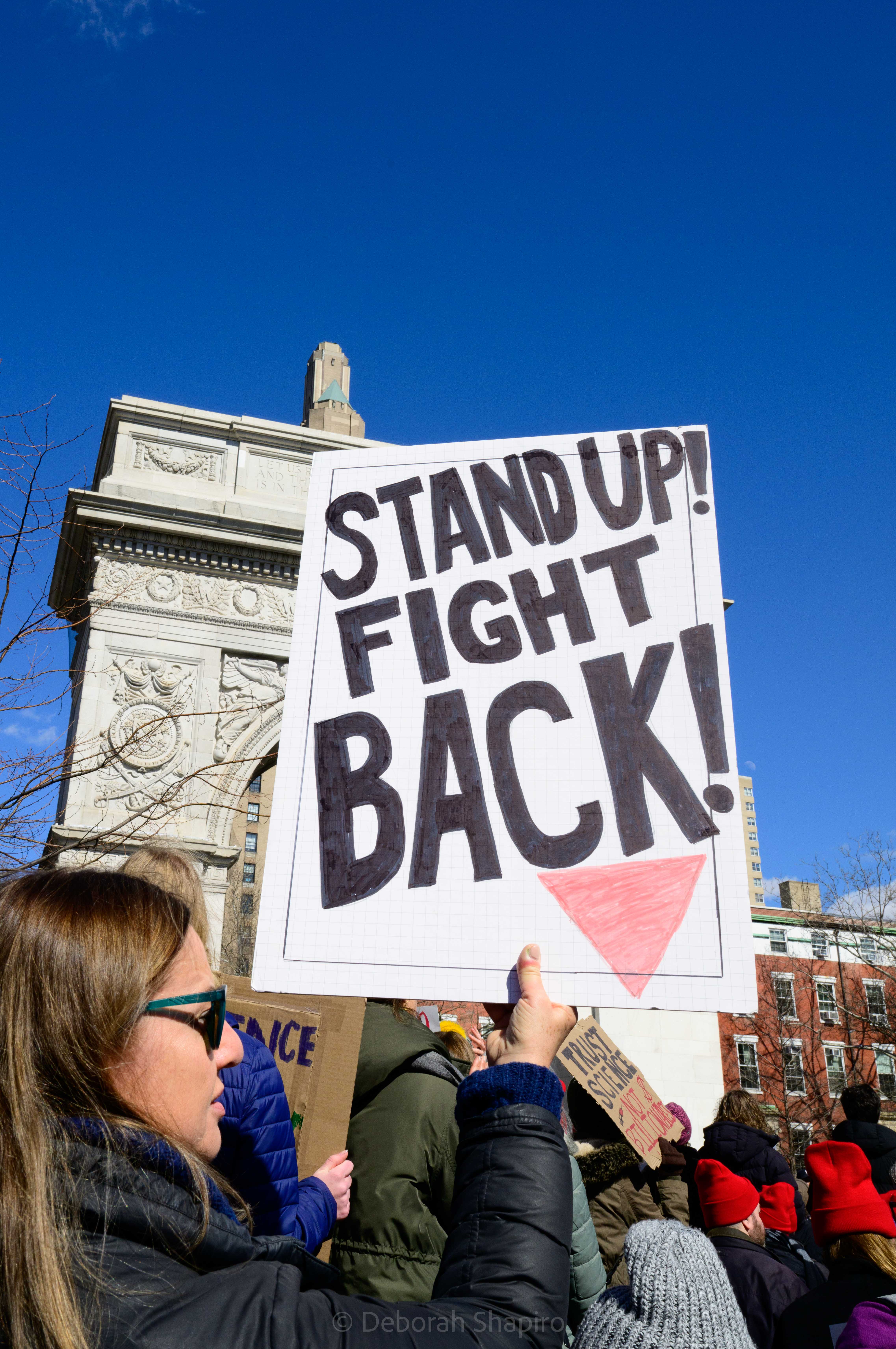
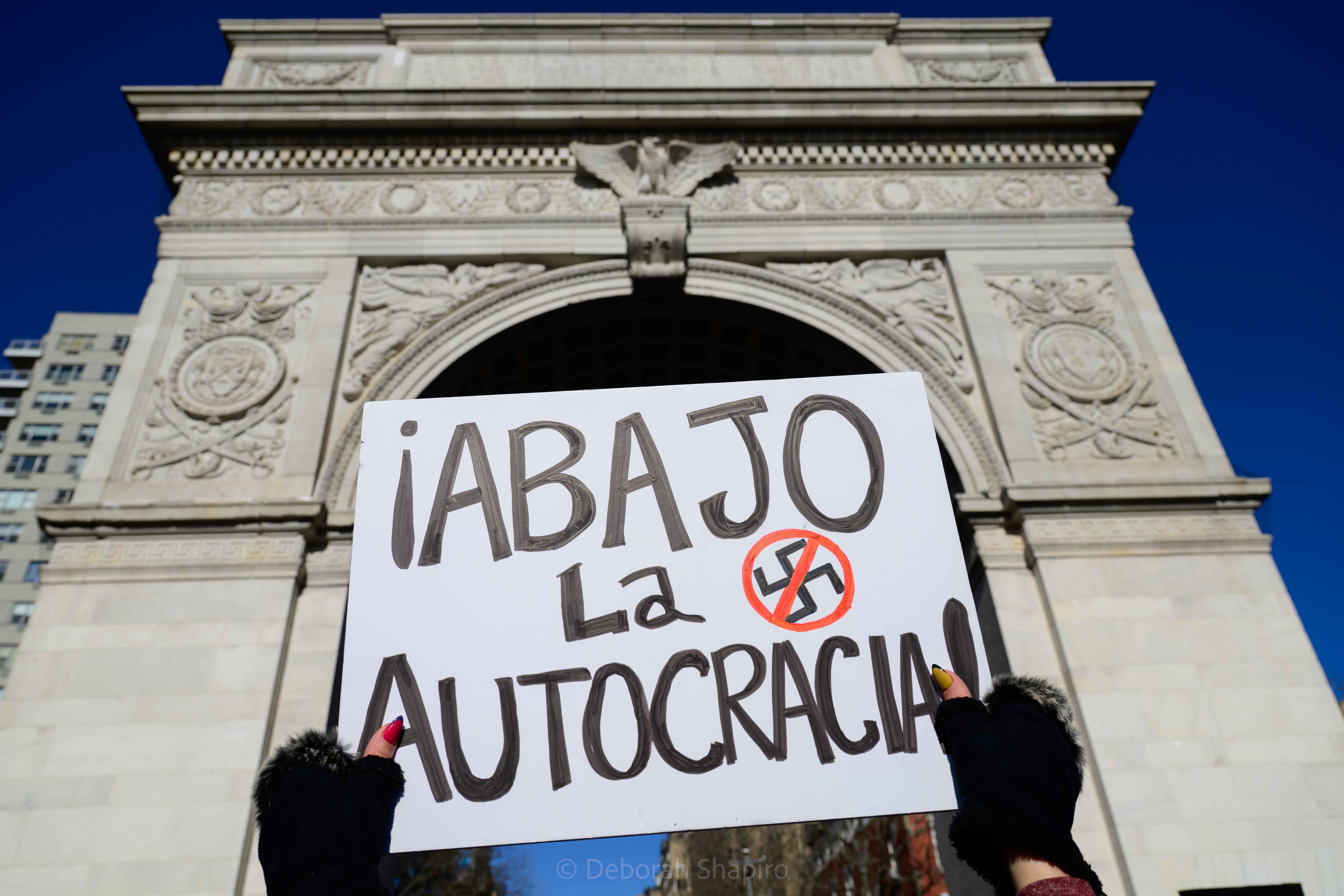
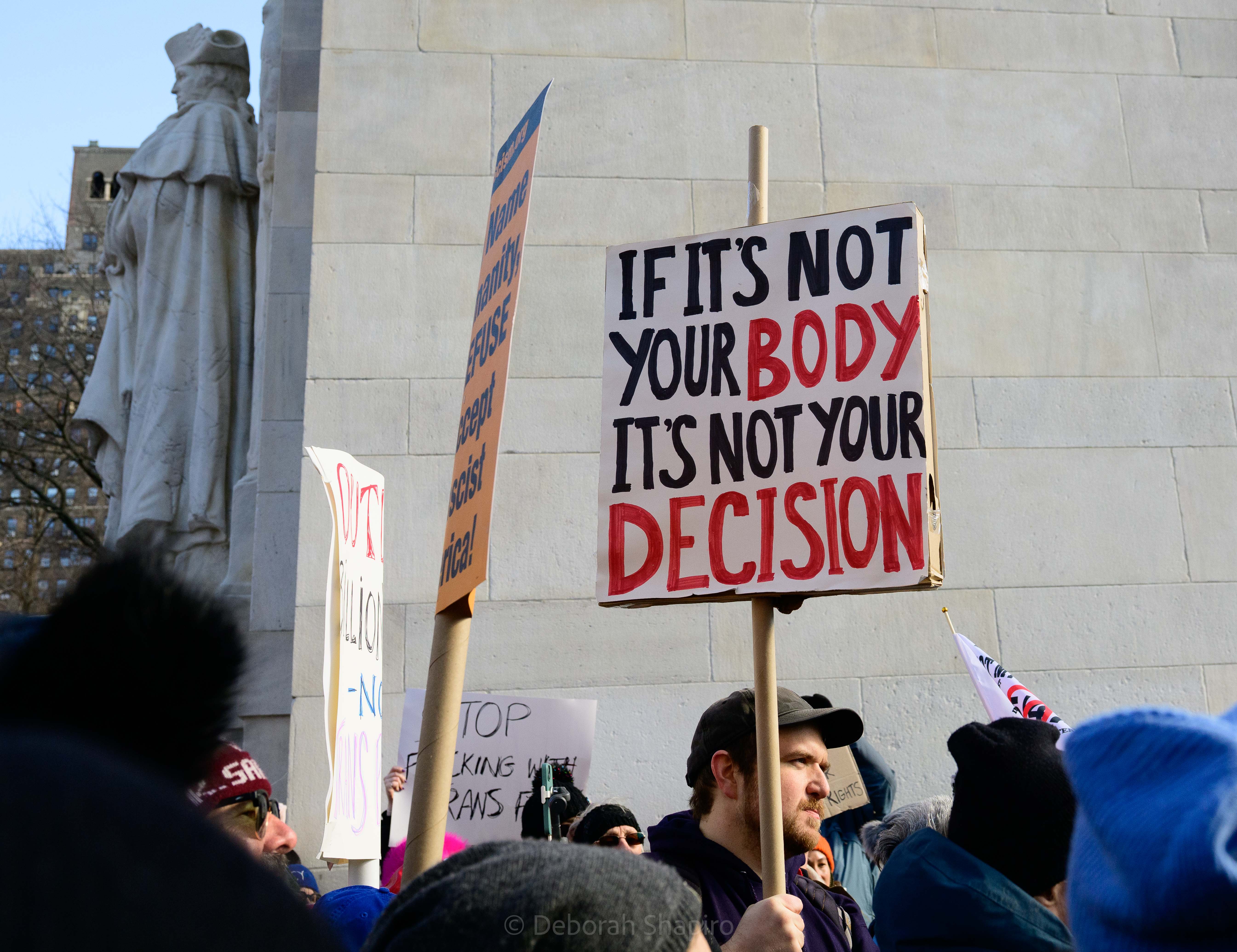
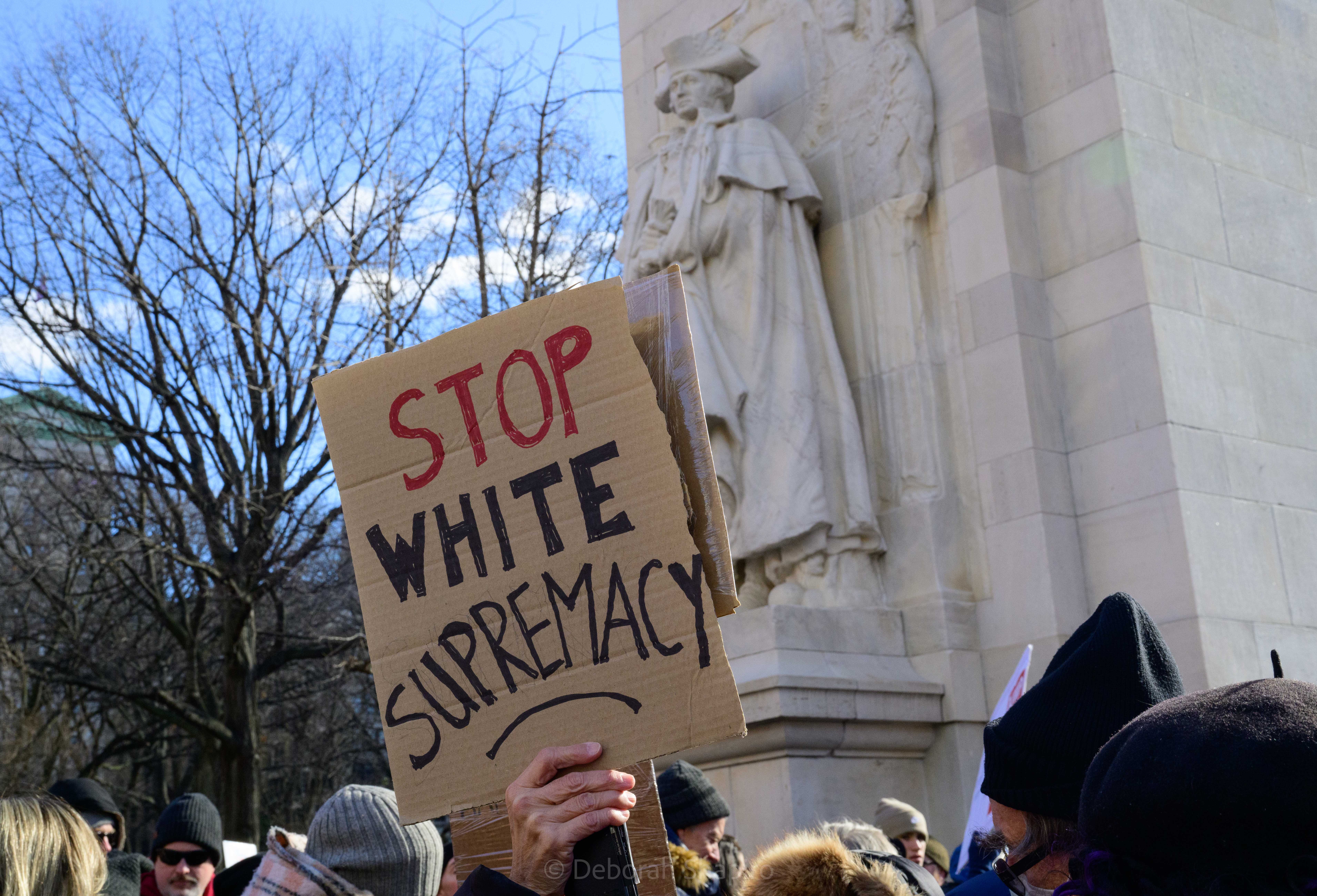
On January 17, President’s Day, protests against the Trump administration took place in all 50 state capitols. In New York City, thousands marched to Washington Square Park to protest near the great arch memorializing our first President.
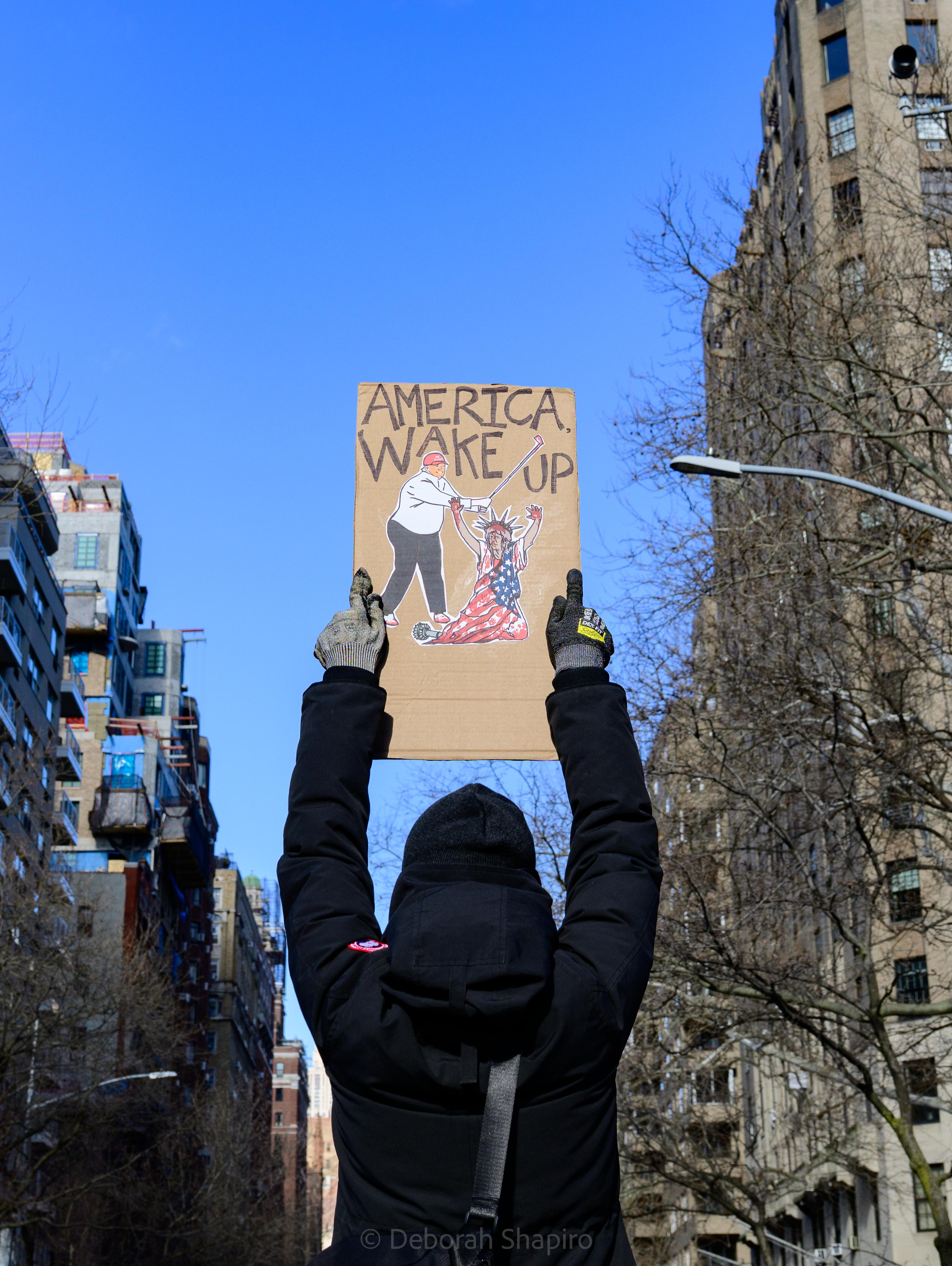
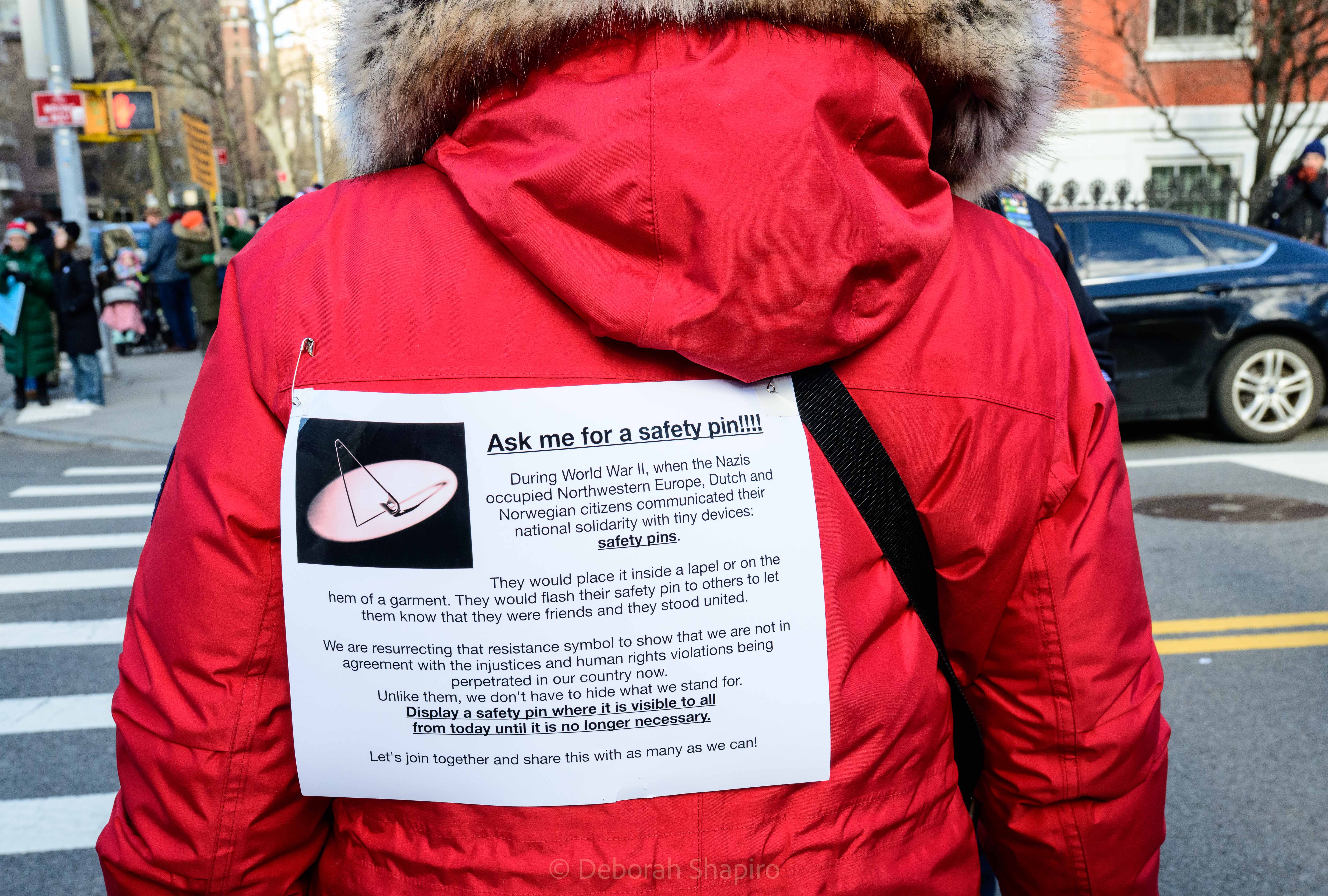
Children cheering for the marchersProtesters marching from Union Square to Washington Square Park“Down with Autocracy” sign held by a protester in front of the famous Washington Square ArchProtesters under the Washington Square Arch with a statue of George Washington in the backgroundThere is some irony here since Washington, whose statue is seen on the arch, was a slave owner. The upside-down American flag is a sign of distress A protester standing under the Washington Square Arch looks up Fifth AvenueA safety pin was a sign of resistance to the Nazi occupiers in Norway and the Netherlands during World War II.
After a tumultuous year, a look back at the photographs that feel most meaningful. I chose images that express beauty, hope, or public events where people came together to celebrate.
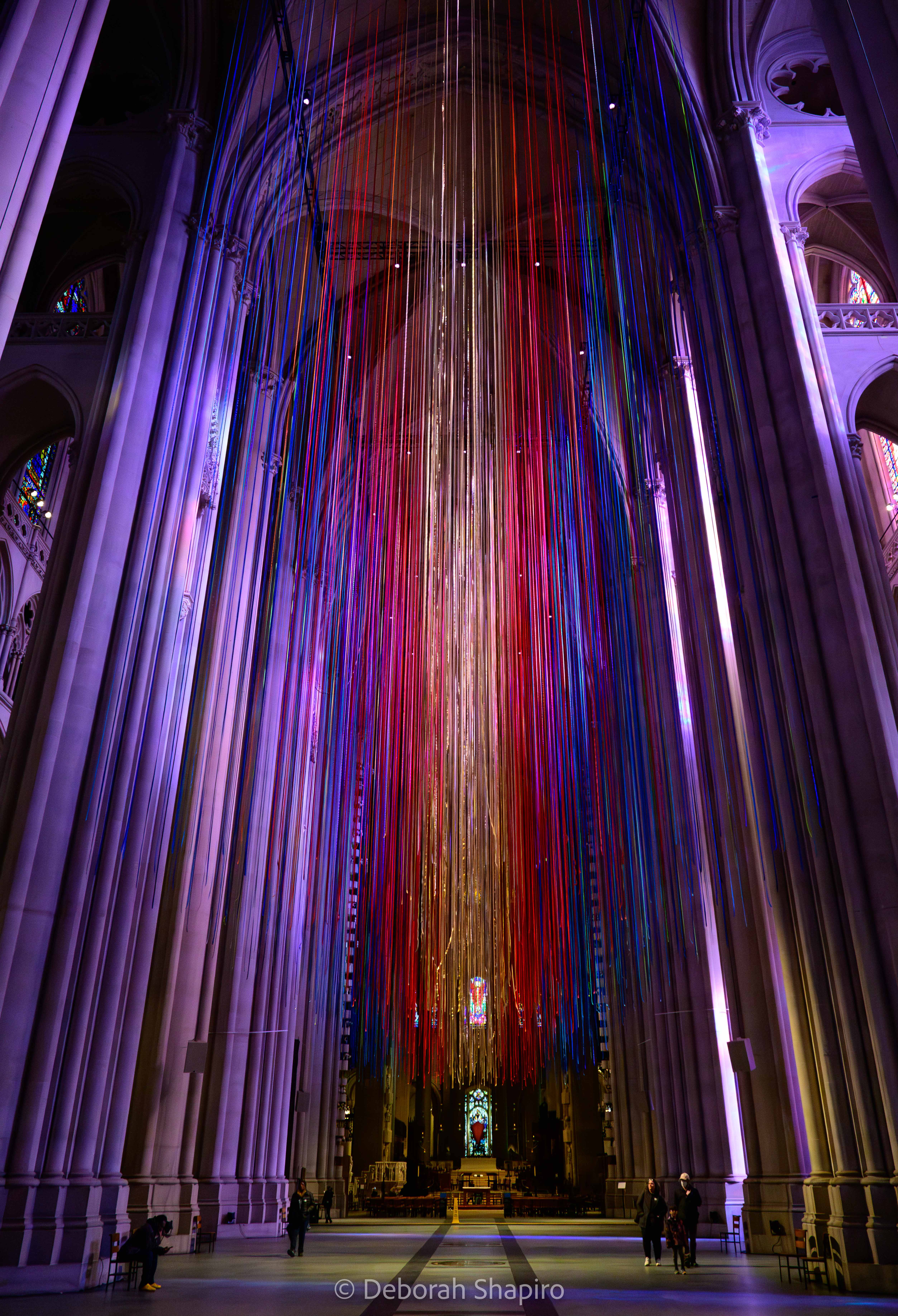
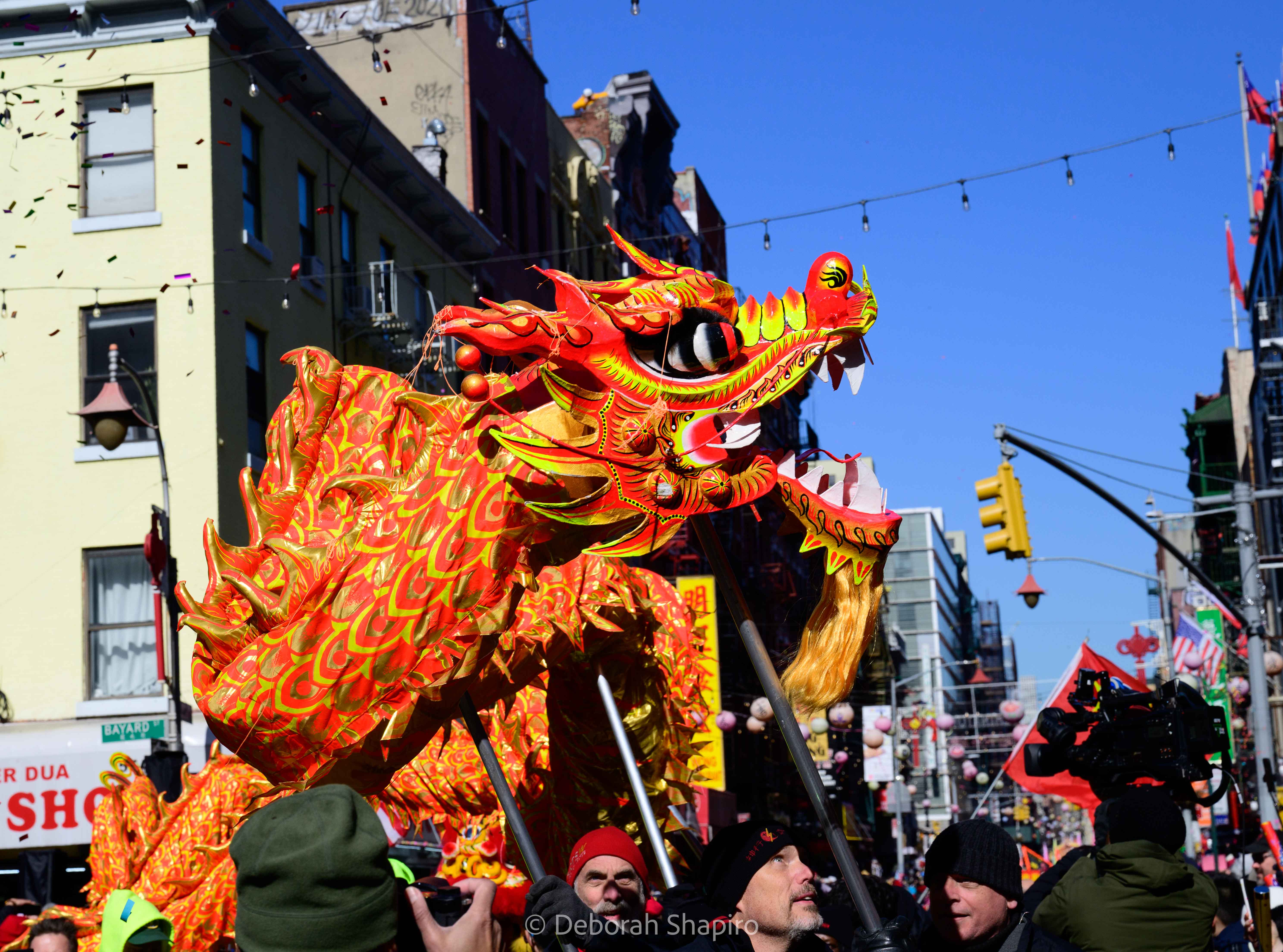
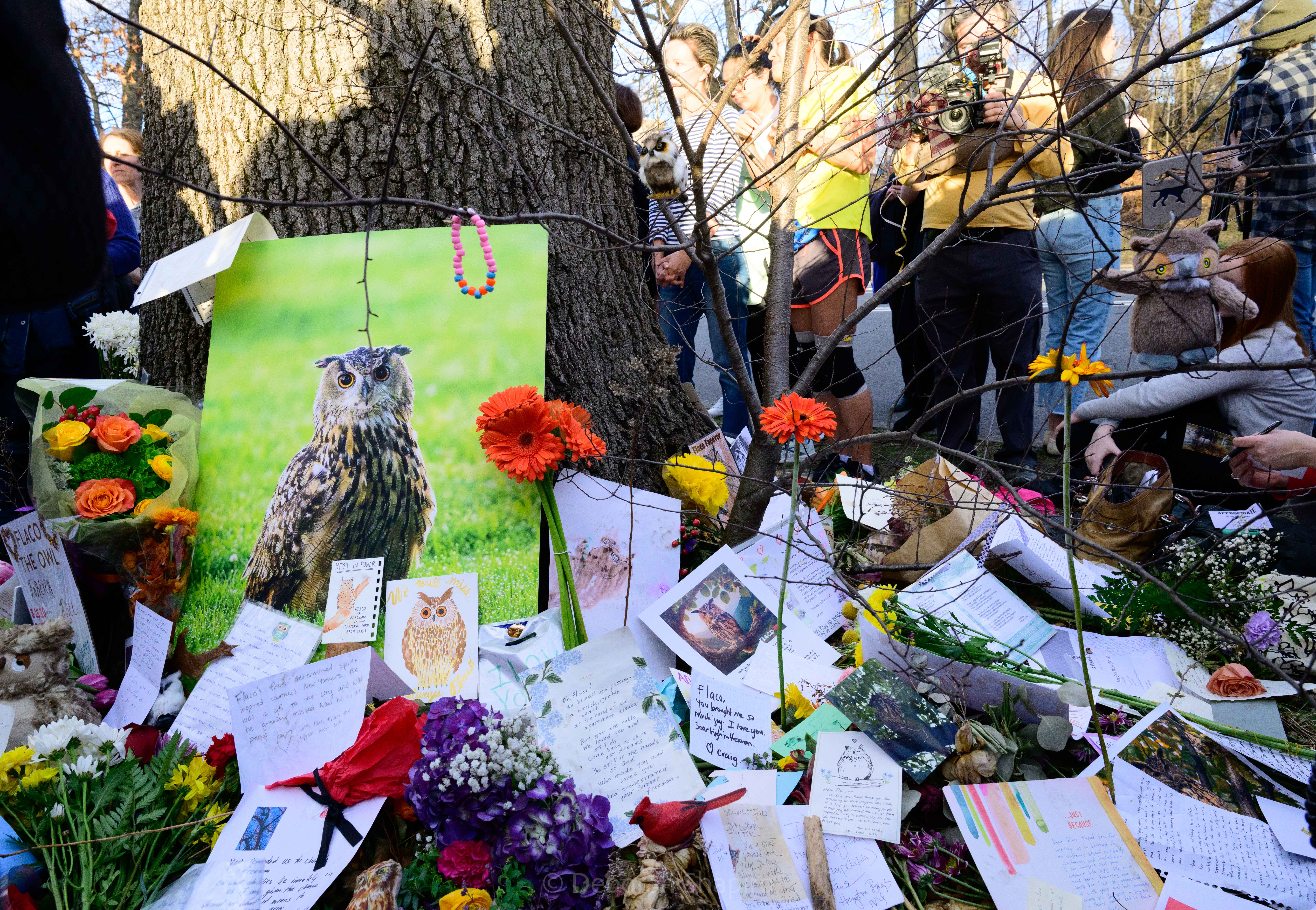
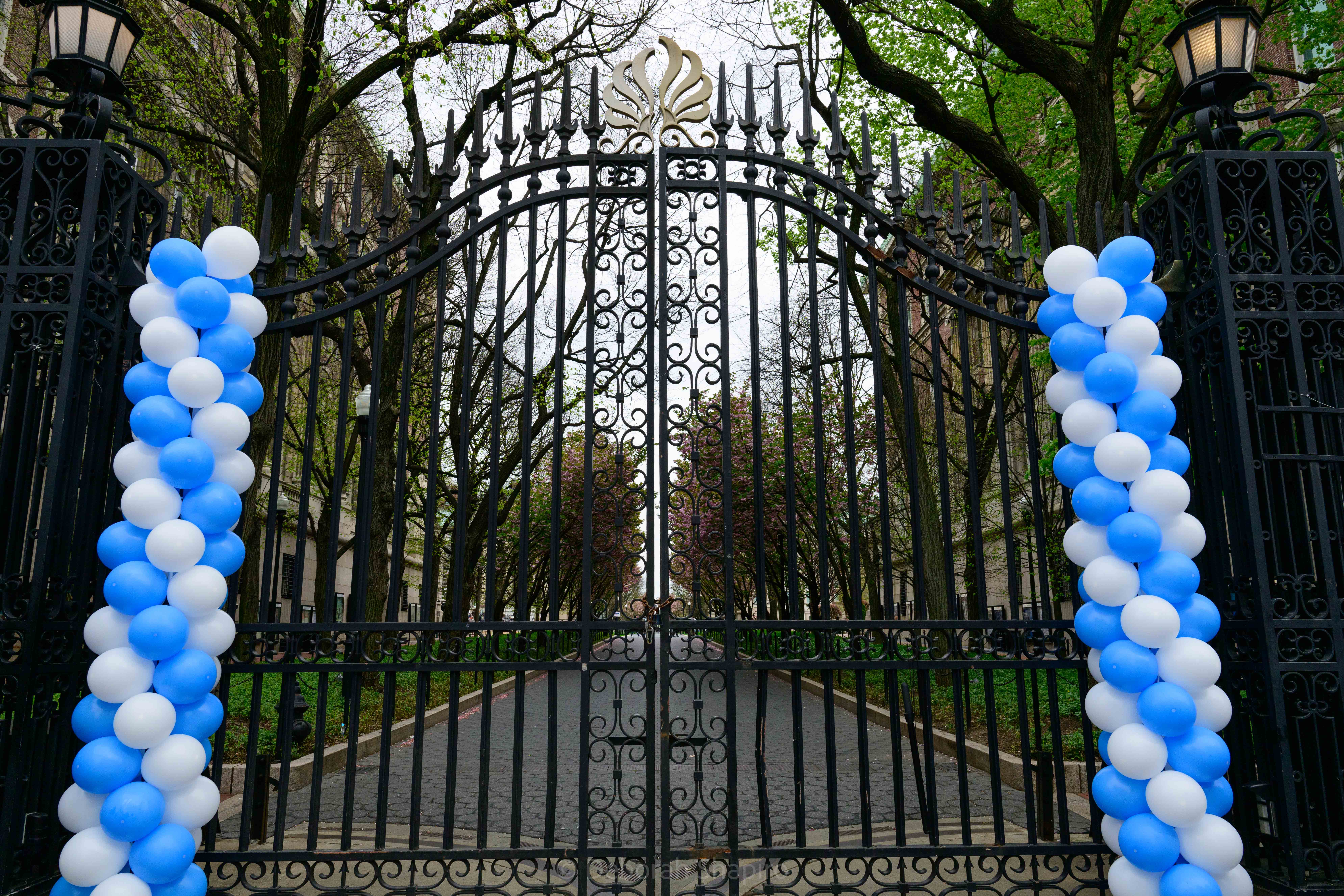
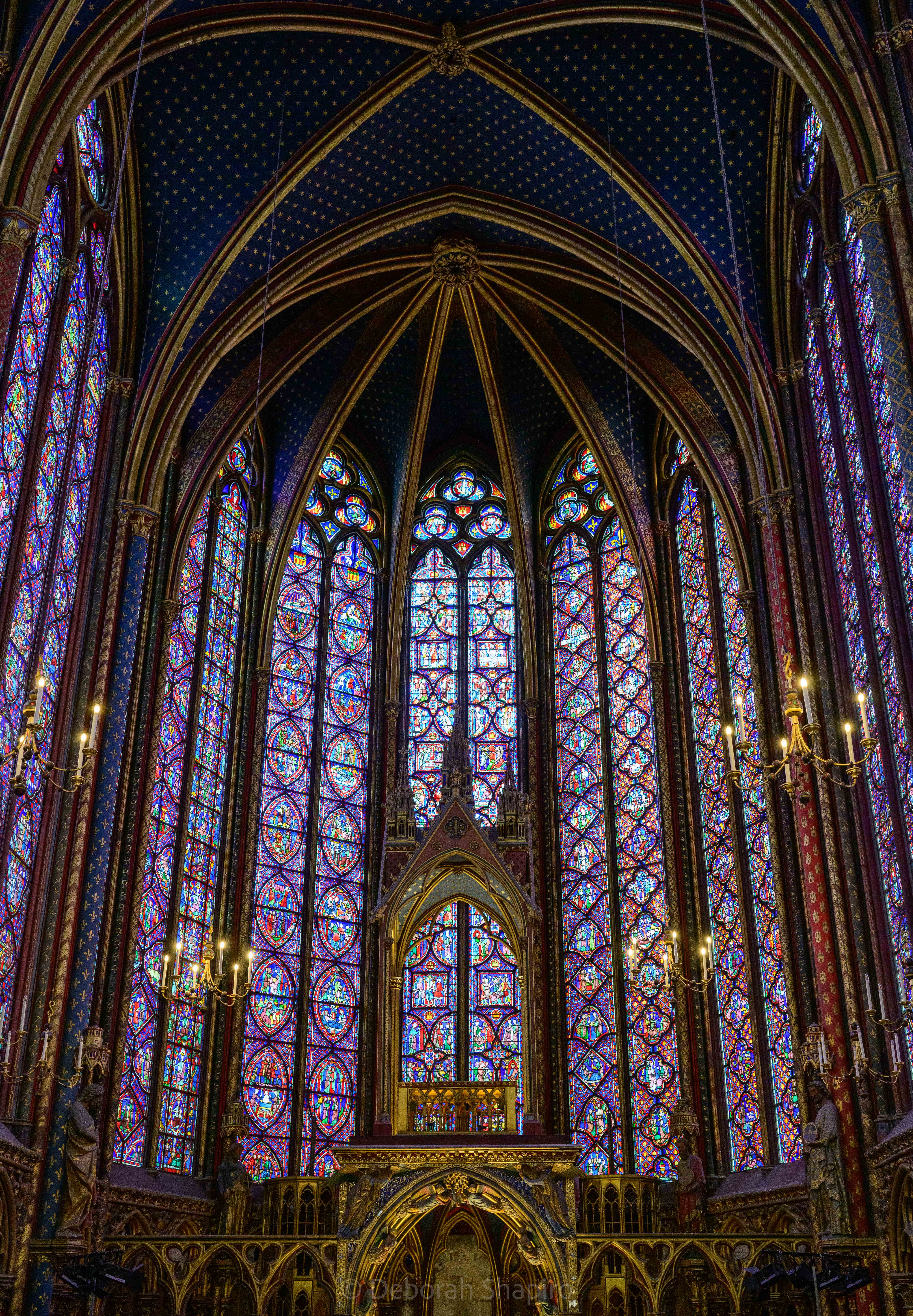
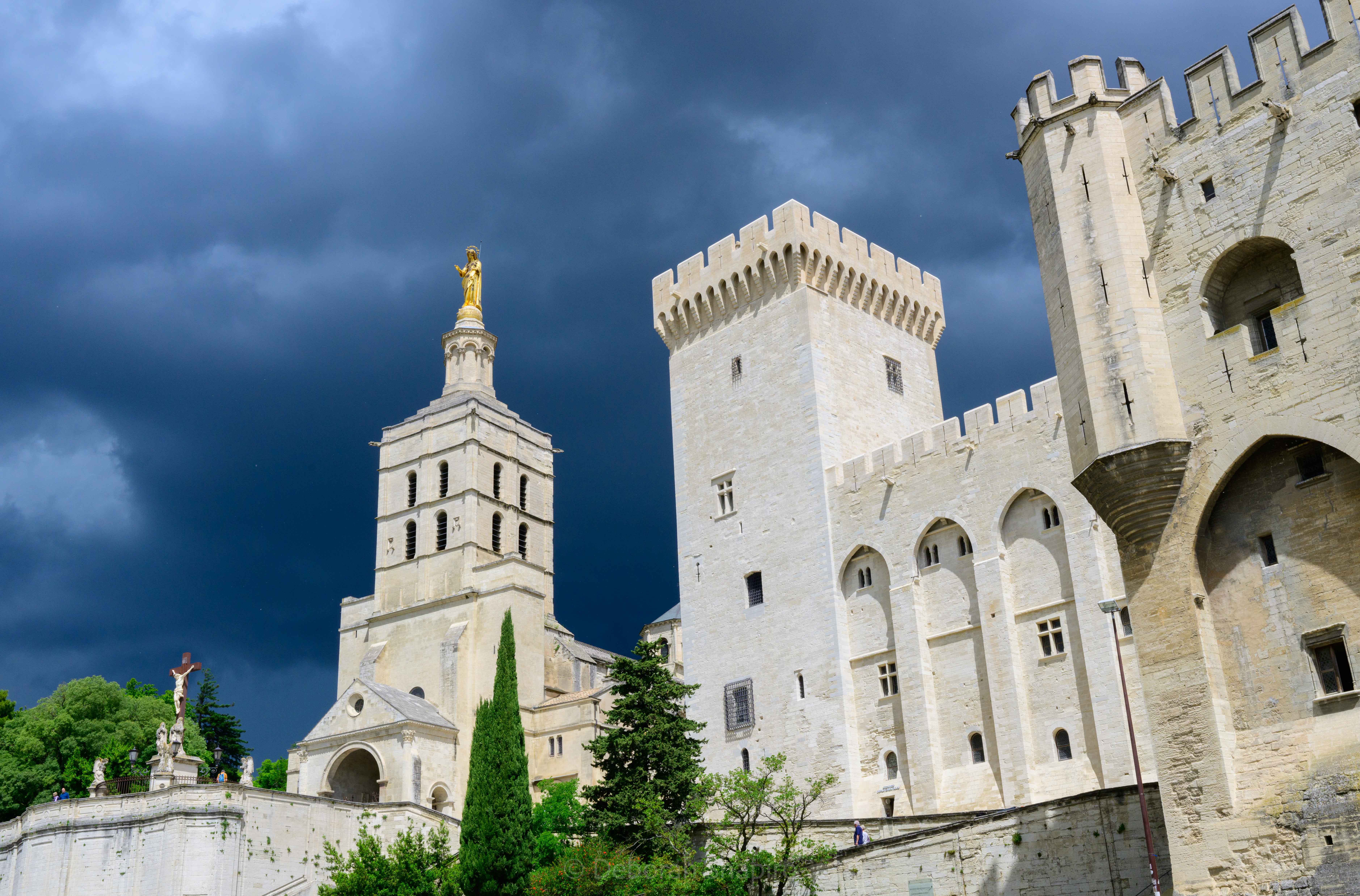
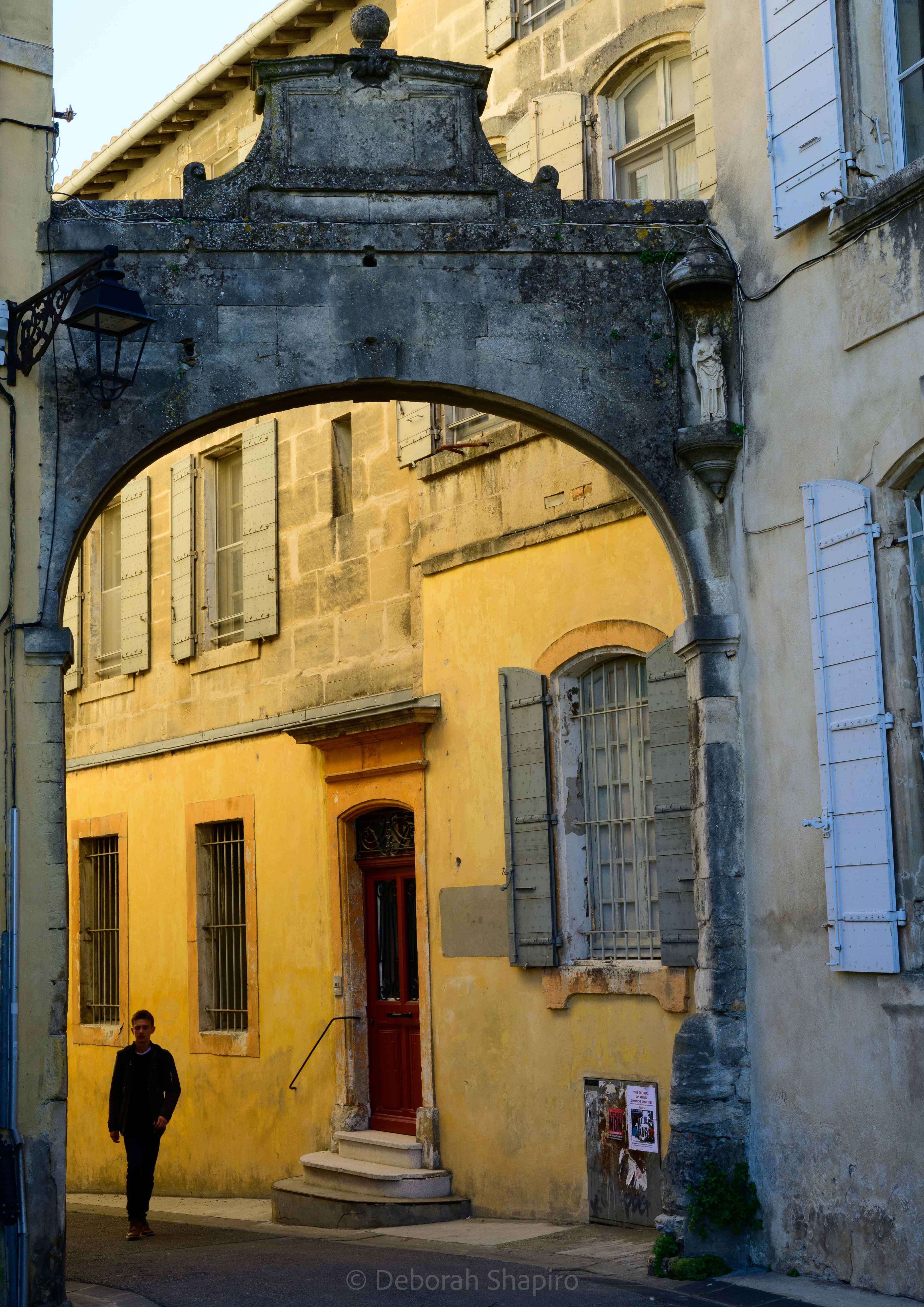
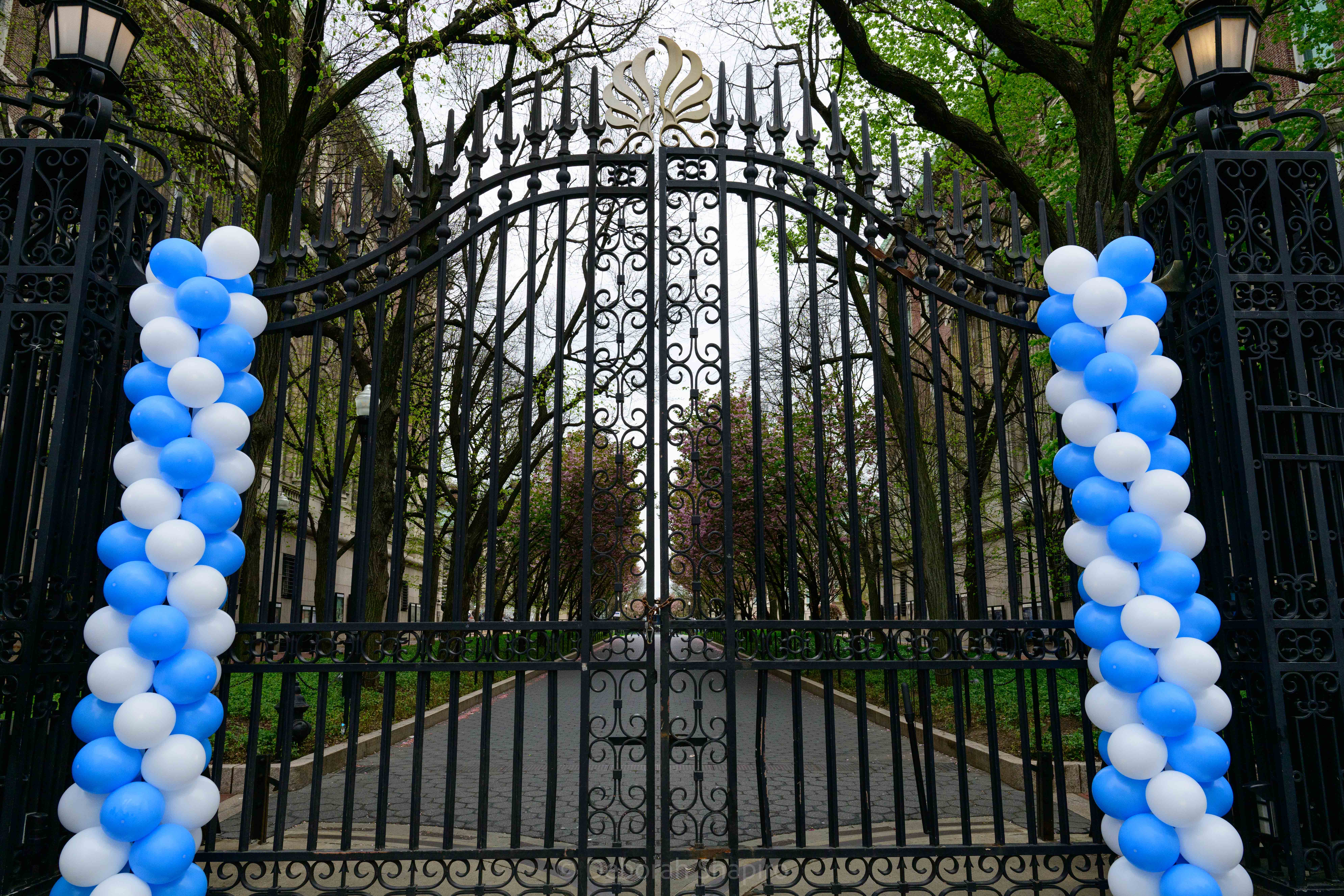
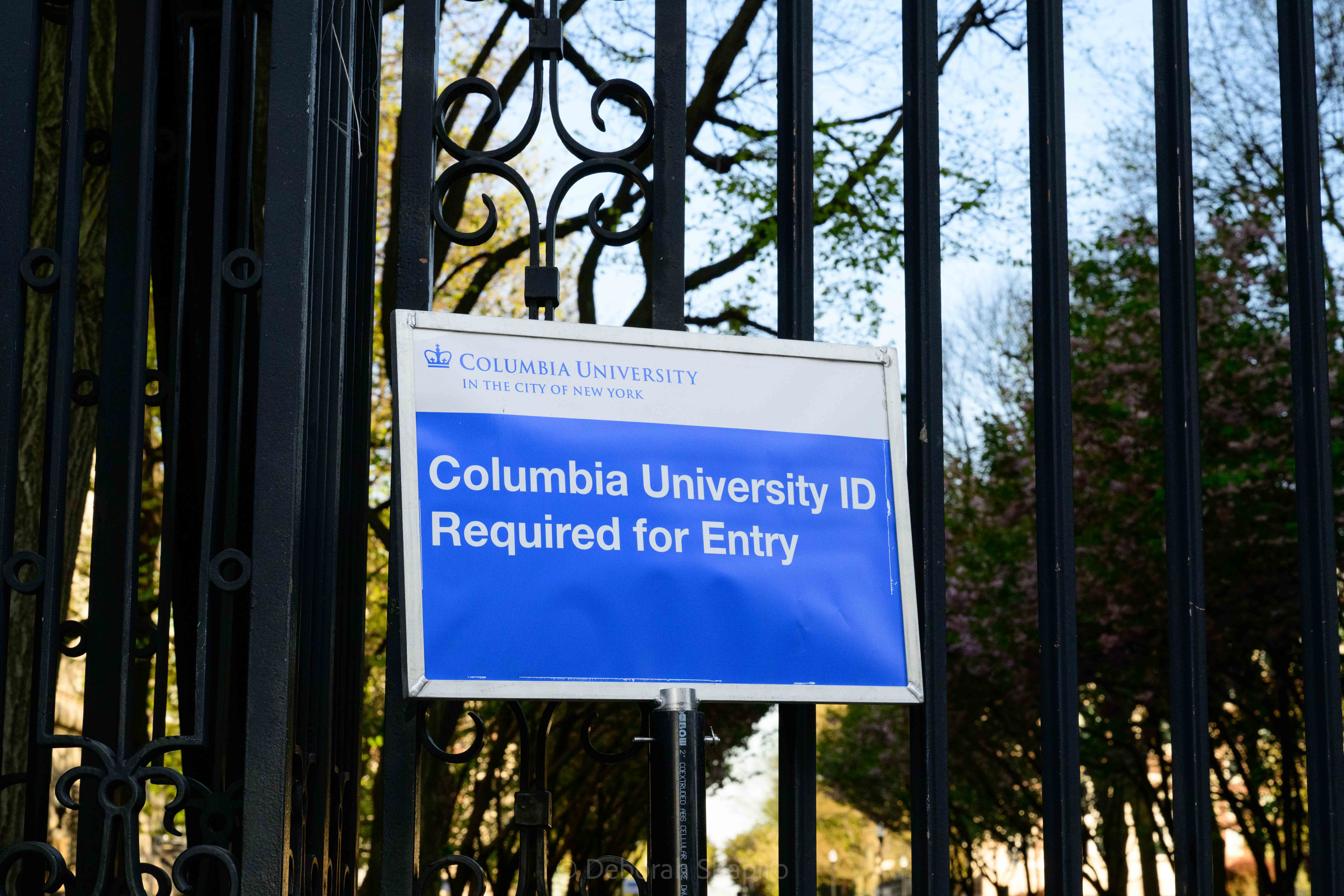
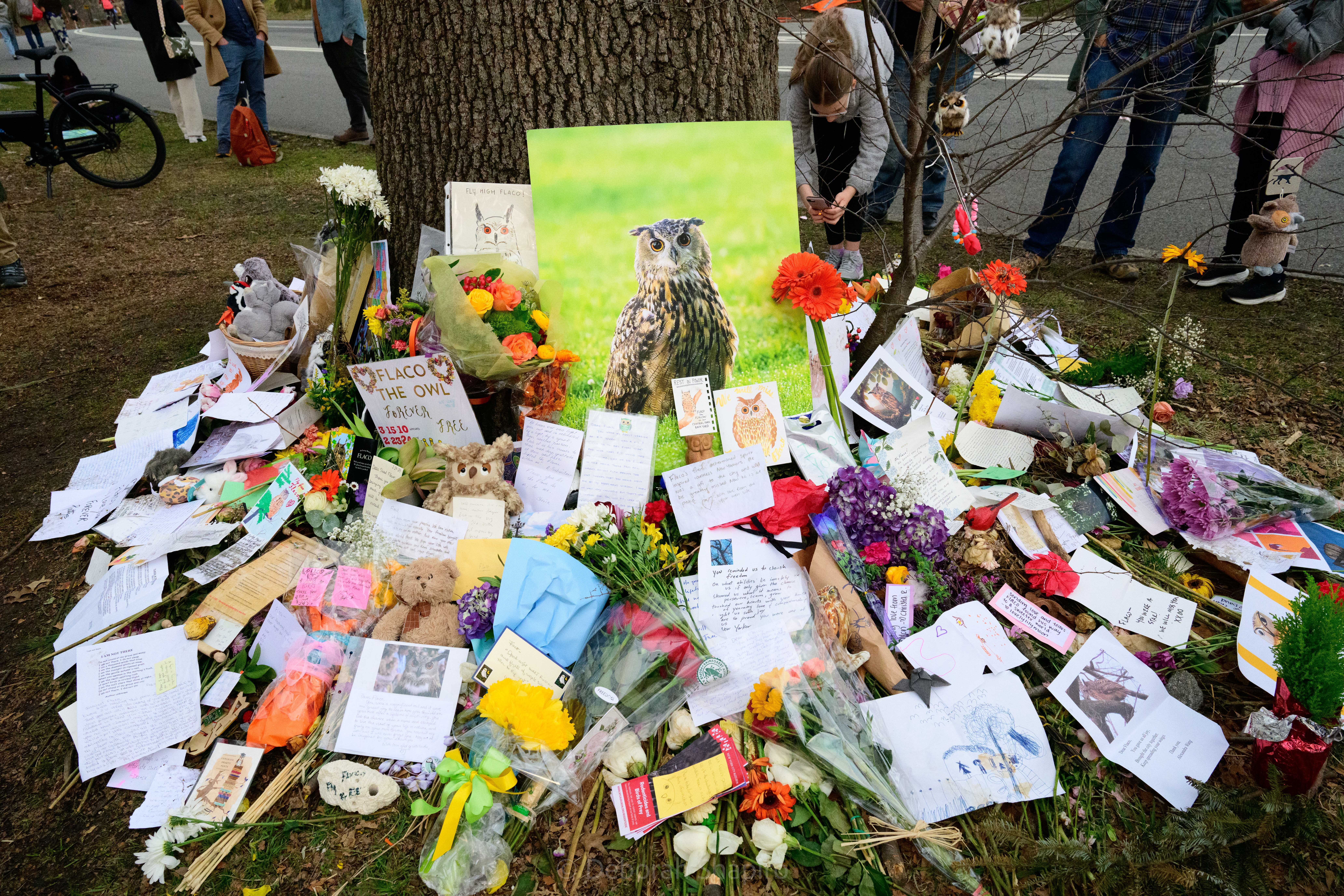
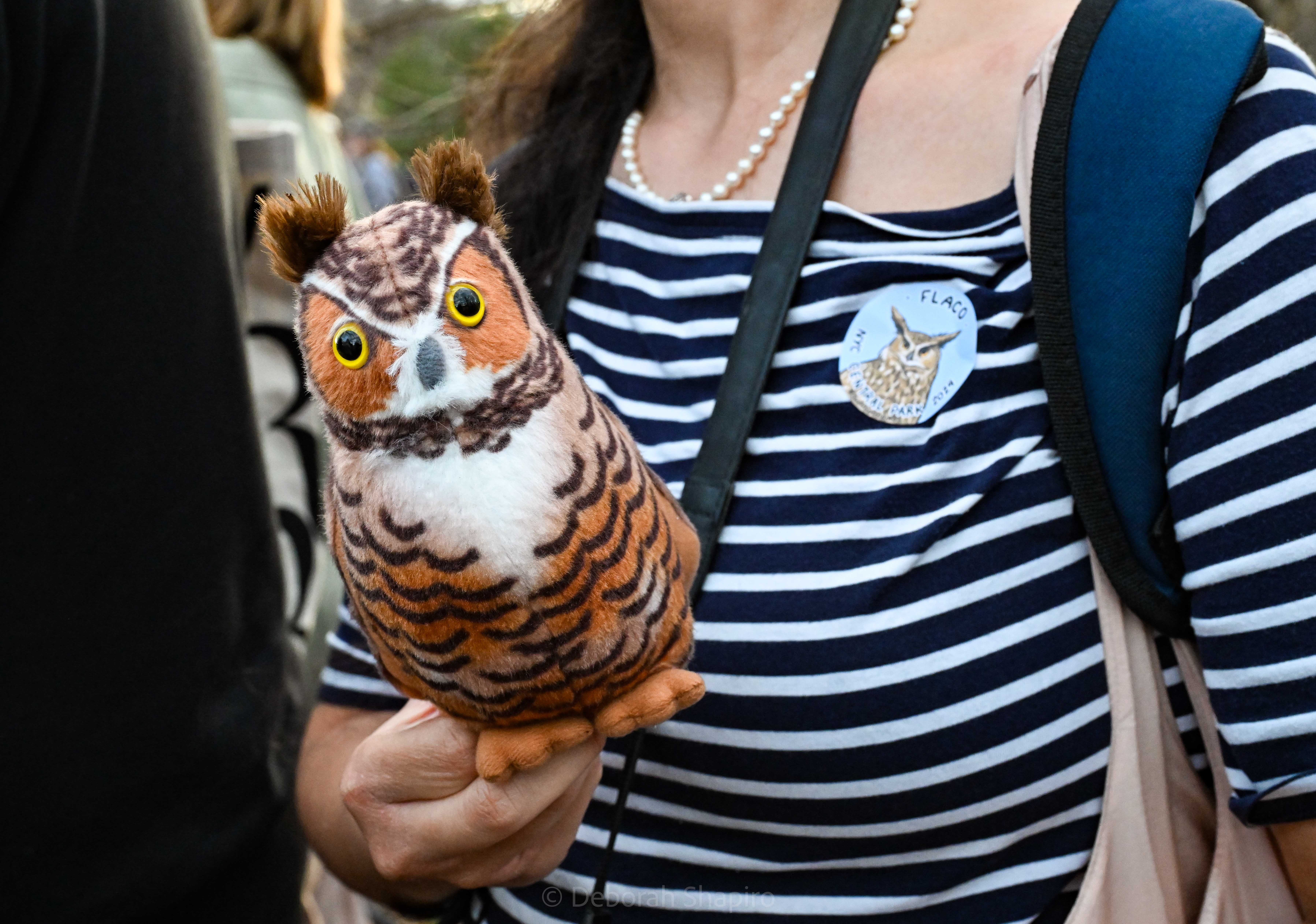
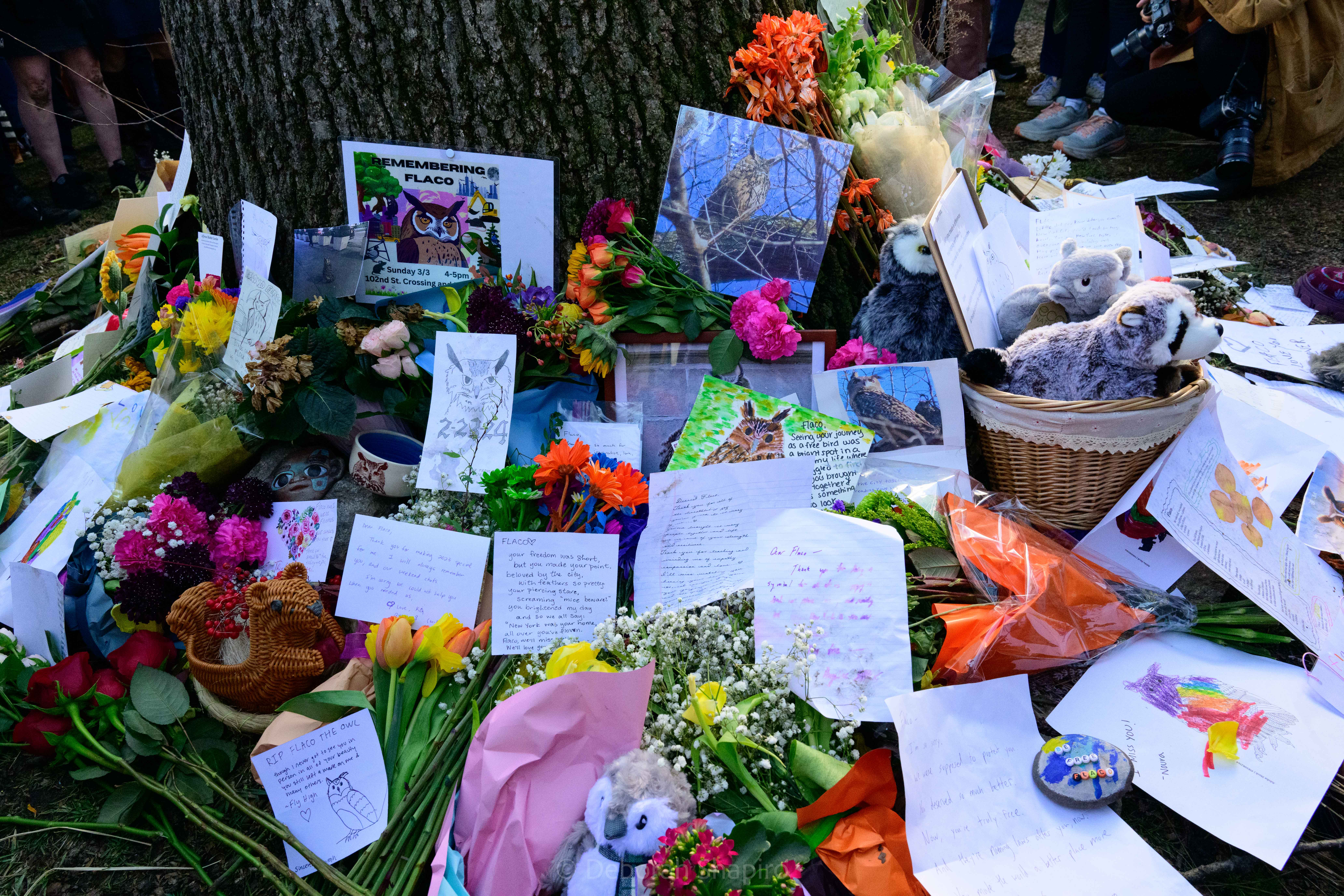
An installation of shimmering colored ribbons bearing the prayers and wishes of people from the community hung from the ceiling of the Cathedral of St. John the Divine. February 2024The annual Lunar New Year parade in Chinatown celebrating the Year of the Dragon. February 2024In Central Park, a memorial for Flaco, the beloved Eurasian Eagle Owl who escaped from the zoo and lived free for a year before dying of rodenticide poisoning. He captured the hearts of New Yorkers and people all over the world. March 2024The main gate to the Columbia University campus was locked and students protesting the war in Gaza were removed from the campus by police. In the photo, balloons with the colors of the university decorate the gate. Eight months later, the campus remains closed to anyone without a university ID. April 2024A faint rainbow over Notre-Dame de Paris, still under reconstruction in May 2024 five years after a devastating fire nearly destroyed it. The Sainte-Chapelle in Paris, an indescribably beautiful High Gothic chapel built in the 13th century by King Louis IX to house relics. May 2024With a passing thunderstorm across the Rhone River, dramatic light illuminates the Papal Palace in Avignon, France. May 2024A street scene in Arles, France shows the light and color of Provence that enchanted Van Gogh. May 2024
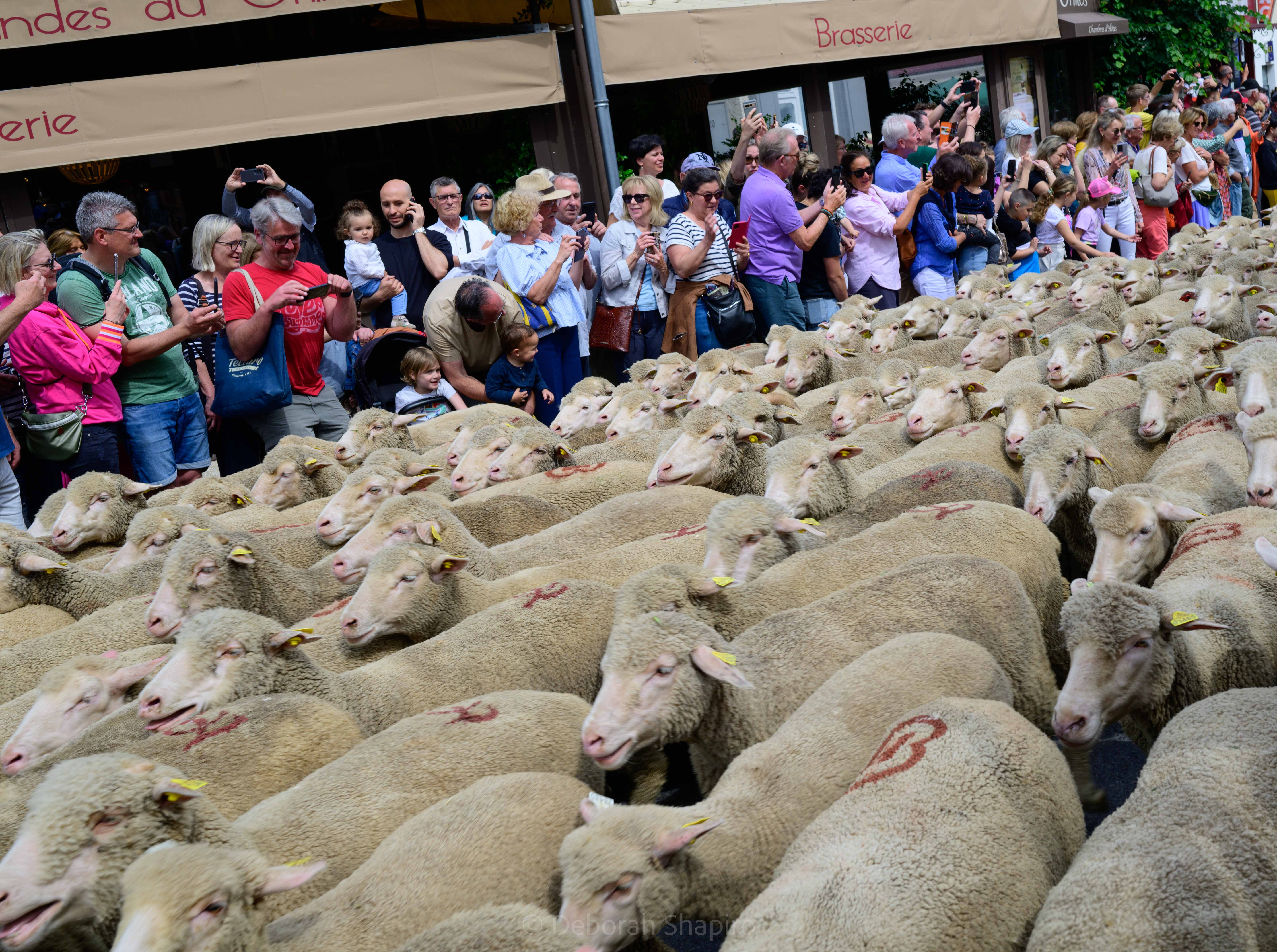
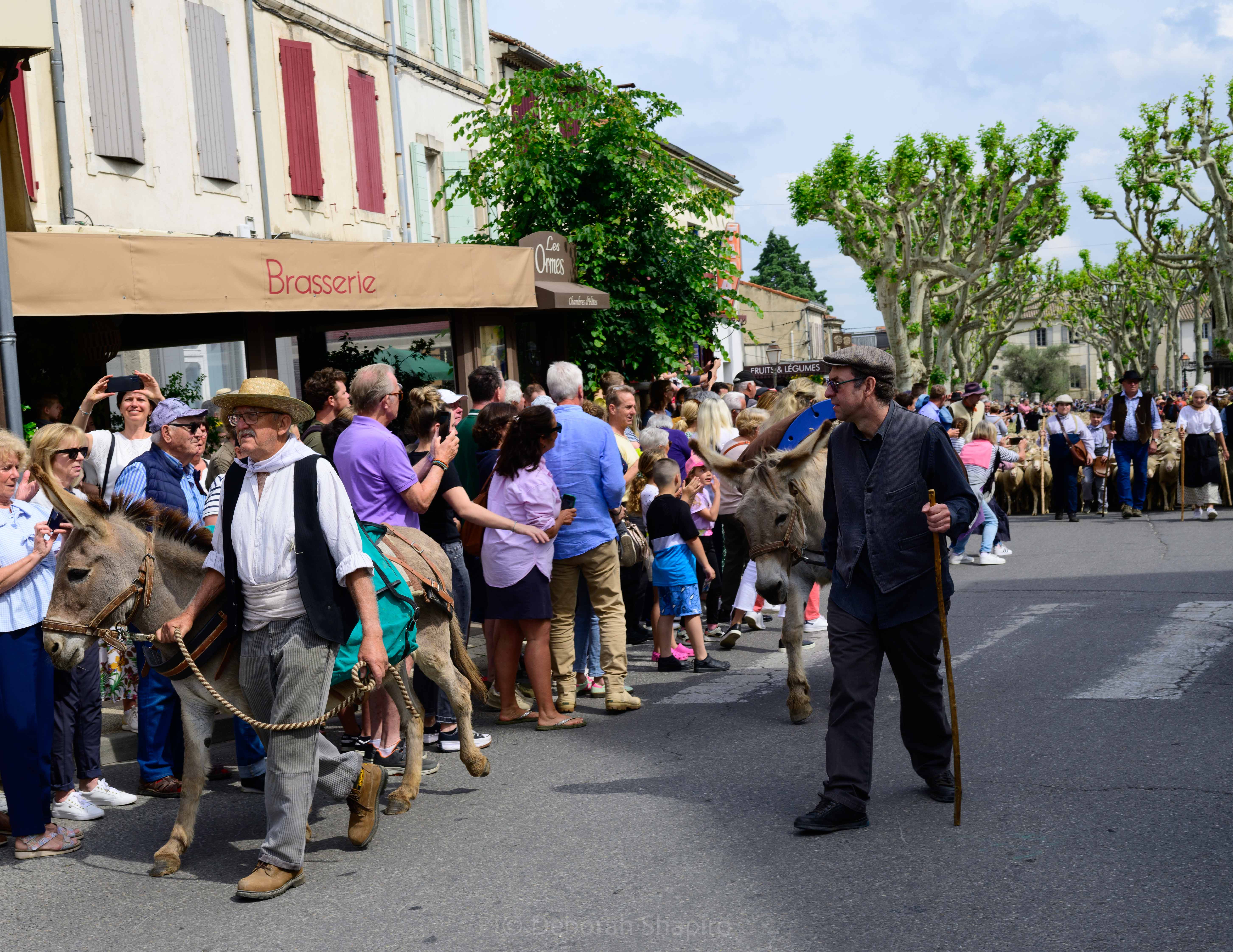
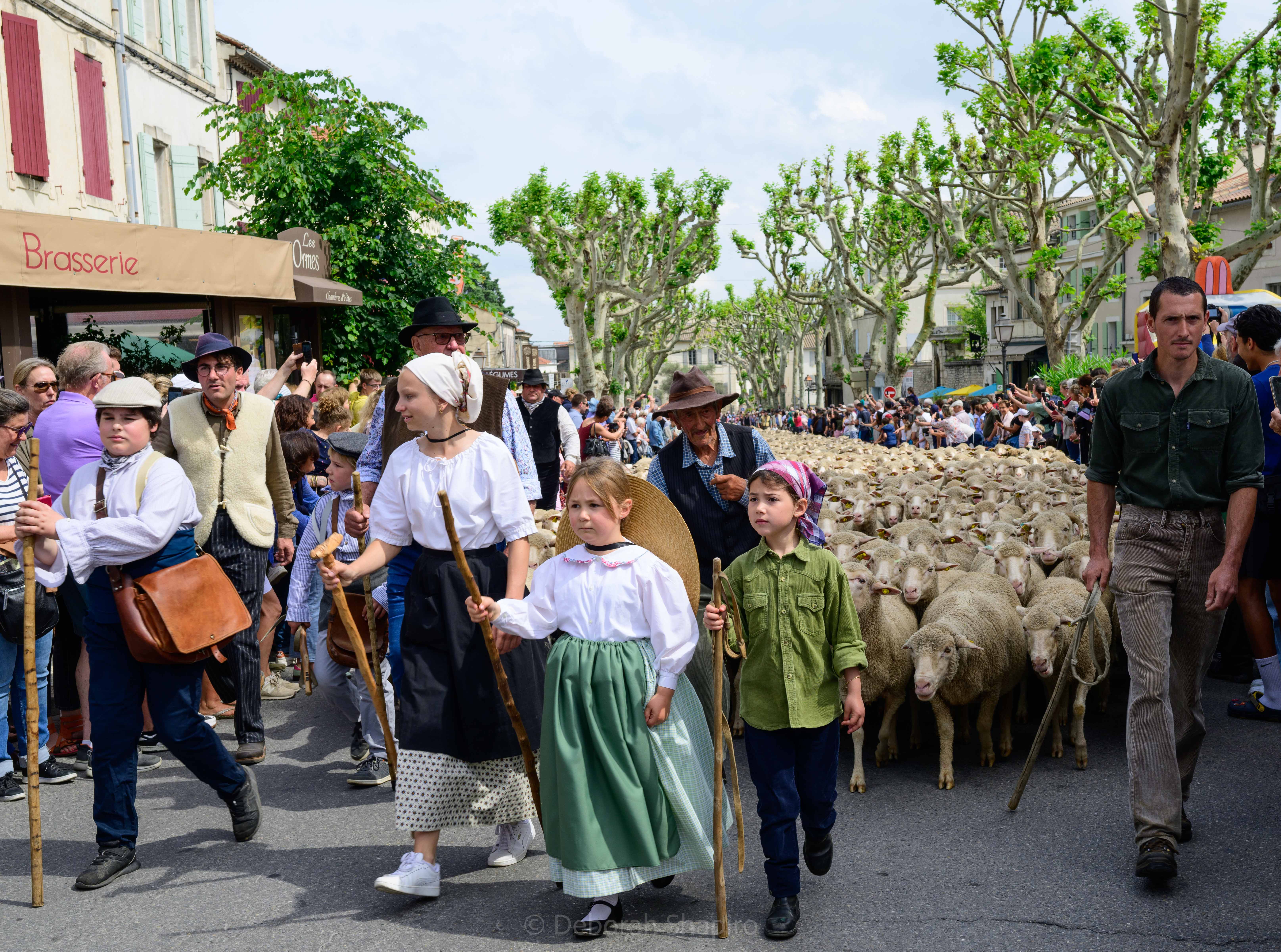
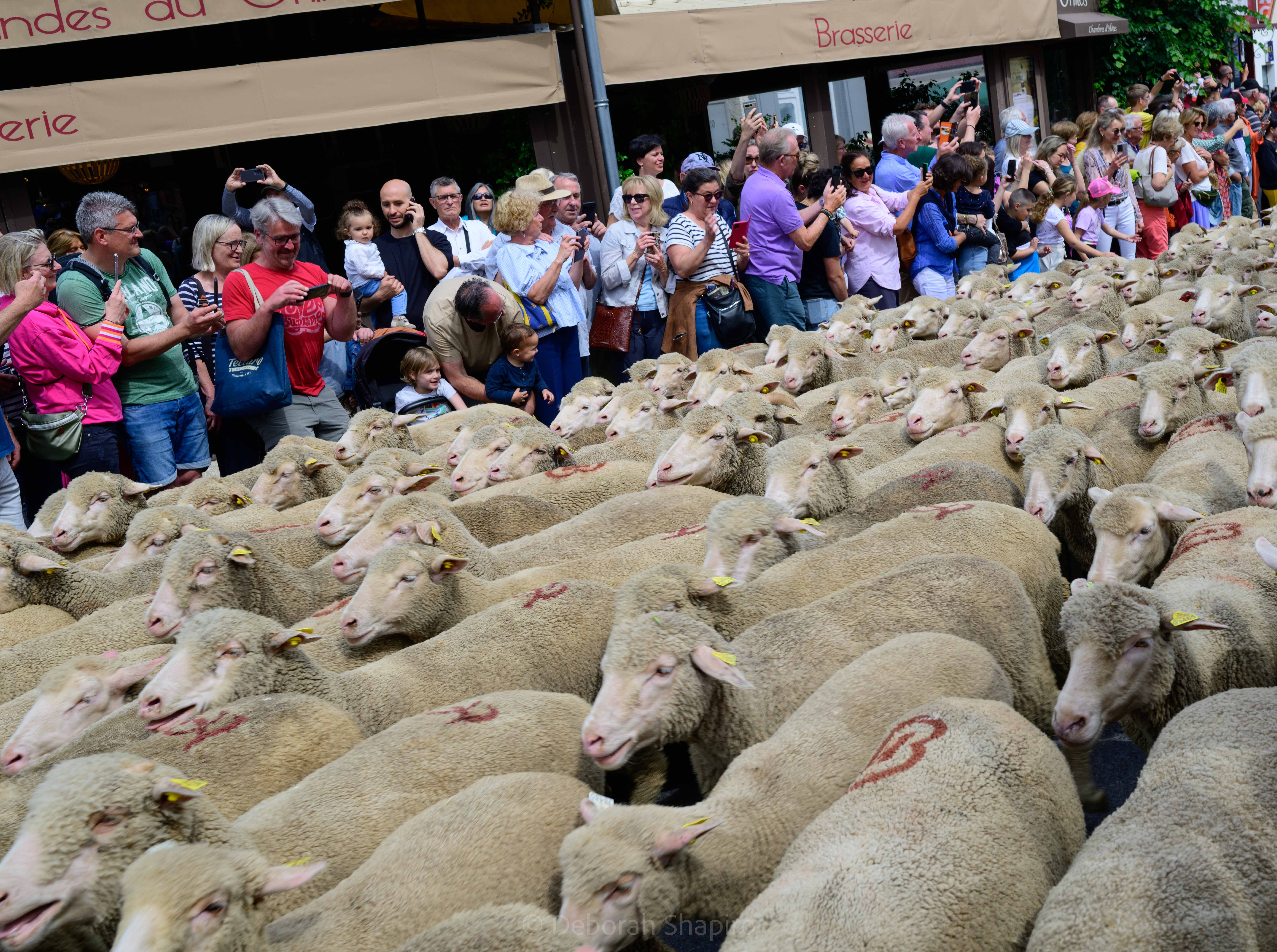
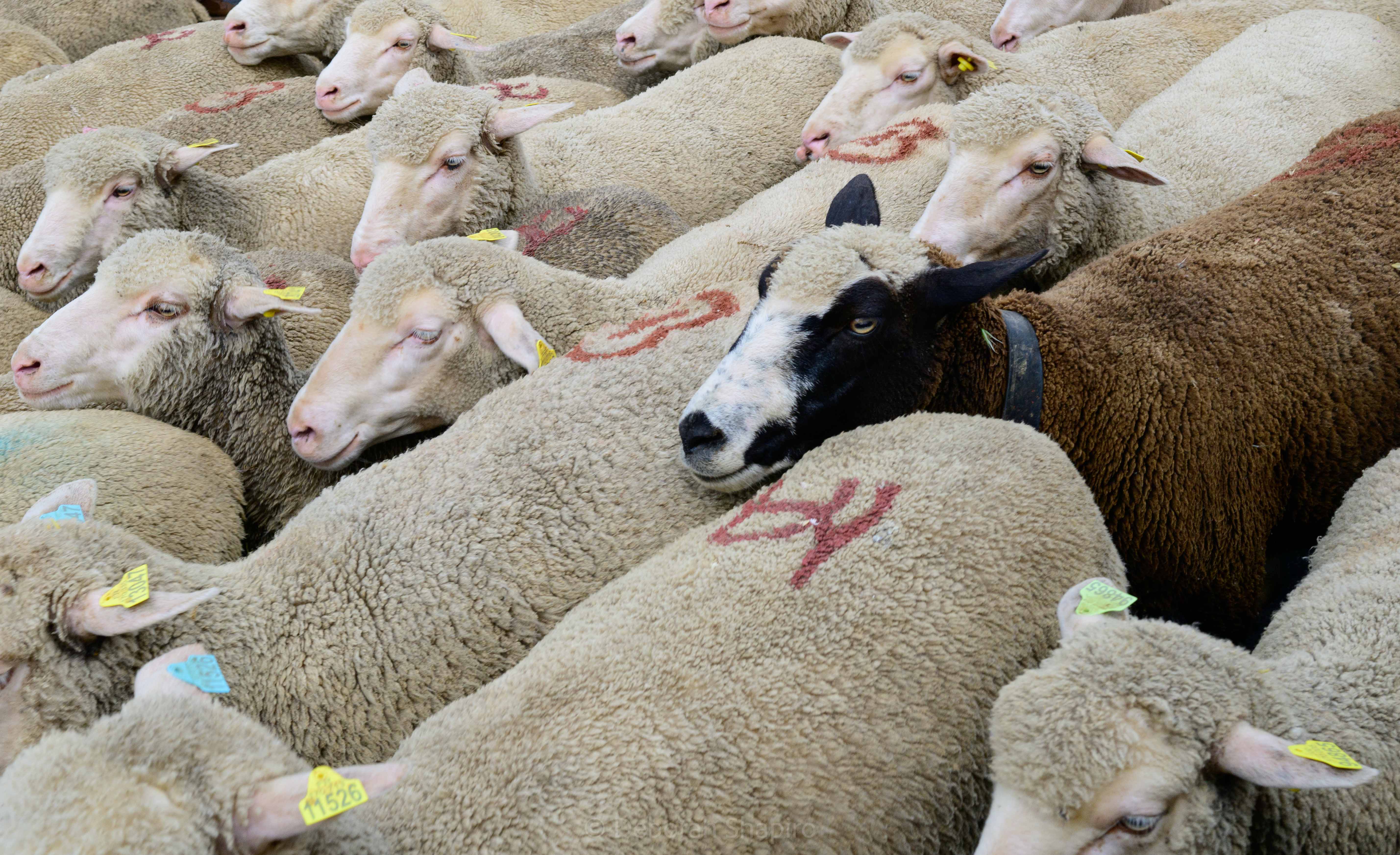
In St-Rémy en Provence, the Transhumance celebrates the annual passage of sheep from the valleys to their summer grazing grounds high in the surrounding mountains. After the procession of the bewildered sheep running through the village streets, hungry French spectators descent on the open air market and the restaurants and bars to continue the celebration in the way the French know best. The Transhumance is considered part of the Intangible Cultural Heritage of France and always takes place on Pentecost Monday, a national holiday in May.
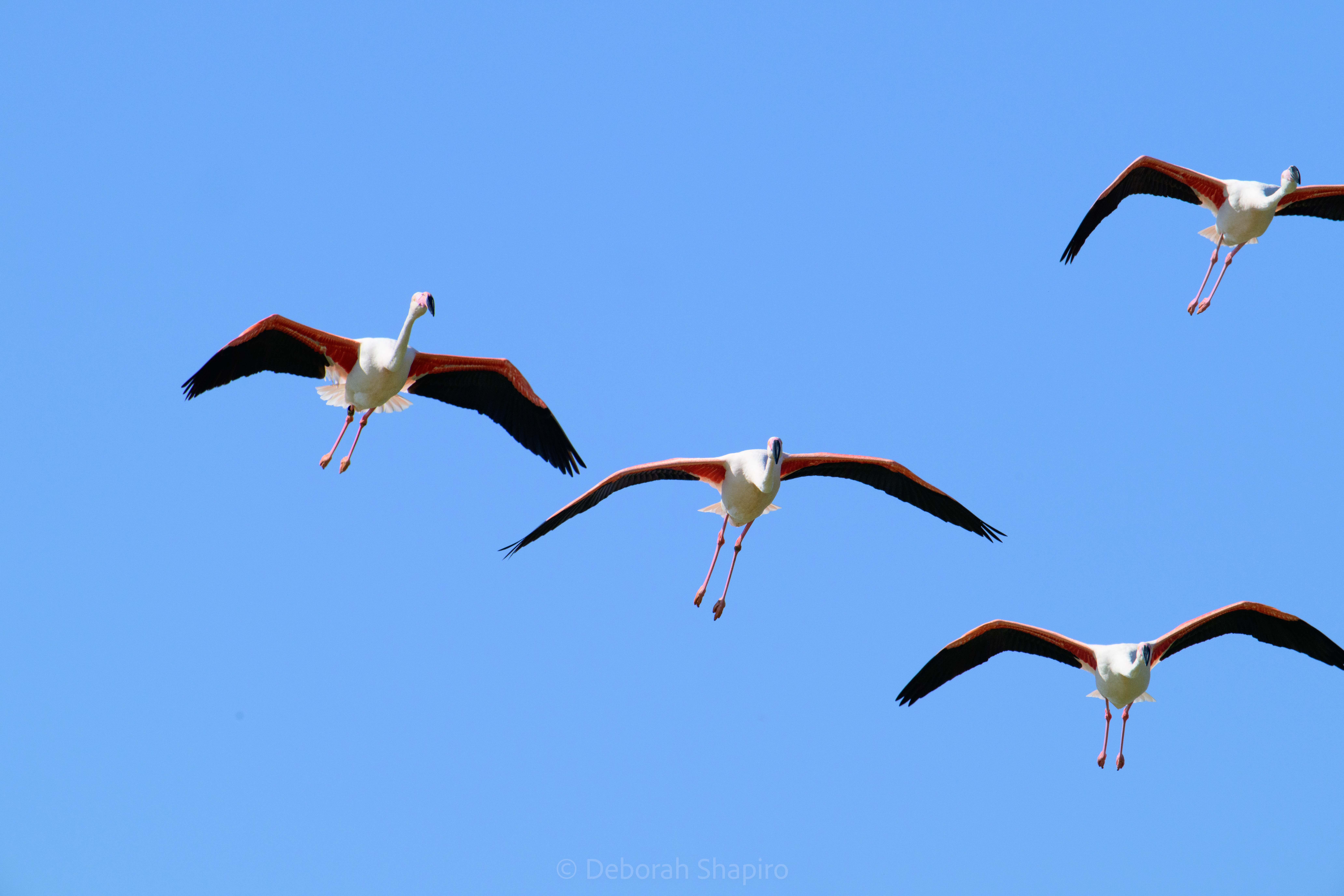
Greater Flamingos (Phoenicopterus roseus, Flamands Roses) flying over the Camargue in southern France. May 2024
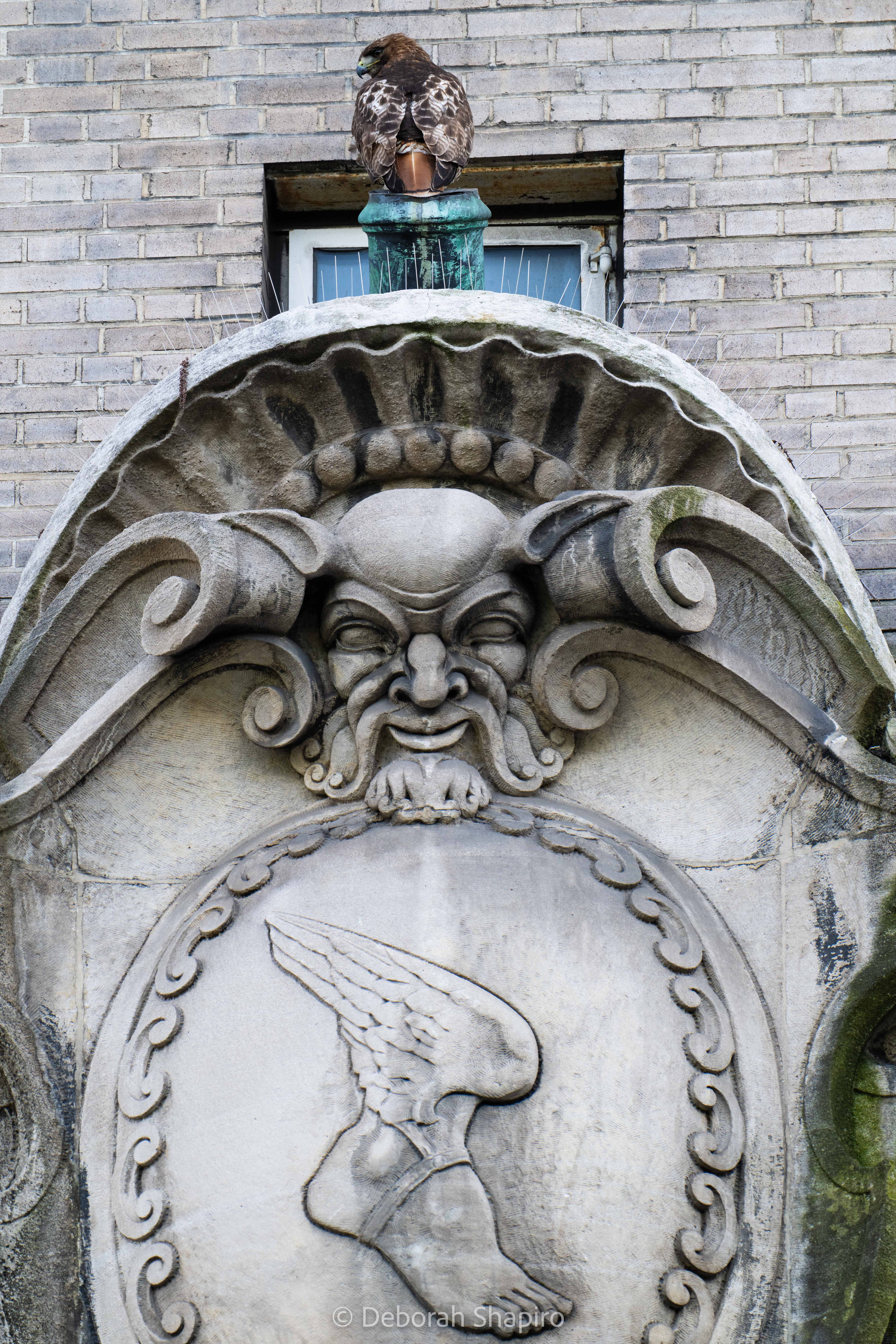
In the spring, a pair of Red-Tailed Hawks (Buteo jamaicensis) chose to build their nest on the facade of the New York Athletic club, some of Manhattan’s most expensive real estate. Here the female is resting above the nest and the symbol of the NYAC, a winged foot.
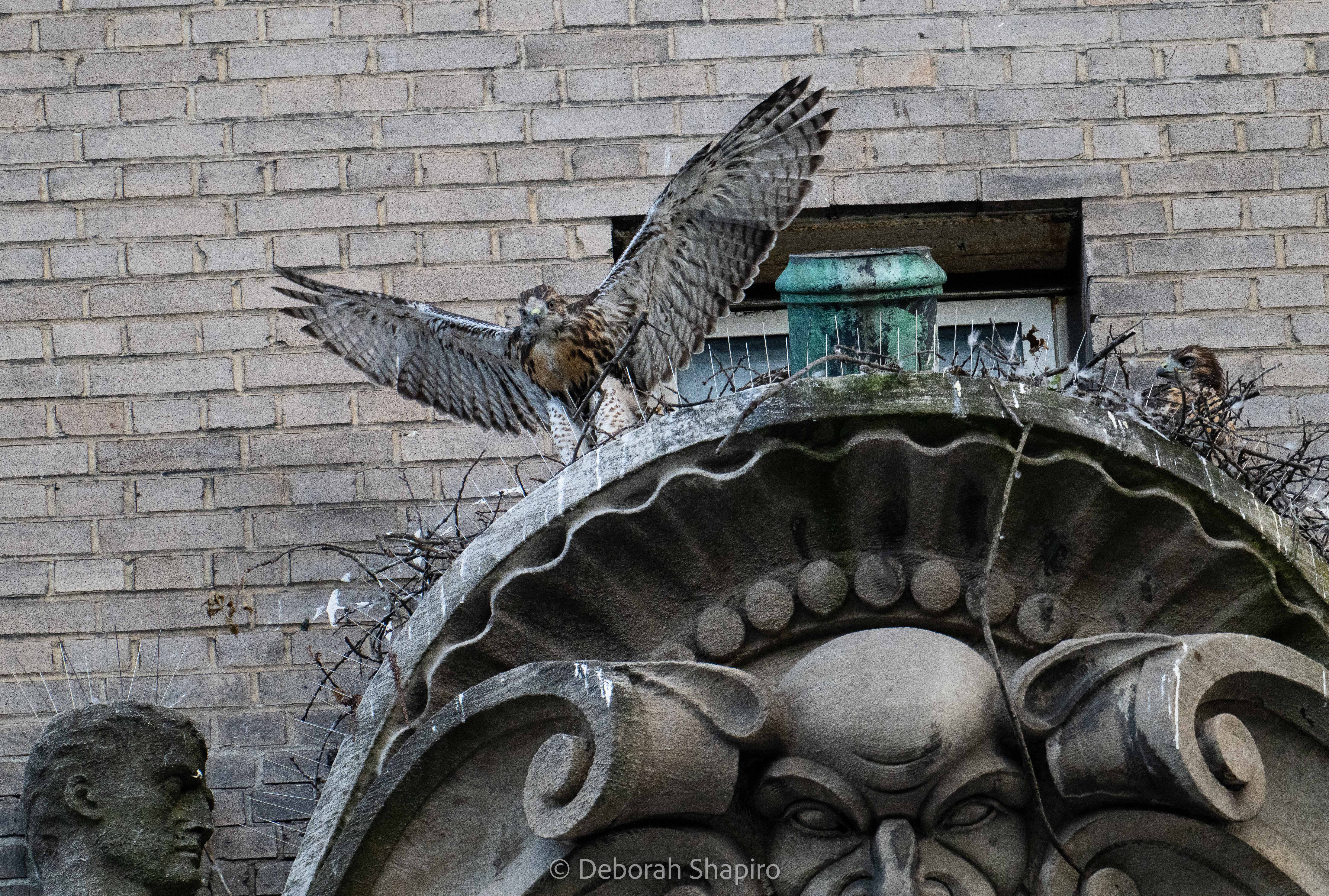
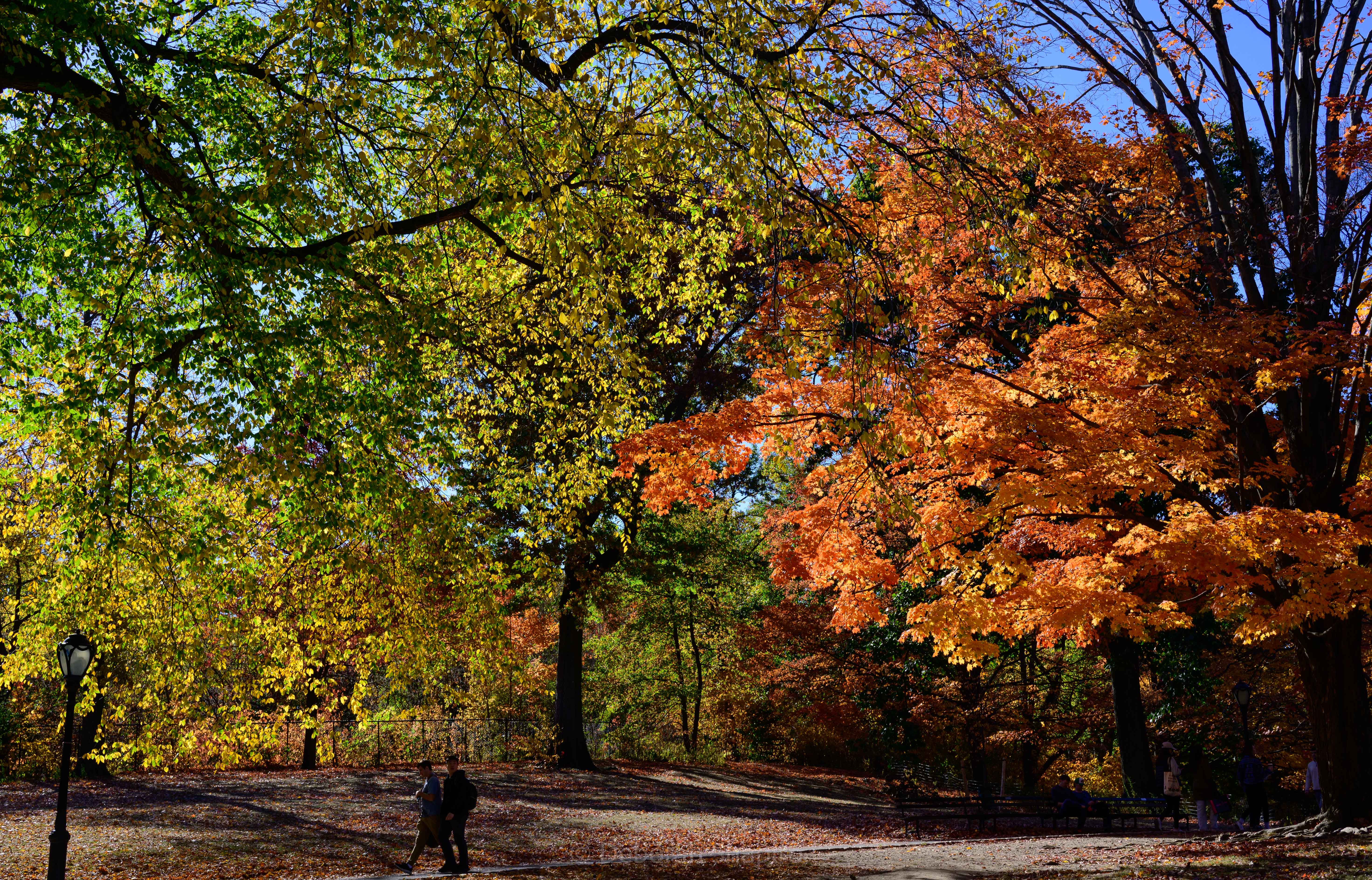
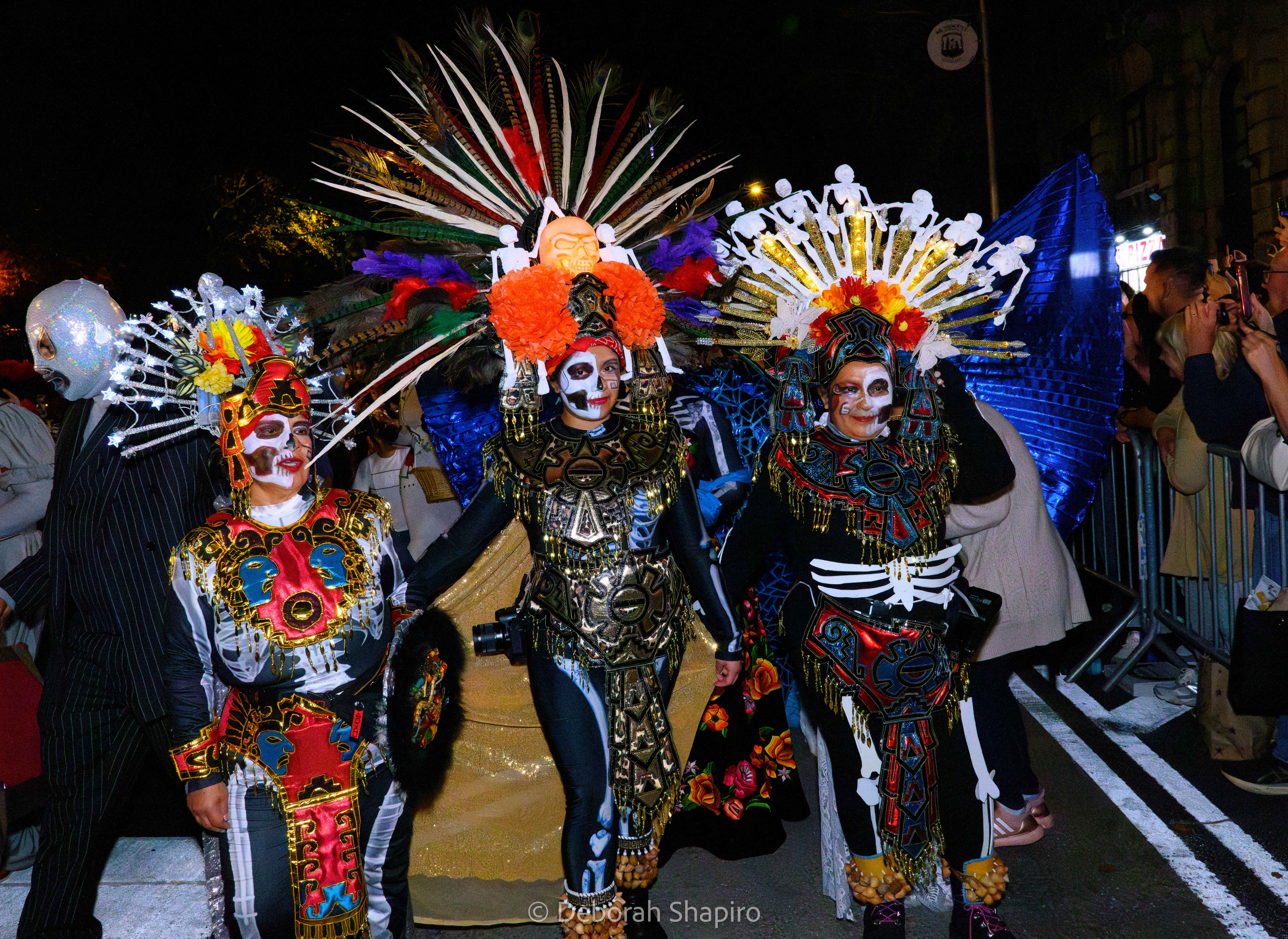
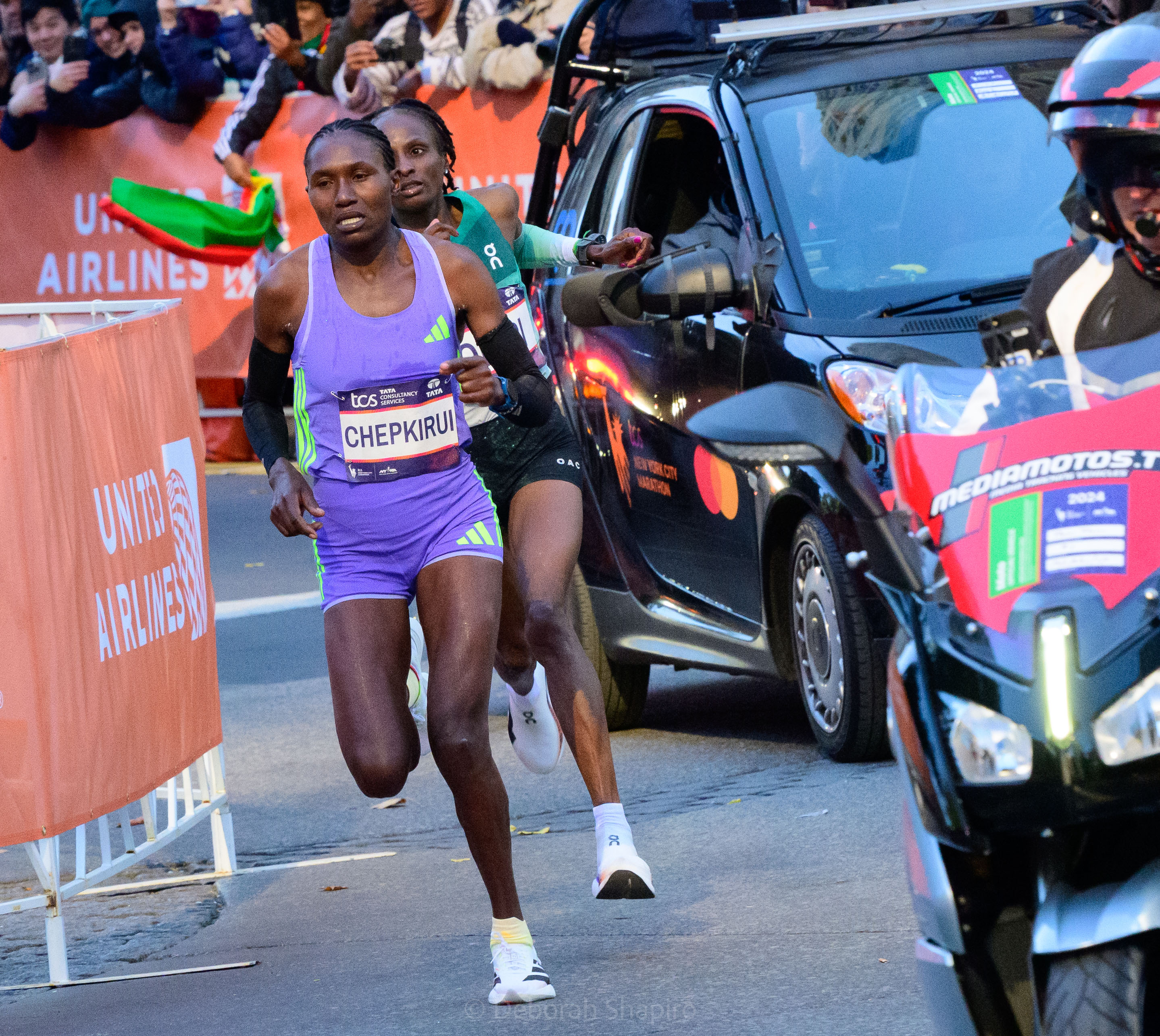
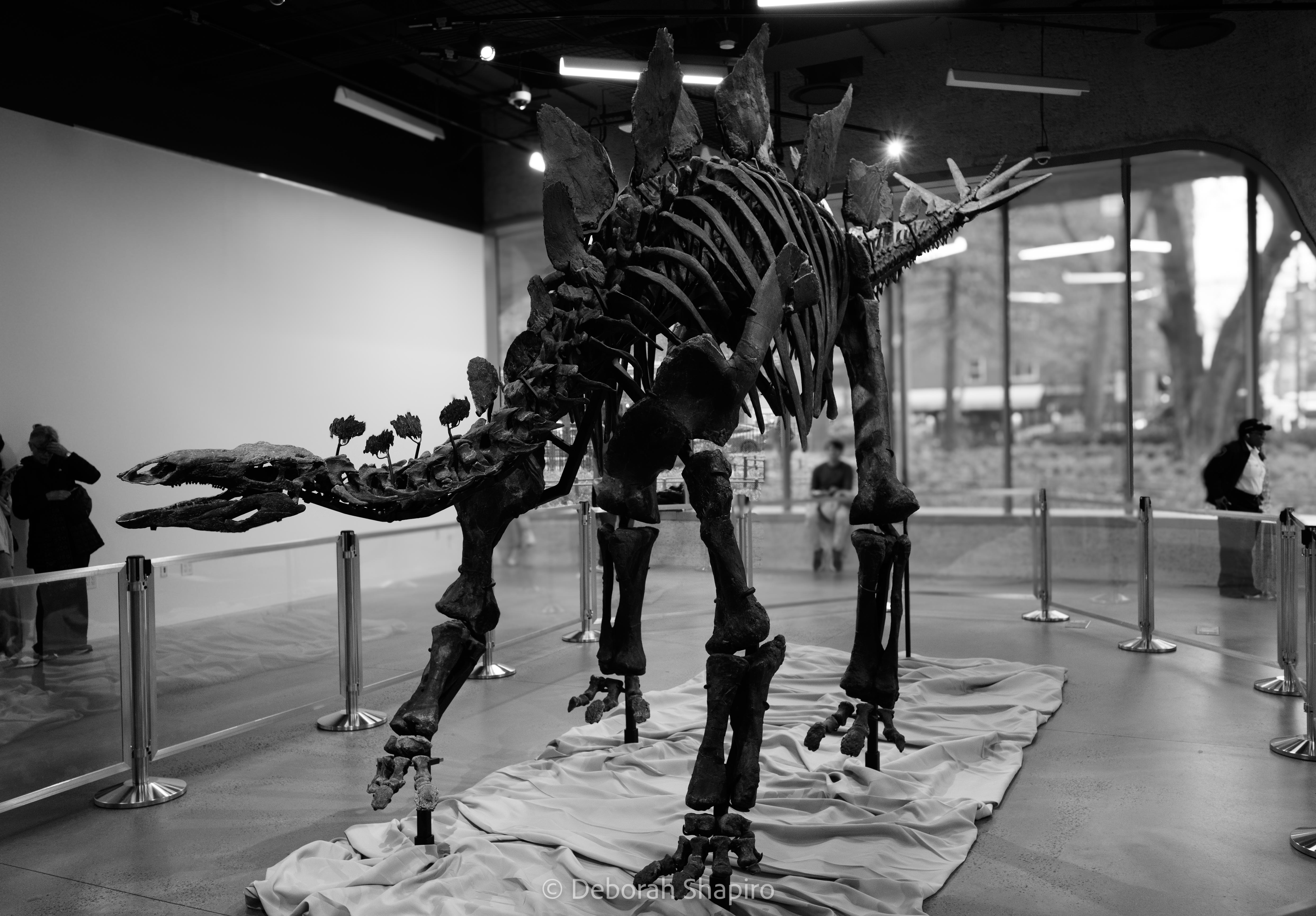
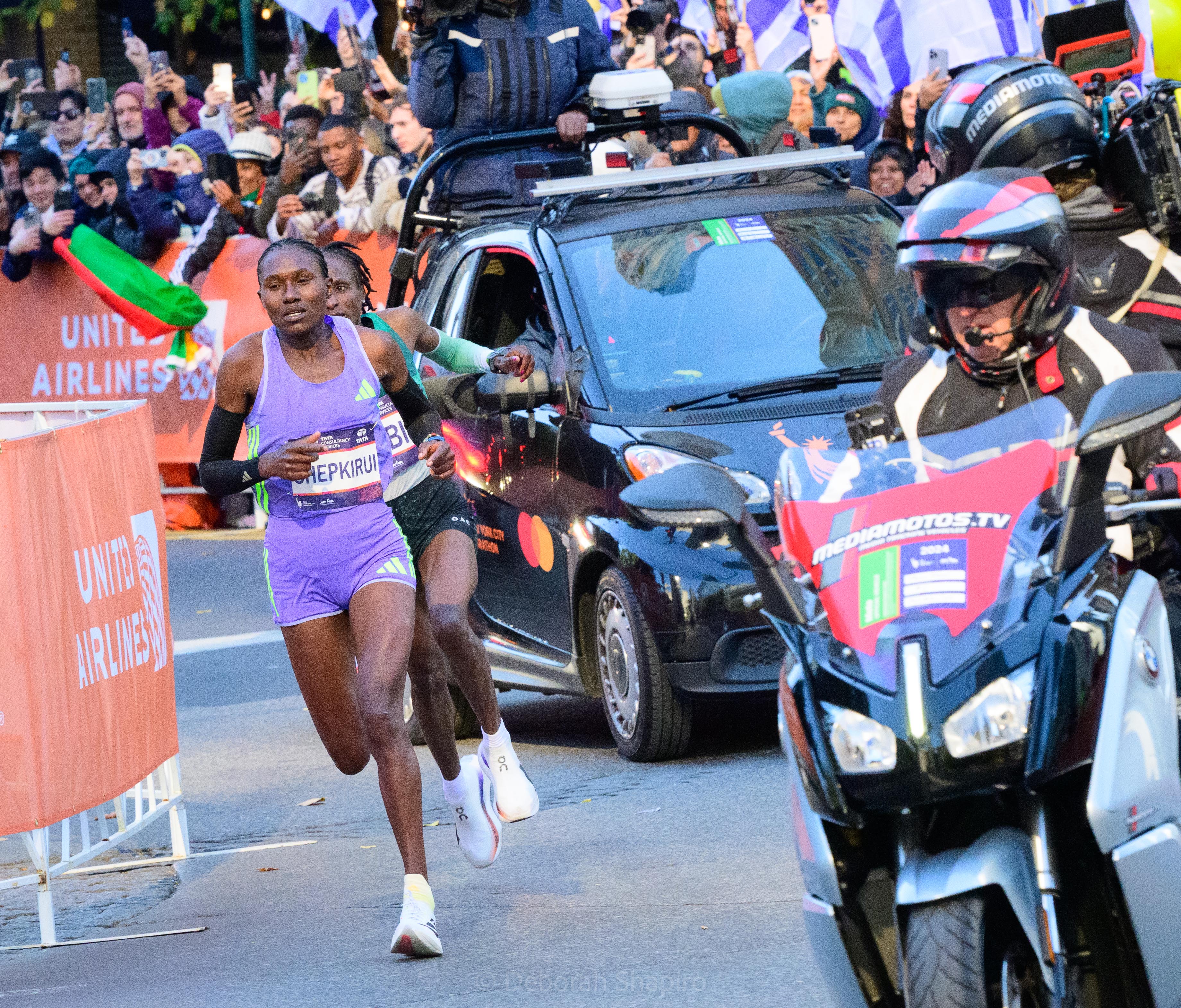
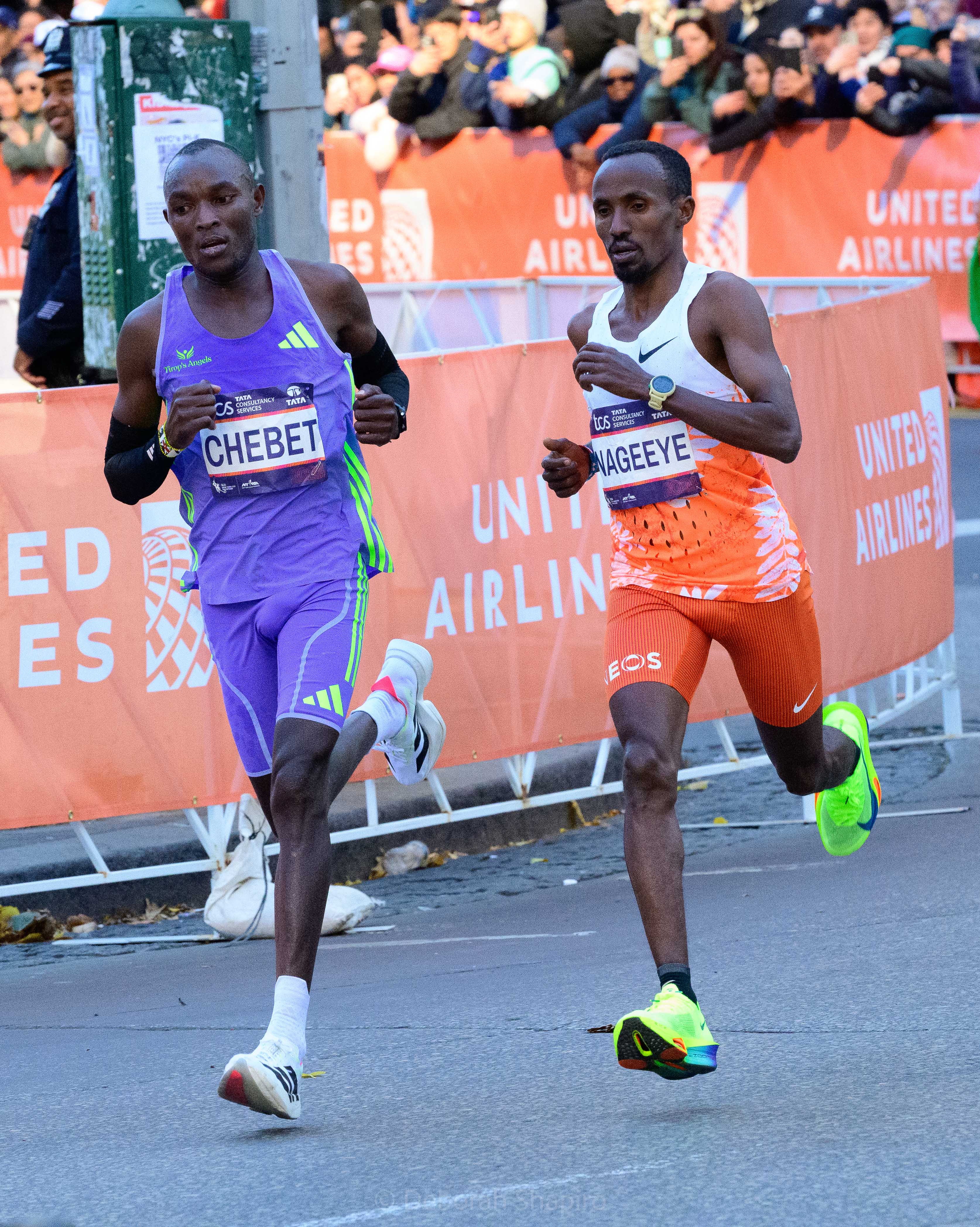
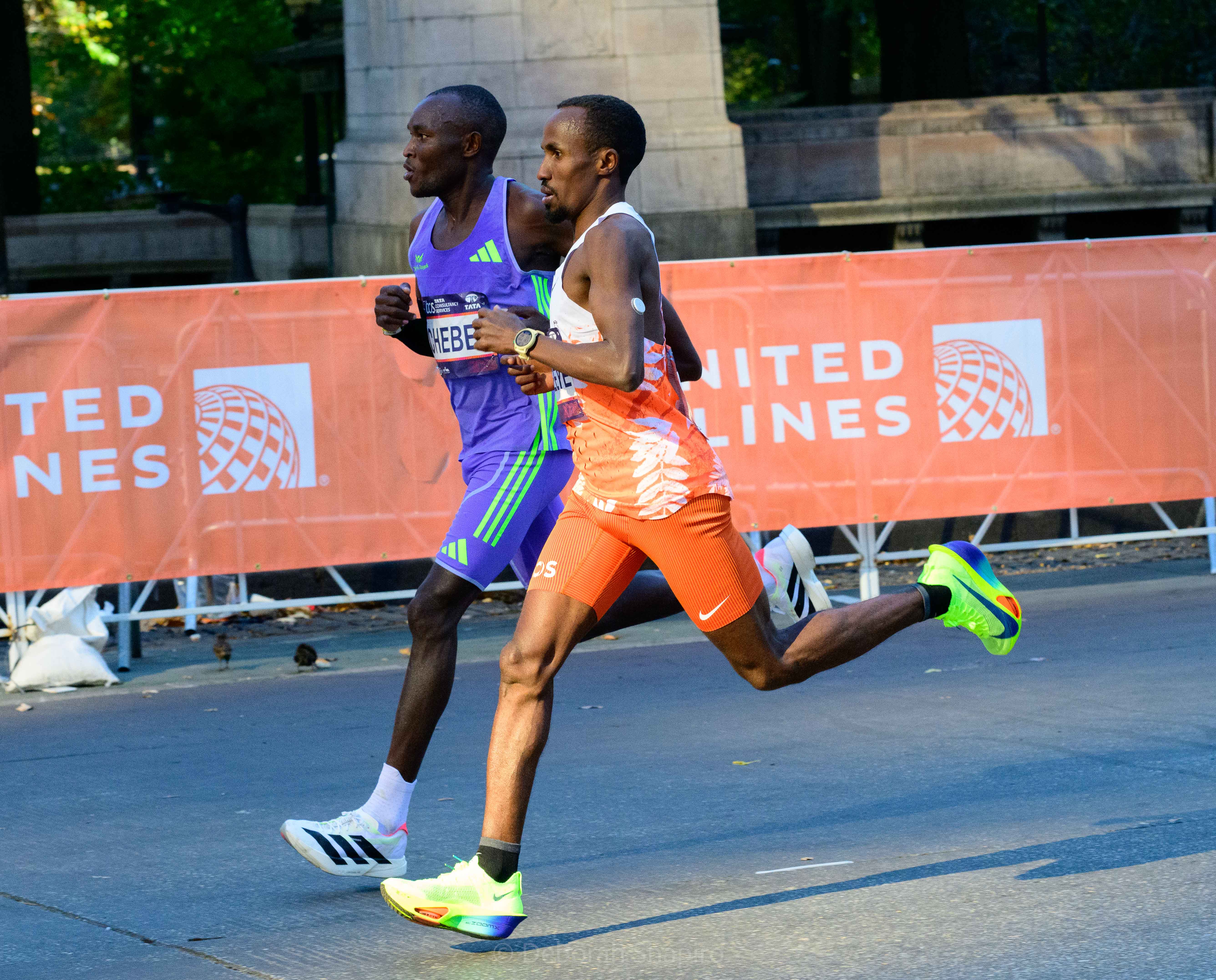
The mother hawk flies off to hunt for food as two of the three nestlings watch. The boldest of the three nestlings flaps its wings energetically and hops around the nest, but is not quite able to take off. Within a week, all three successfully fledged (flew out of the nest). An autumn afternoon in Central Park. October 2024The Greenwich Village Halloween Parade, October 31. These women were part of a Mexican group celebrating the Day of the Dead and accompanied by a mariachi band. October 31The lead runners of the 2024 New York Marathon rounding the final turn to the finish line. Sheila Chepkirui of Kenya held her lead and won. November 3The most complete Stegosaurus ever found, 150 million years old and nicknamed Apex, took up residence at the American Museum of Natural History where he/she will be studied by paleontologists.
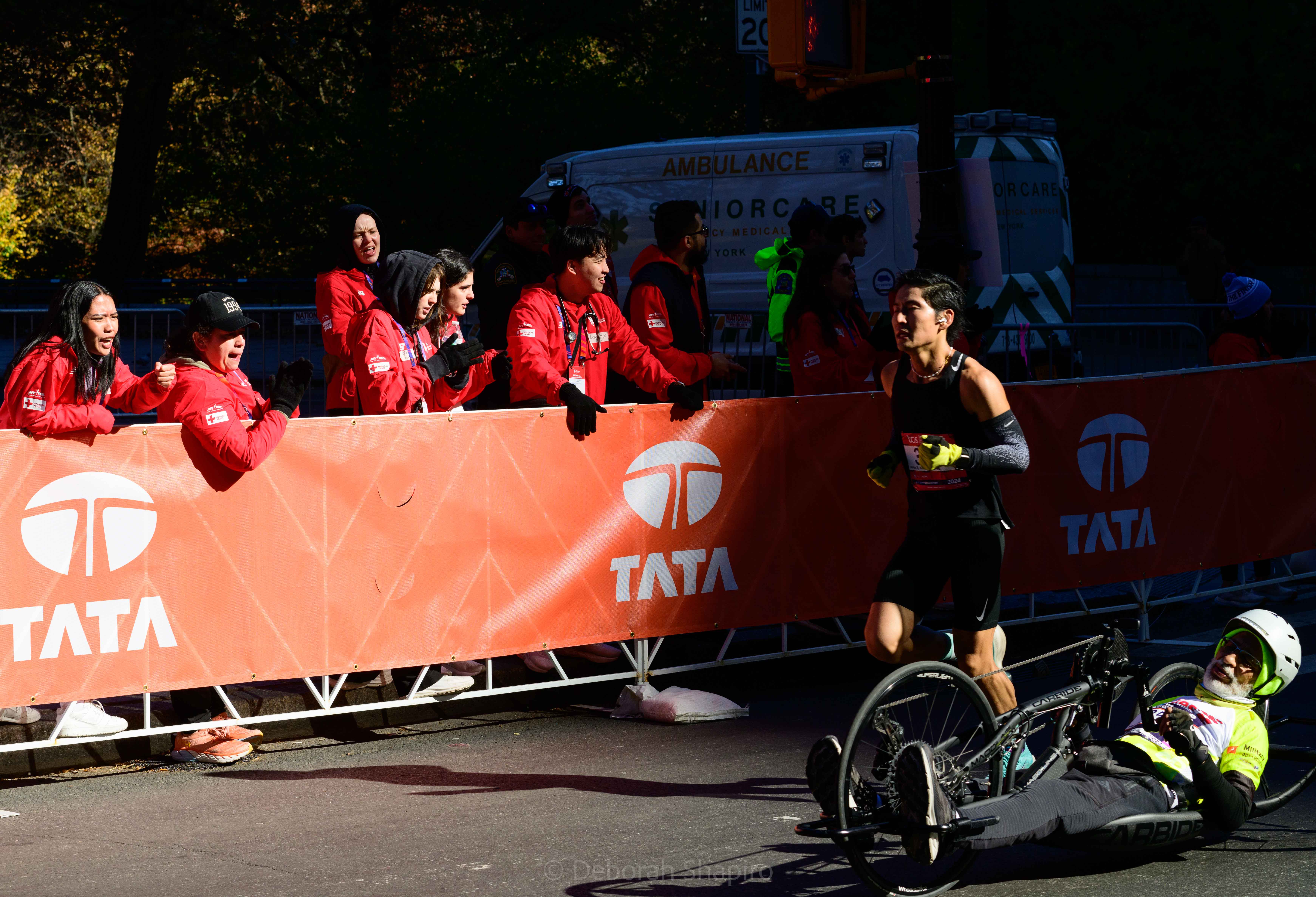
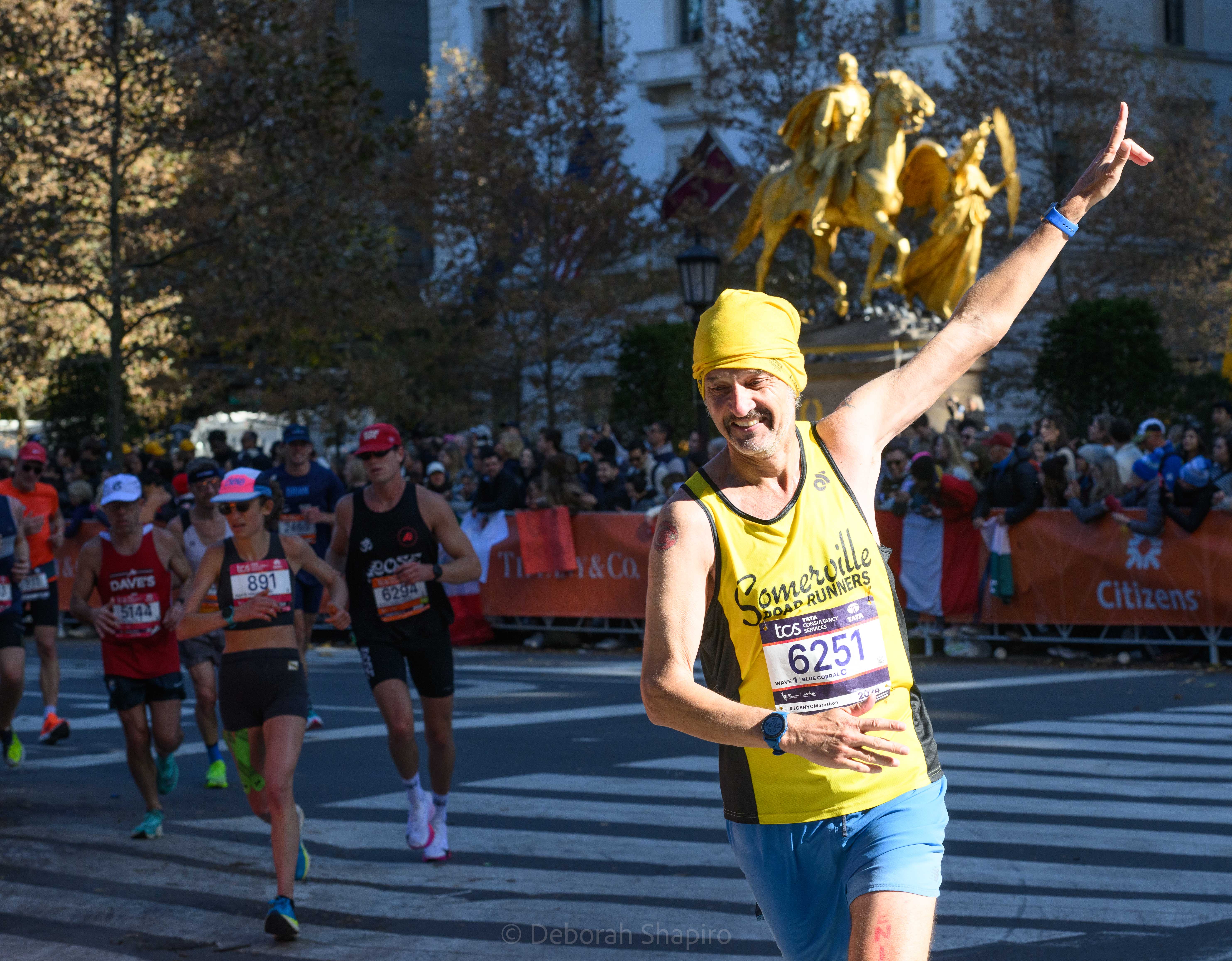
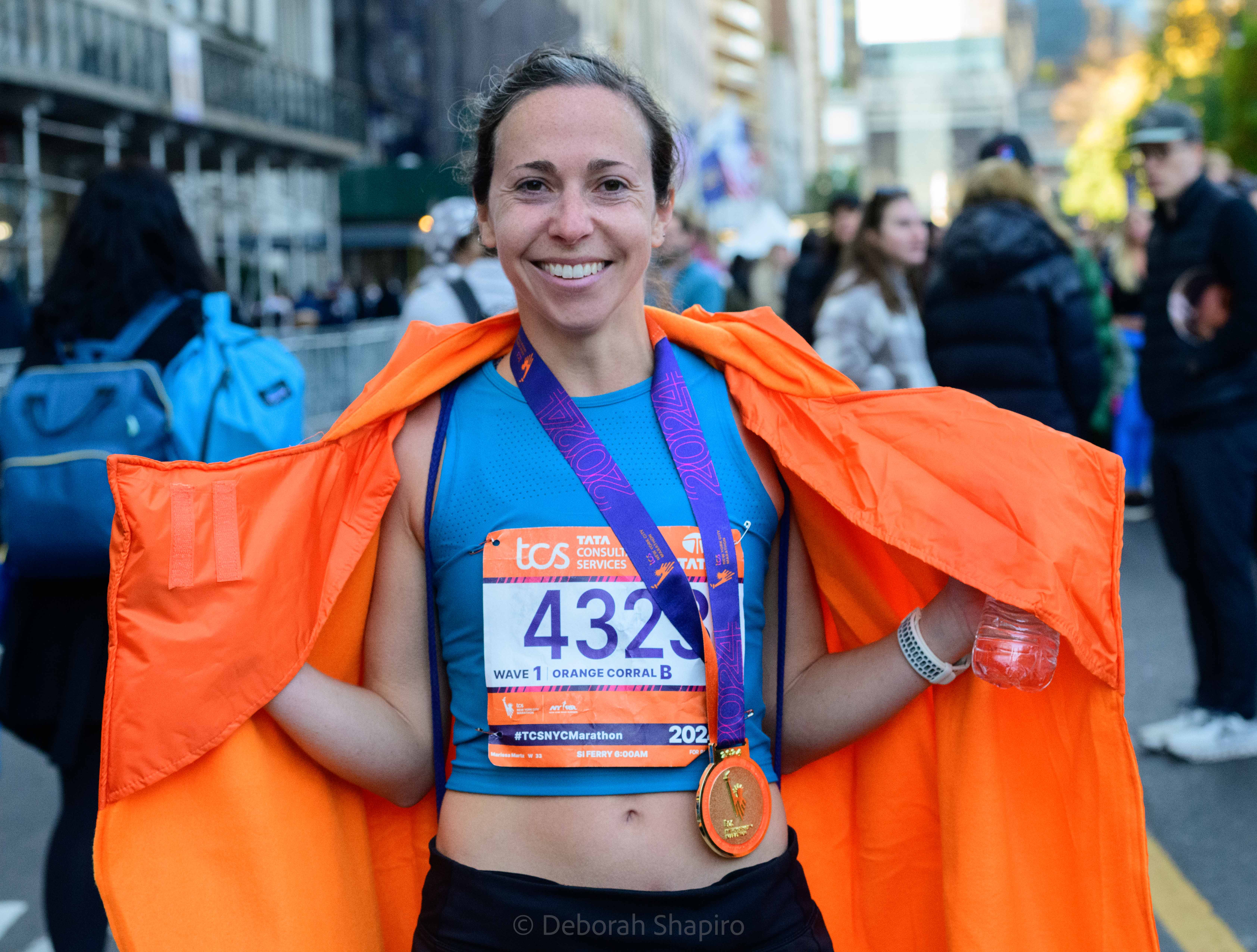
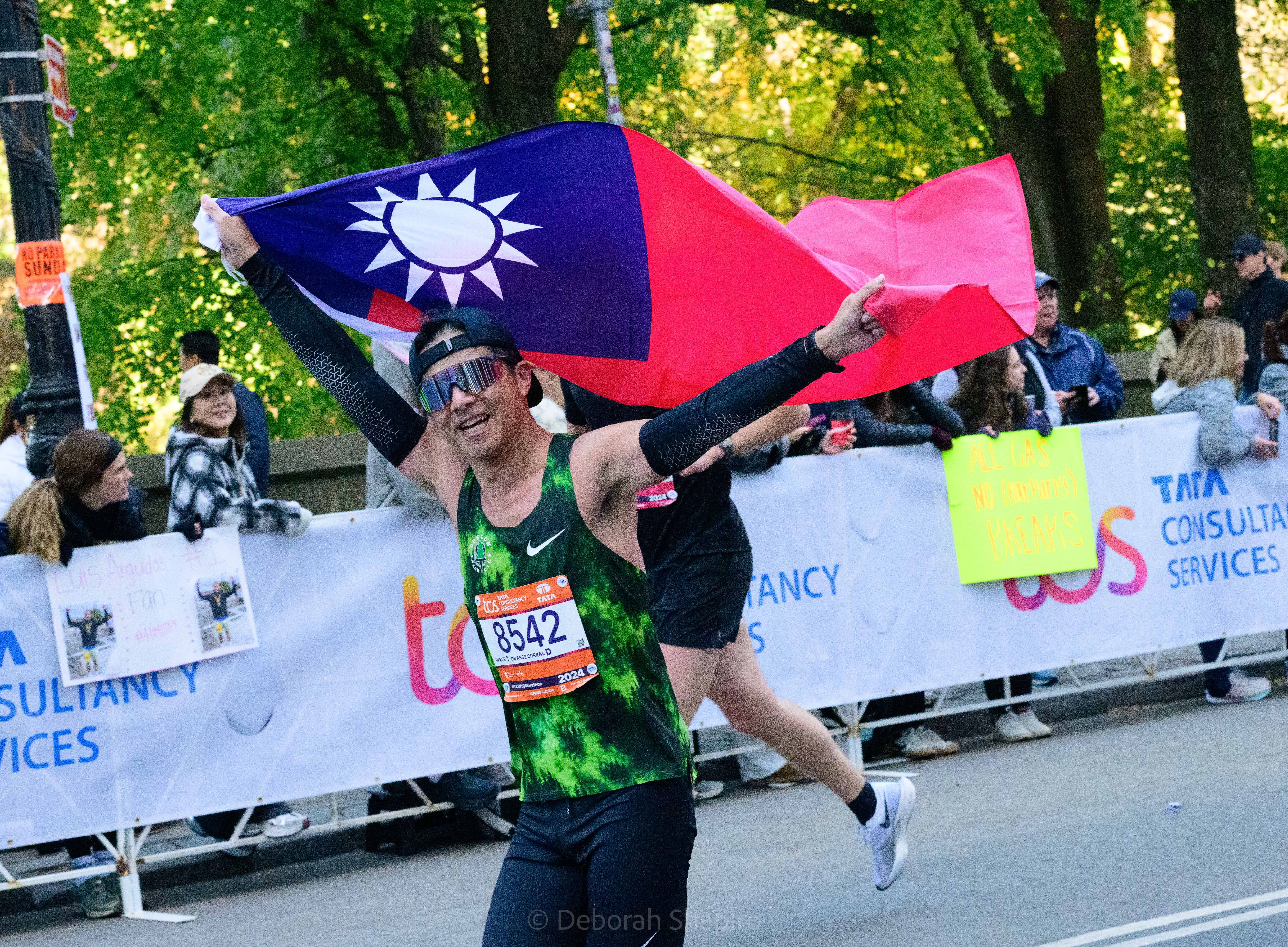
The 53d annual New York Marathon was run today through the five boroughs of New York City on a sunny day with ideal temperatures for the 50,000 runners. For one day, the city comes together in celebration and joy to cheer on runners from every state and country, of all ages and abilities, who have the tenacity to run 26.2 miles/42 kilometers through our streets.
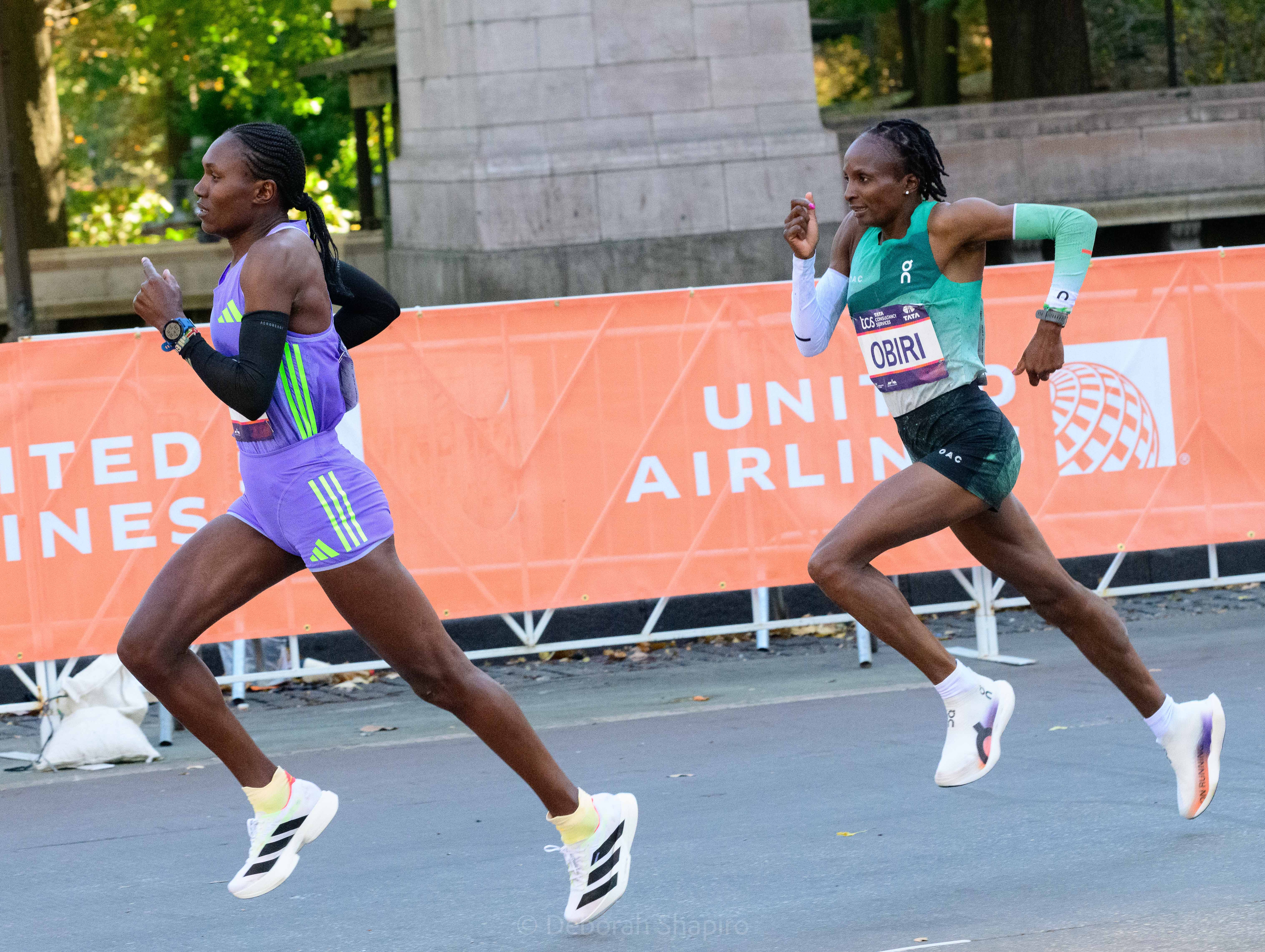
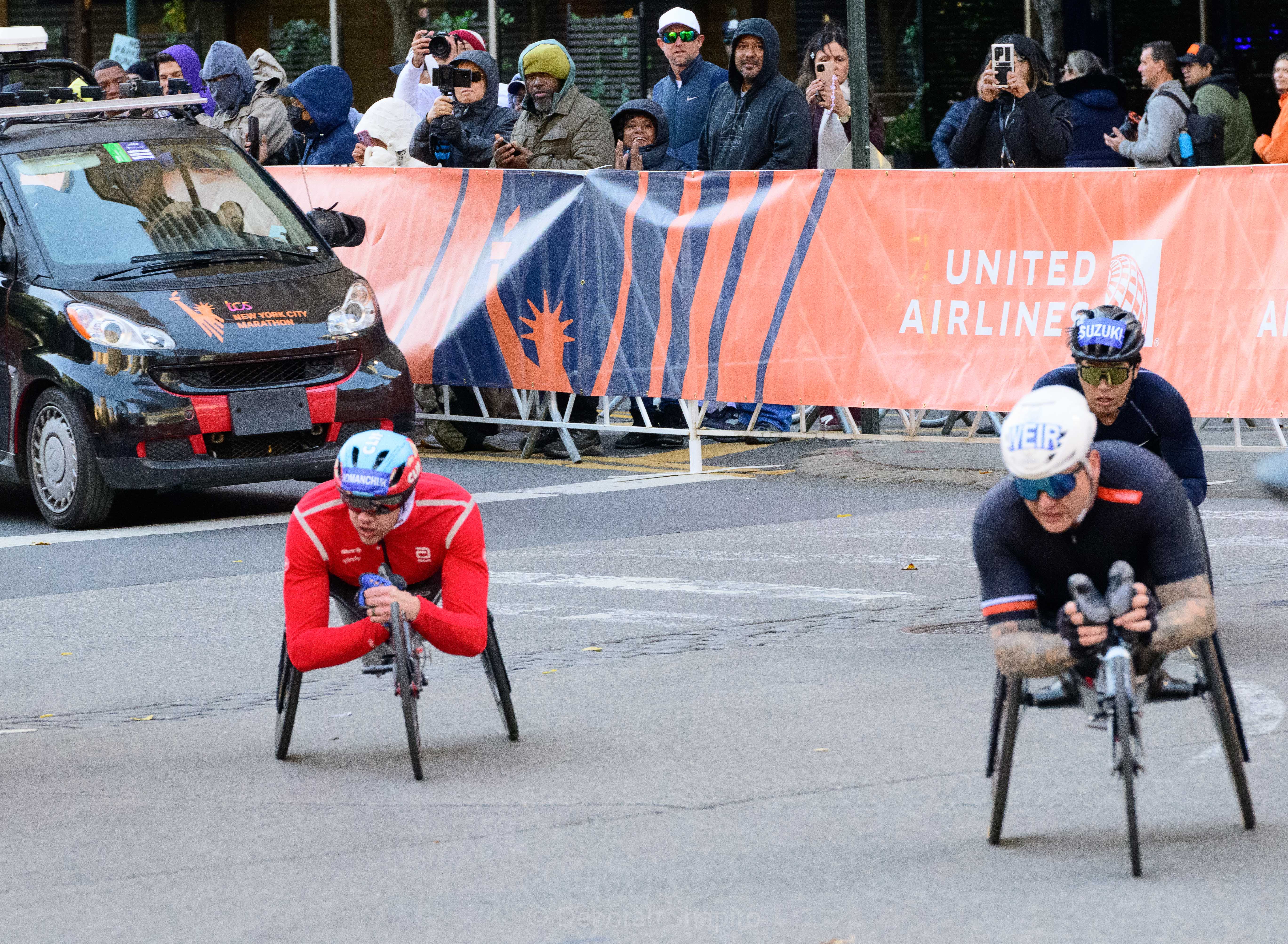
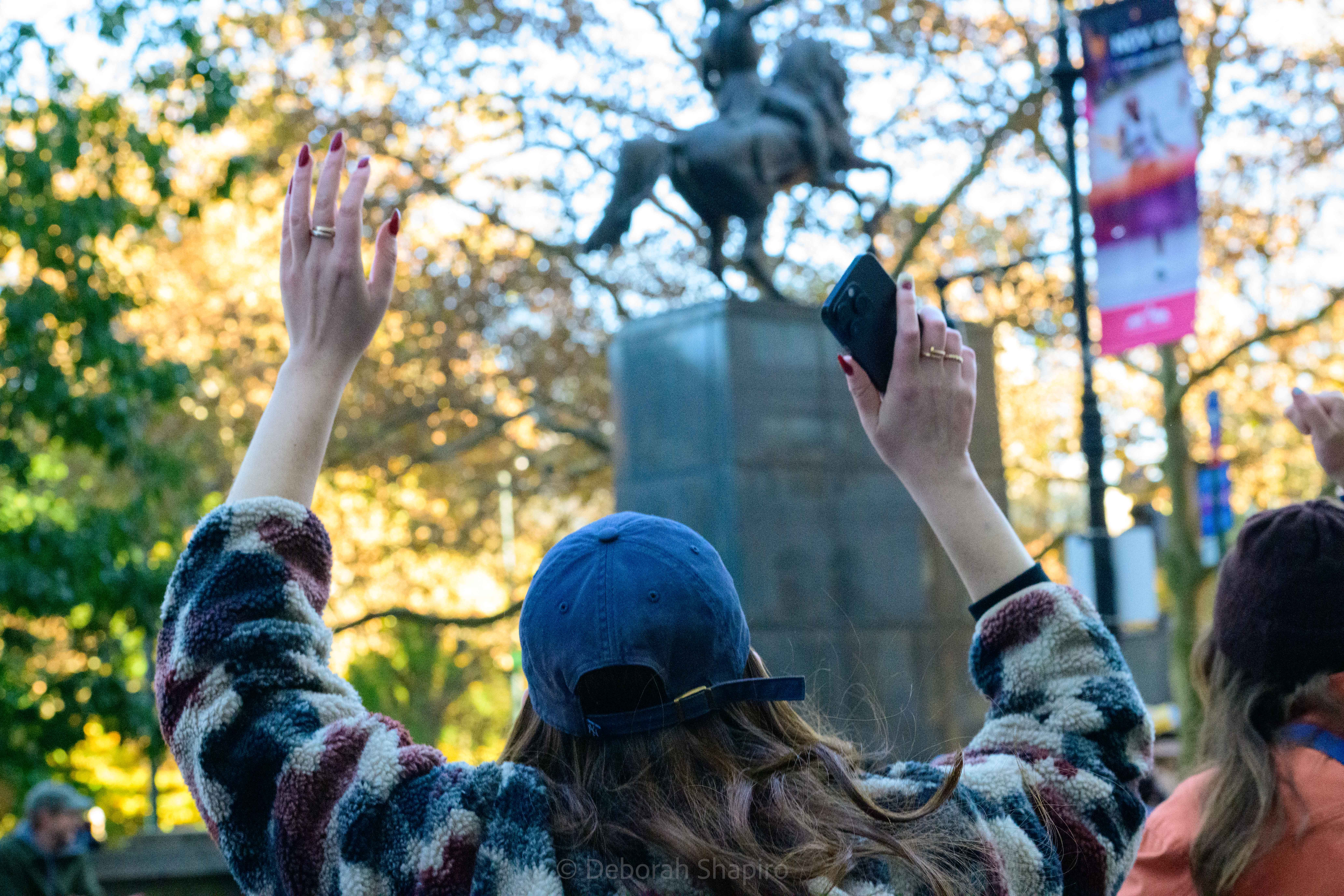
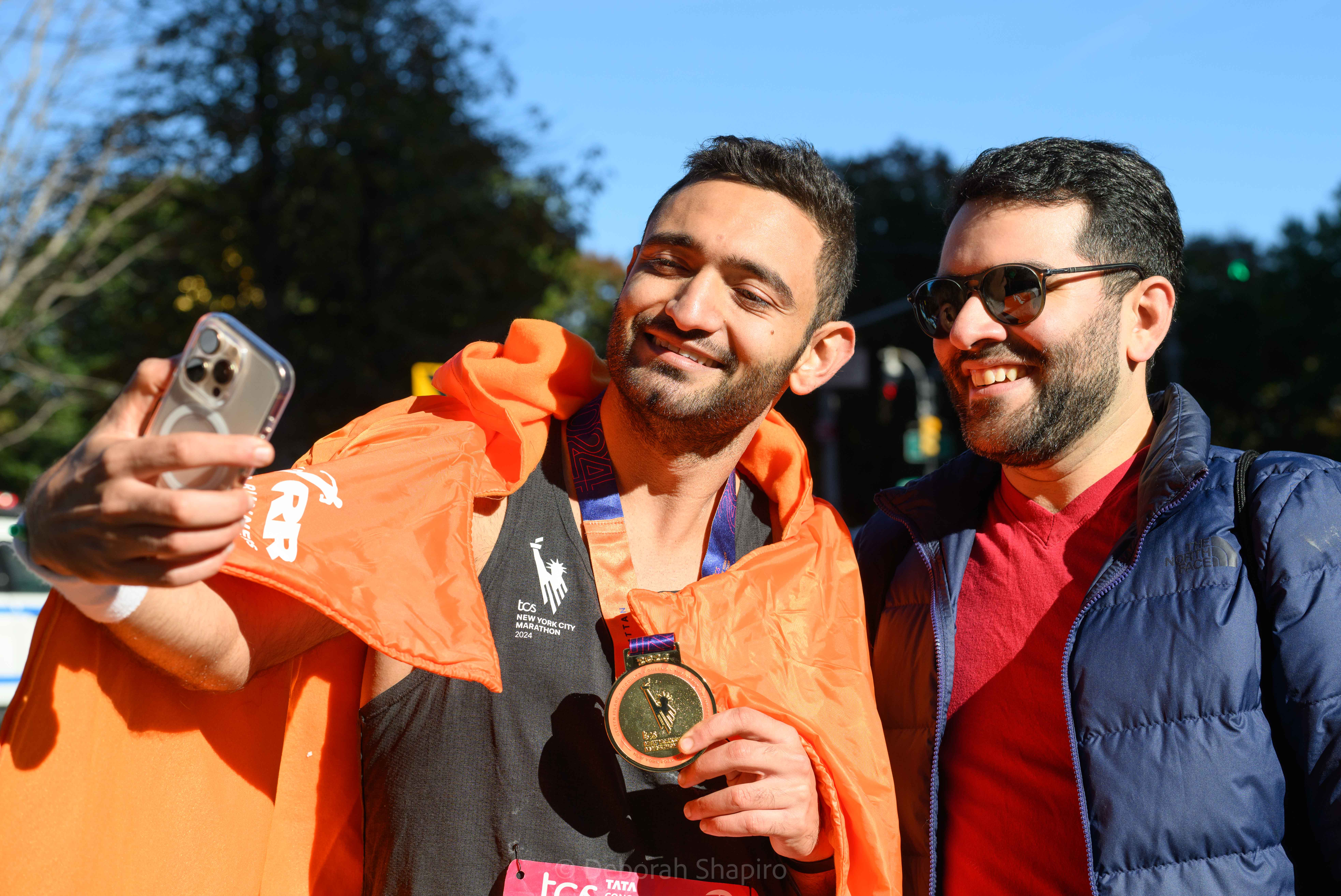
Sheila Chepkirui (Kenya) running just ahead of Hellen Obiri (Kenya) as they enter Central Park just before the finish line.The look of determination on Obiri’s face says it all, but Chepkirui kept her lead and went on to win the marathon in 2 hours 24 minutes.In the men’s race, Abdi Nageeye (Netherlands) ran stride for stride with Evans Chebet (Kenya). Nageeye outsprinted Chebet and won in 2:07:39.Shoulder to shoulder, stride for stride, Nageeye and Chebet entering the chute to the finish line in Central ParkAmerican Daniel Romanchuk (red jersey) won the men’s wheelchair race.The American wheelchair racer Susannah Scaroni won the women’s wheelchair race by 10 minutes.An enthusiastic spectator on Central Park SouthMedics applauding a hand wheelchair competitor on Central Park SouthA runner acknowledges the cheers of his family as the runners turn through Grand Army Plaza less than a mile from the finish lineMarissa Martz, happy with her 2:46 time, shows her marathon medal after the finish.A runner from Taiwan with his country’s flagProud finisher Ali takes a selfie with his friend after the finish.
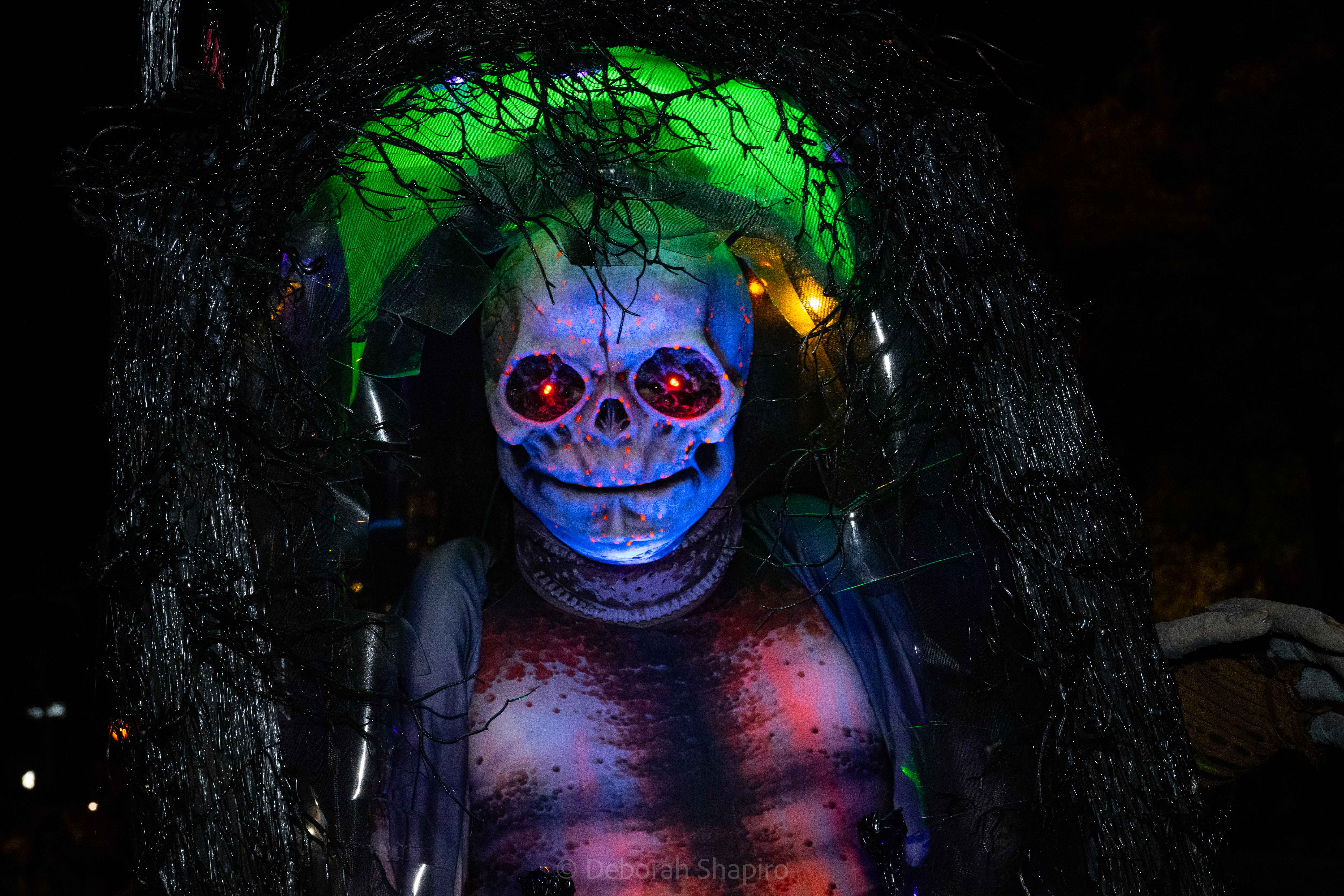
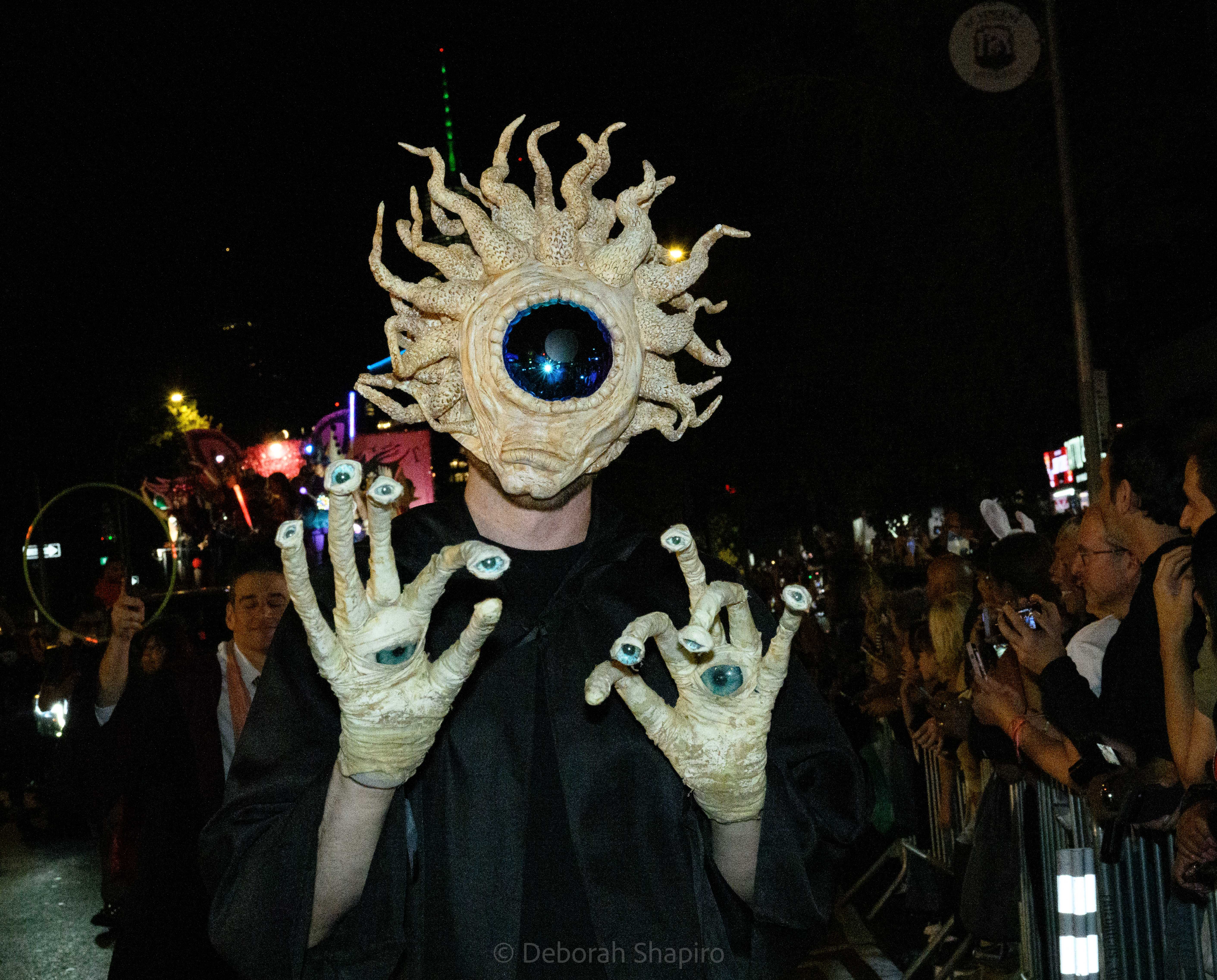
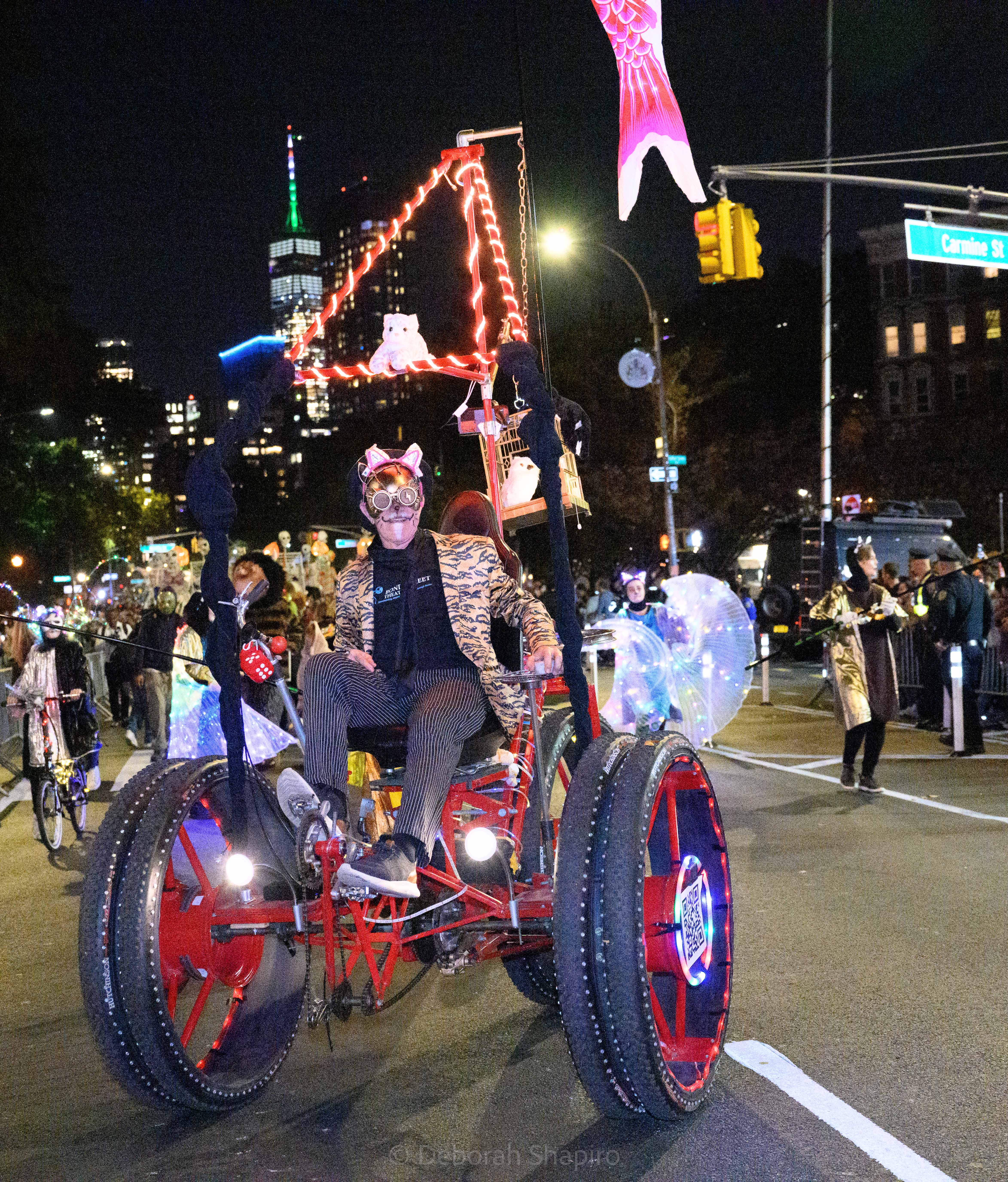
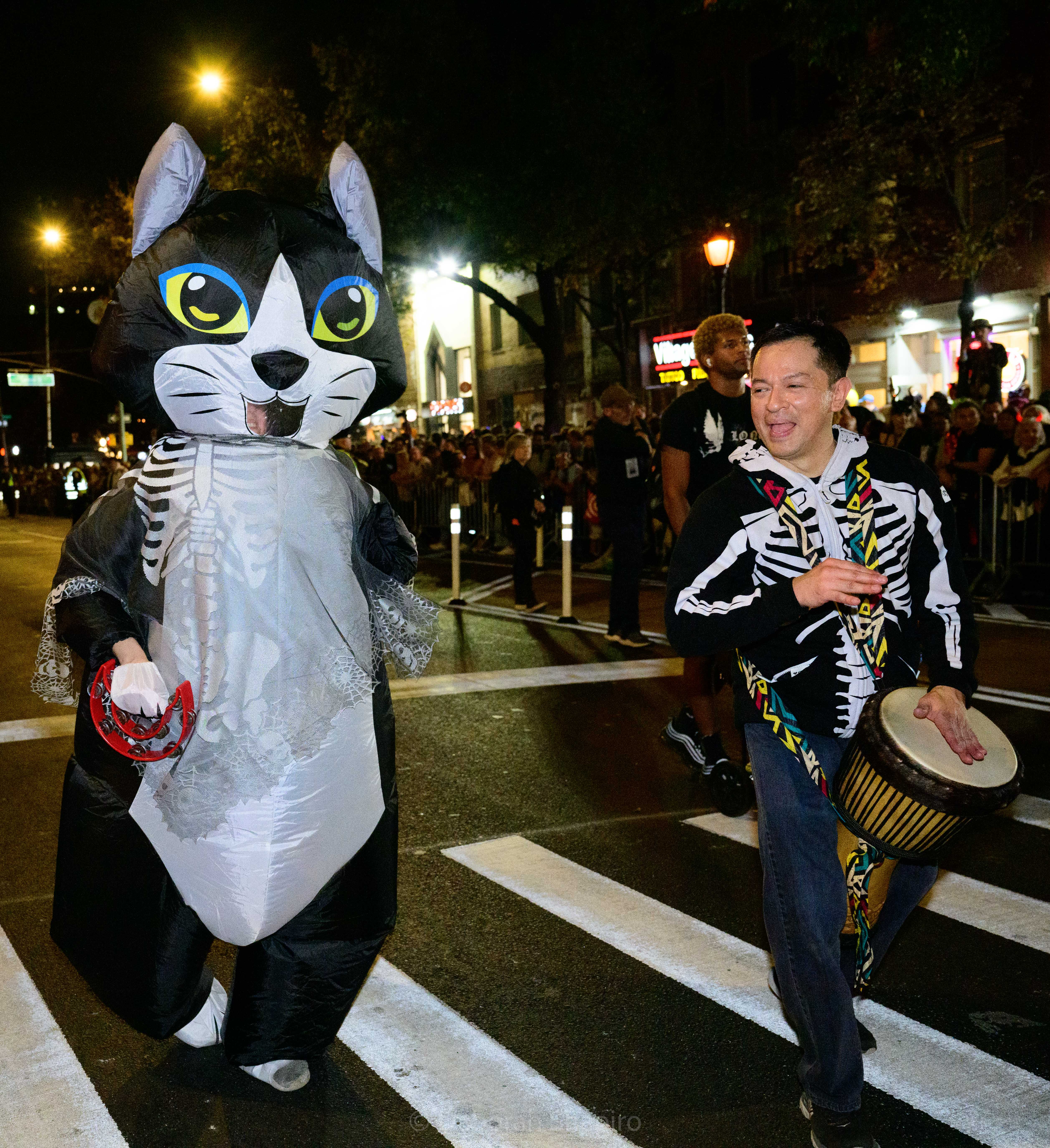
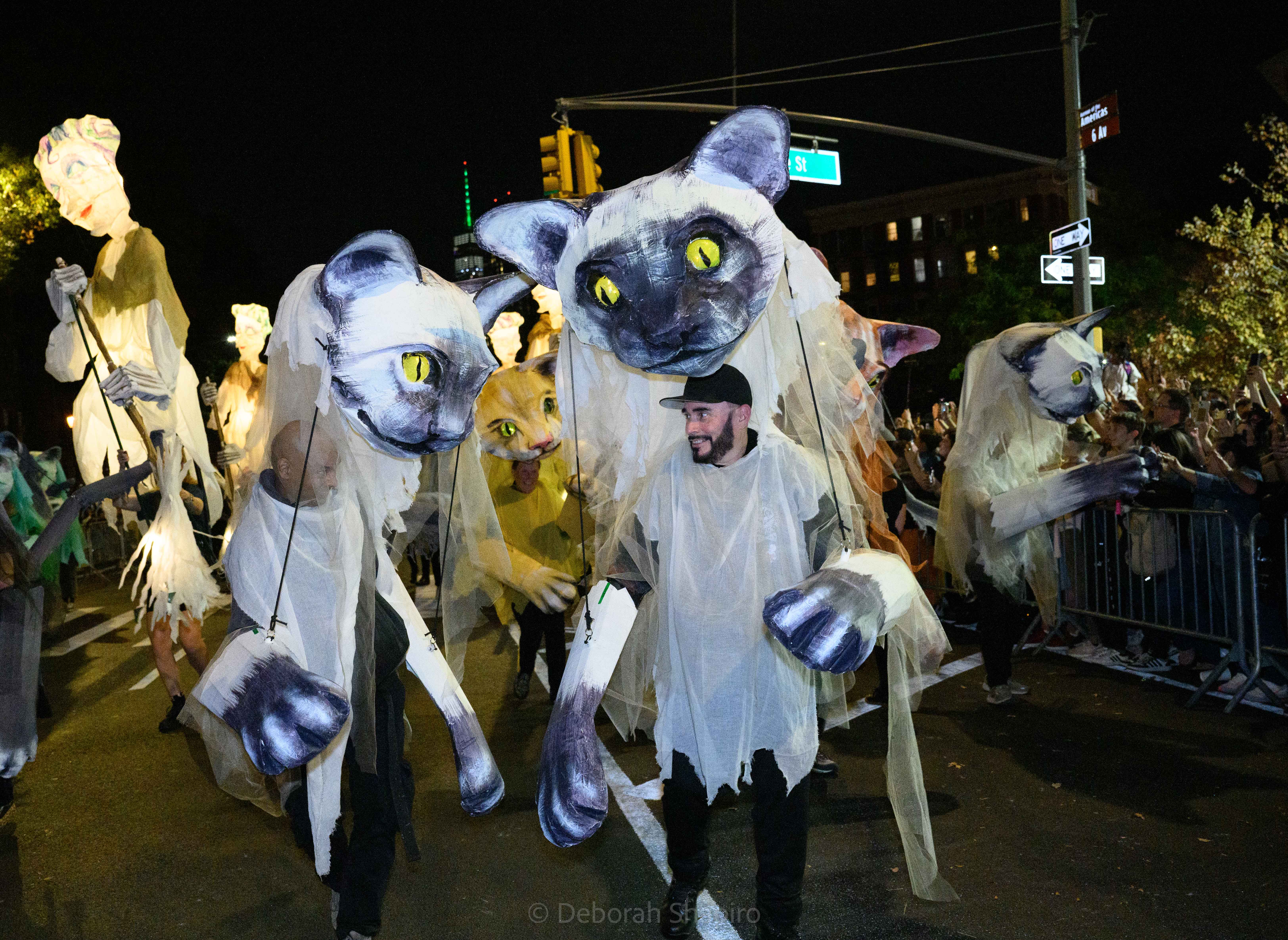
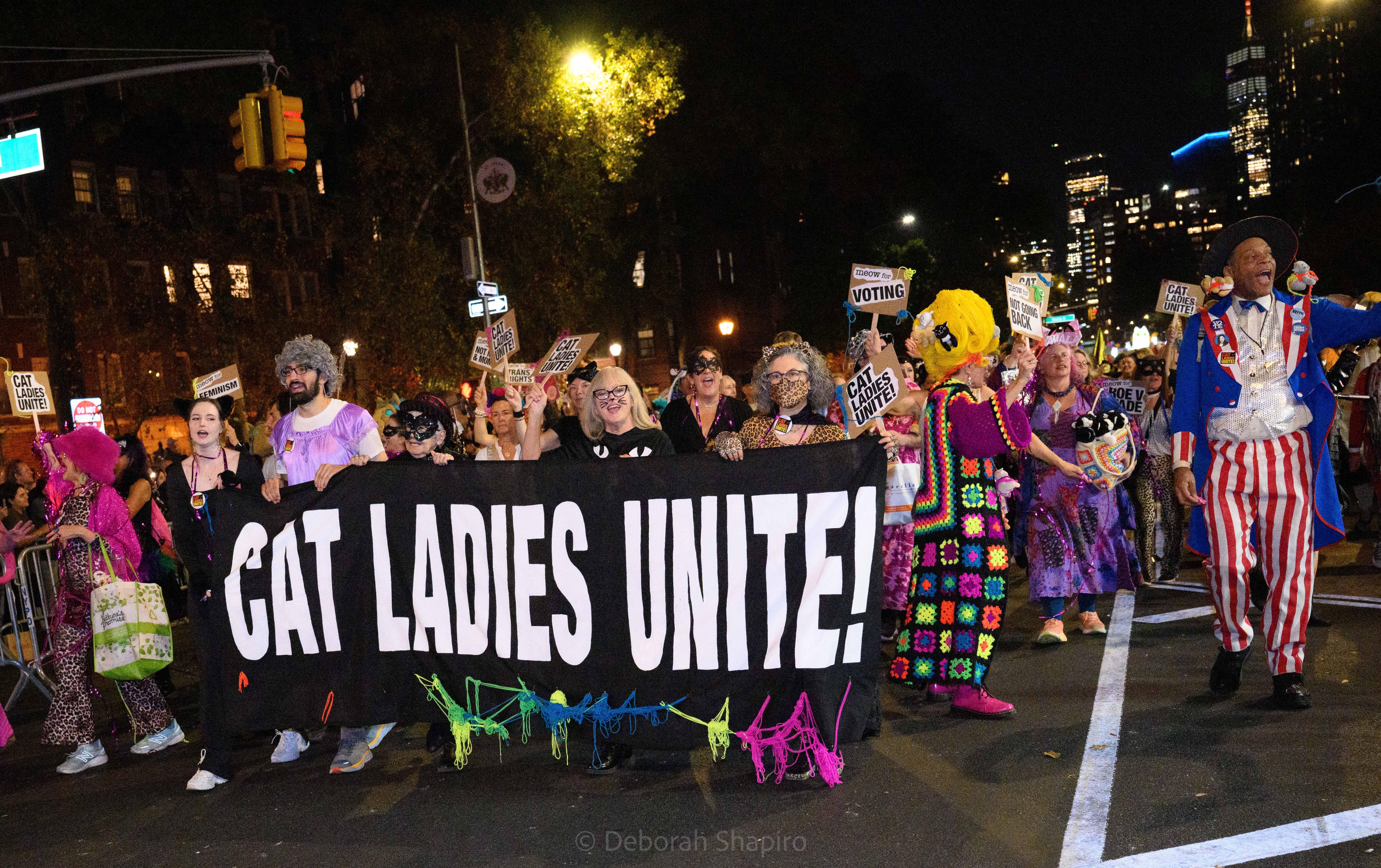
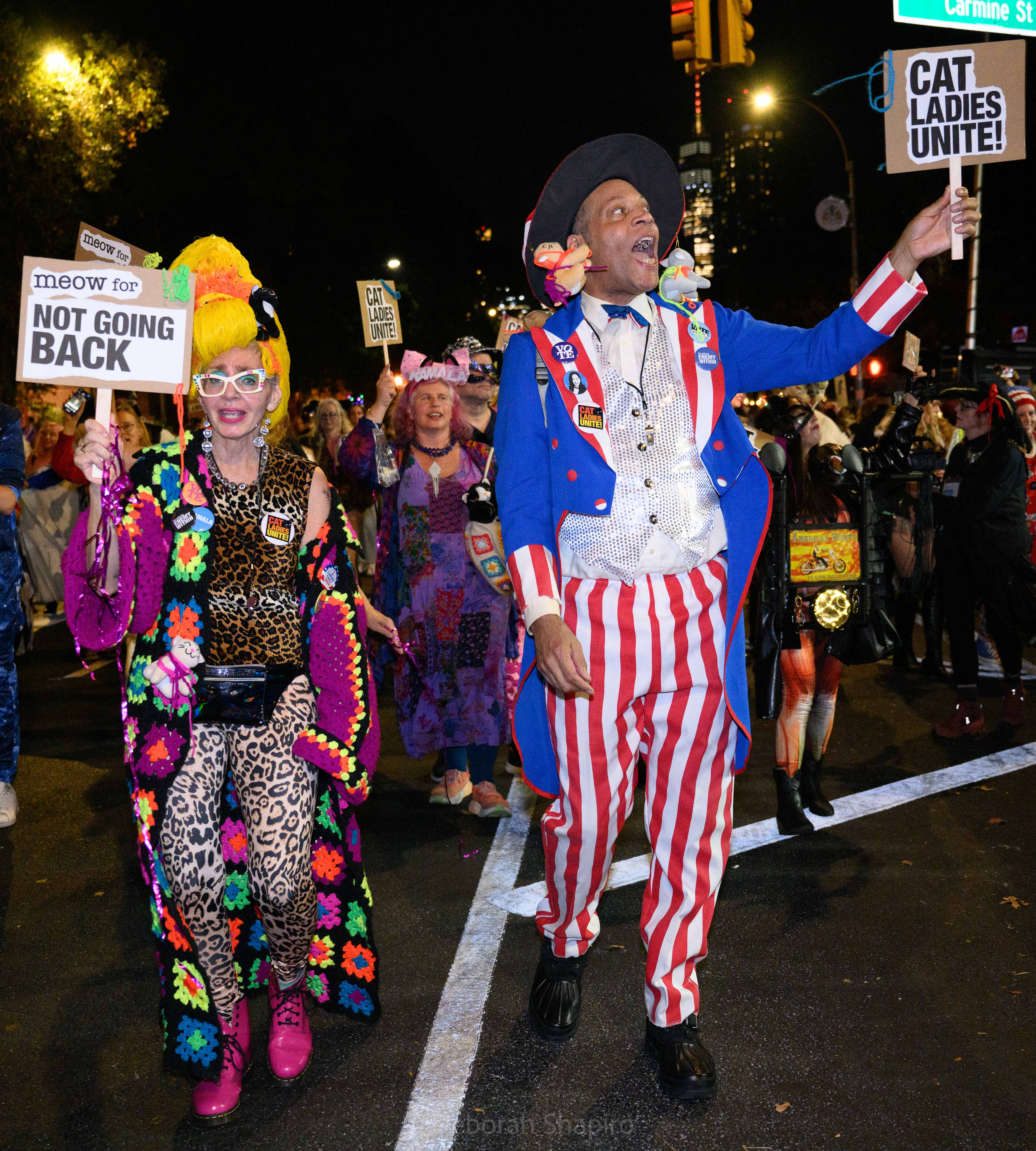
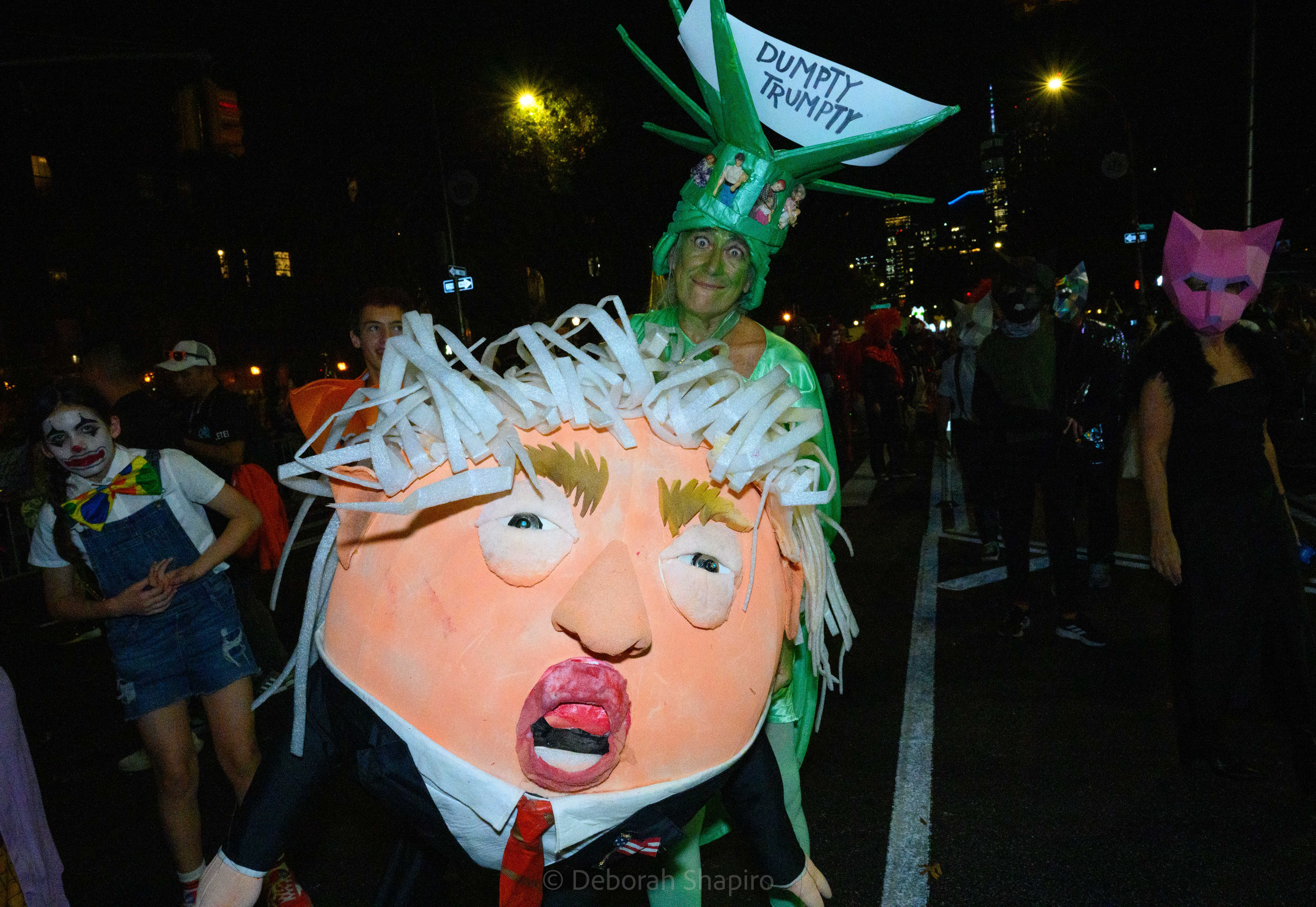
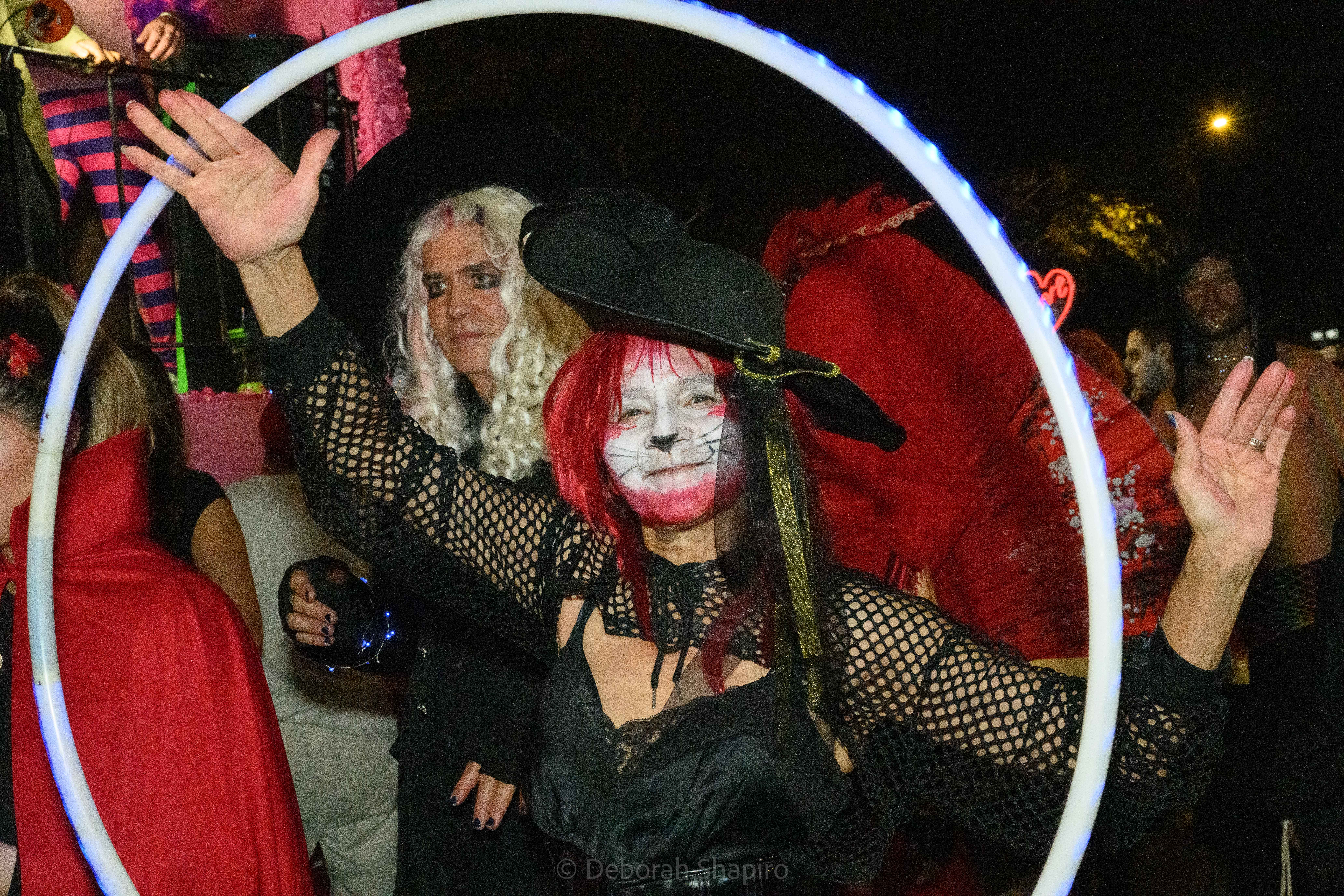
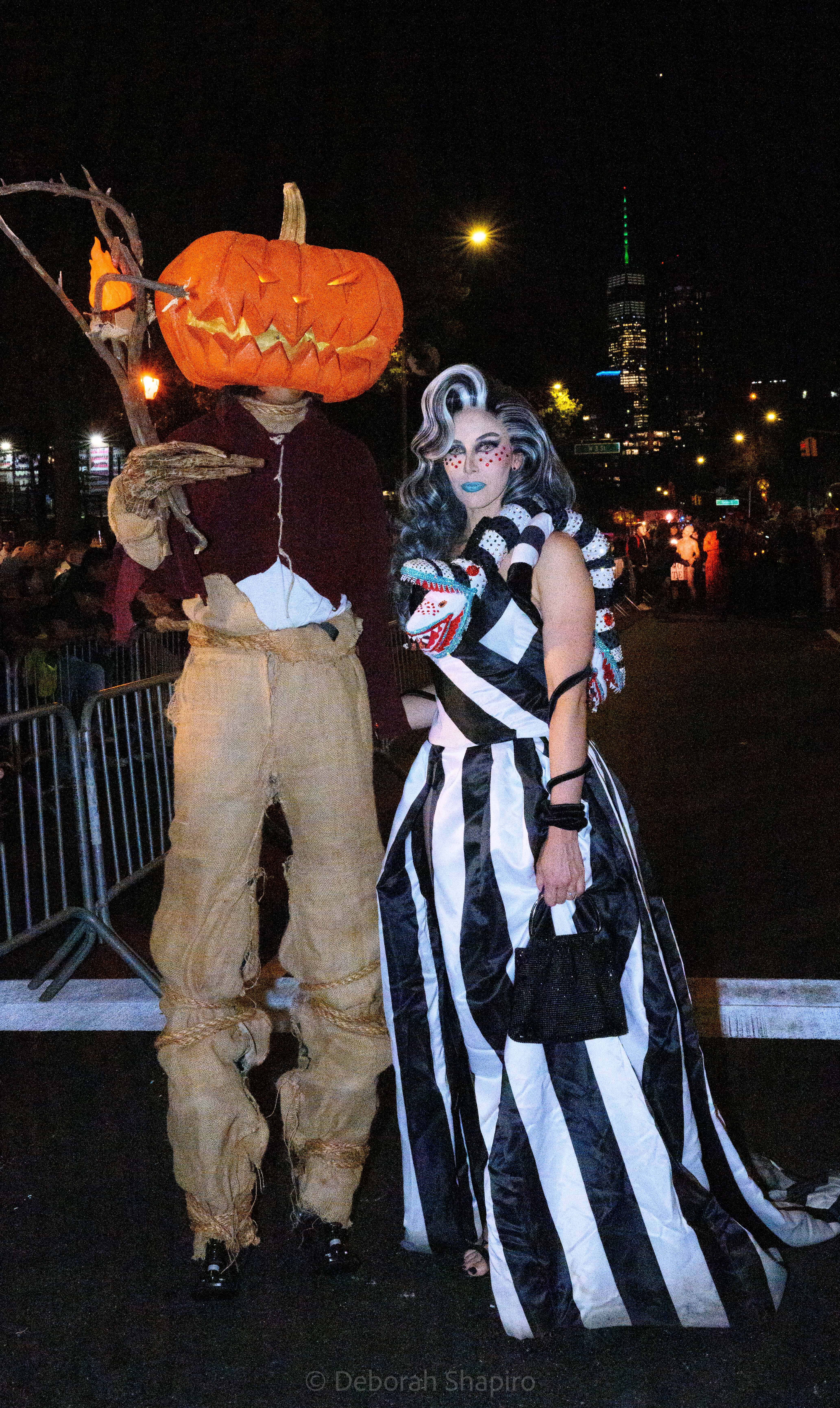
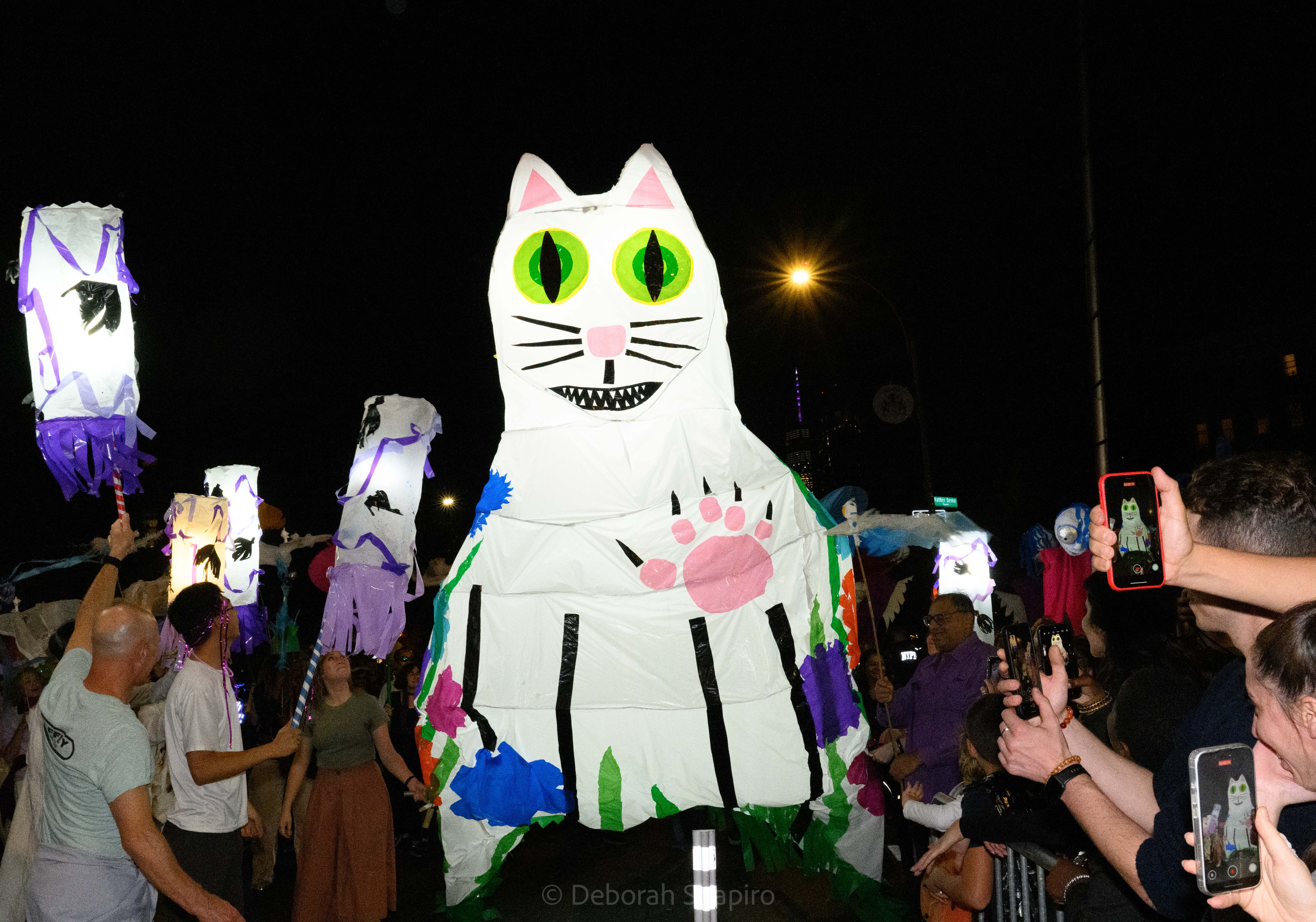
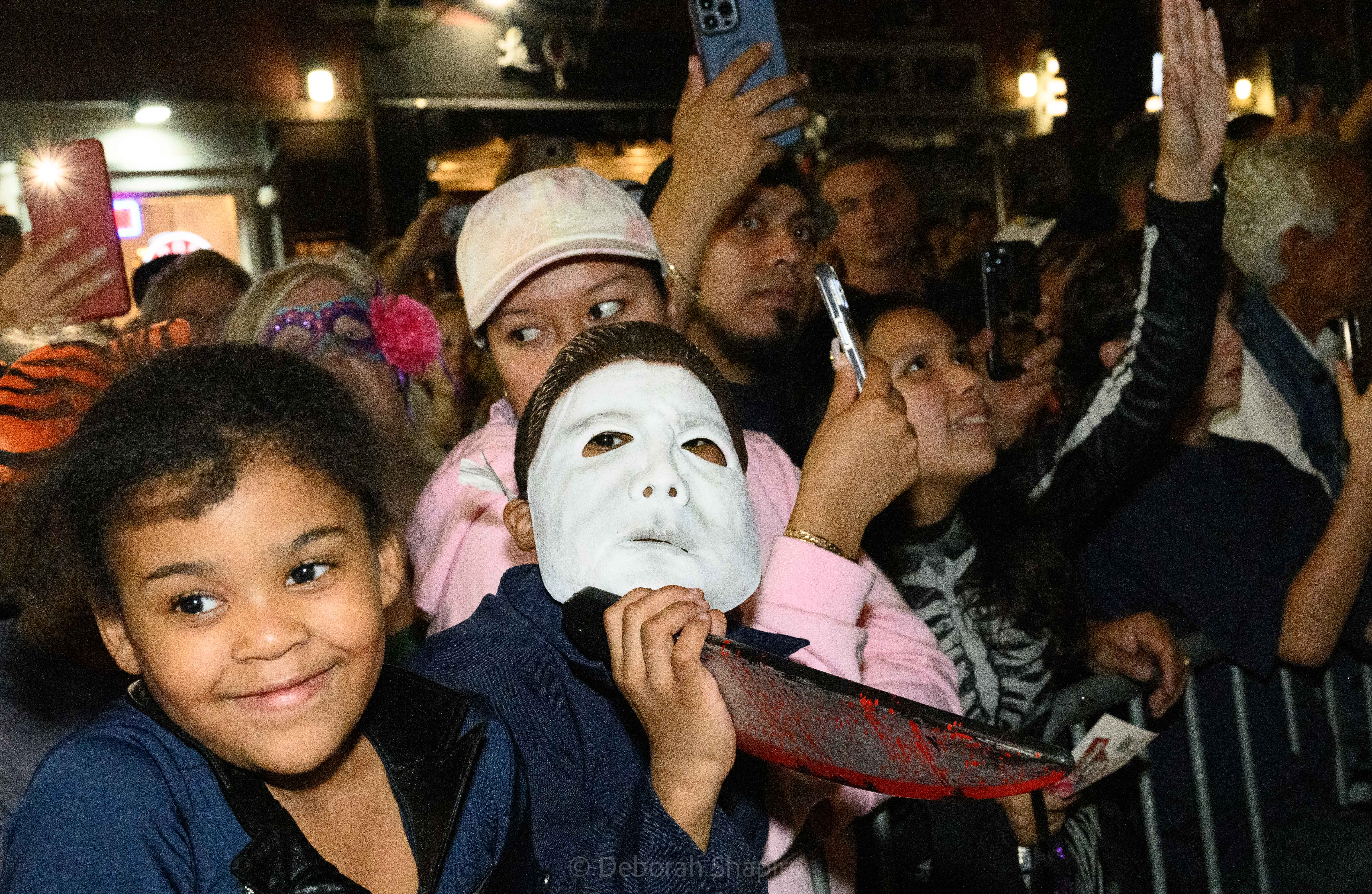
Ghosts, goblins, and politics are all part of the beloved annual Greenwich Village Halloween Parade. The creativity and beauty of the costumes never fails to amaze and the marching bands are terrific. This year’s theme was Meow (Cats), reflecting political commentary in this presidential election season.
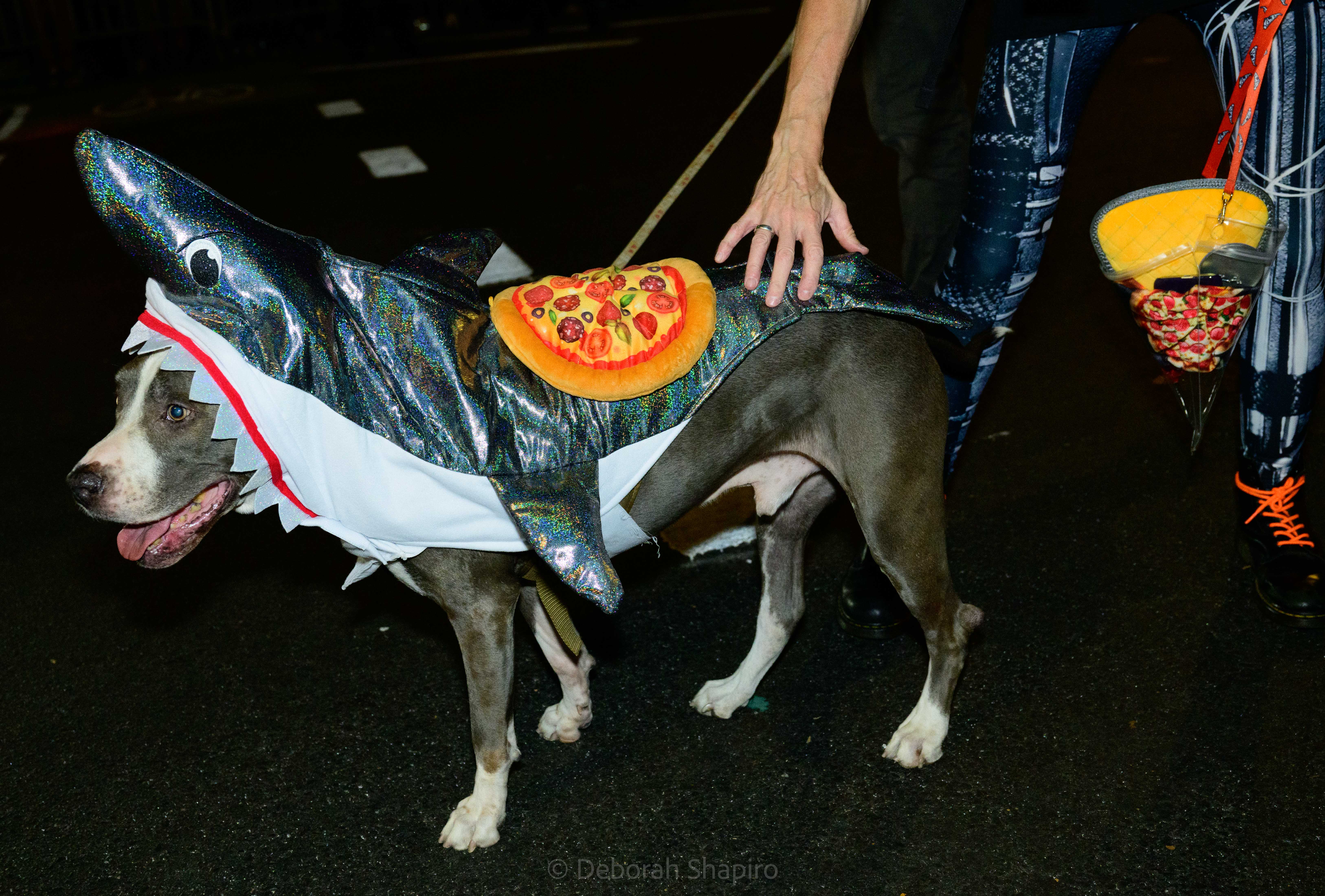
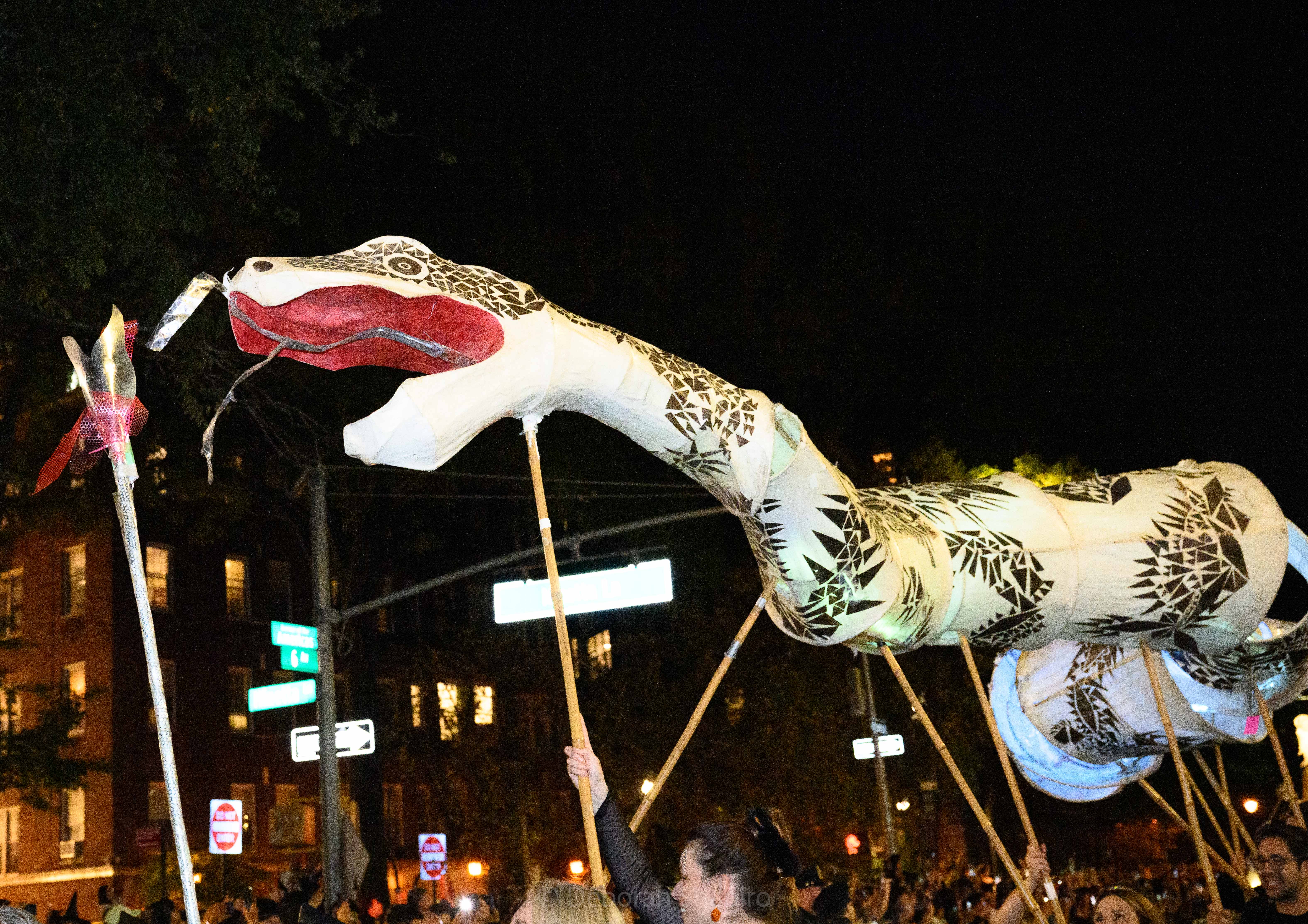
There was an award for best costume and I would have voted for this one.Cyclops meets MedusaThe parade moves up Sixth Avenue with the World Trade Center in the background A dog in a pizza shark costume was outnumbered by catsCat puppets march up Sixth AvenueA pink pussycatThis snake marionette appears every year and slithers fastThere was much satire directed at JD Vance’s “childless cat ladies” commentWith the presidential election in 5 days, political expression ran highThis Harris-Walz supporter was cheered by the spectatorsOne of the better caricature costumes More of the cat themeShe’s better dressedCats and cat pictures on the spectators’ phonesHalloween fell on a school night so no homework was done
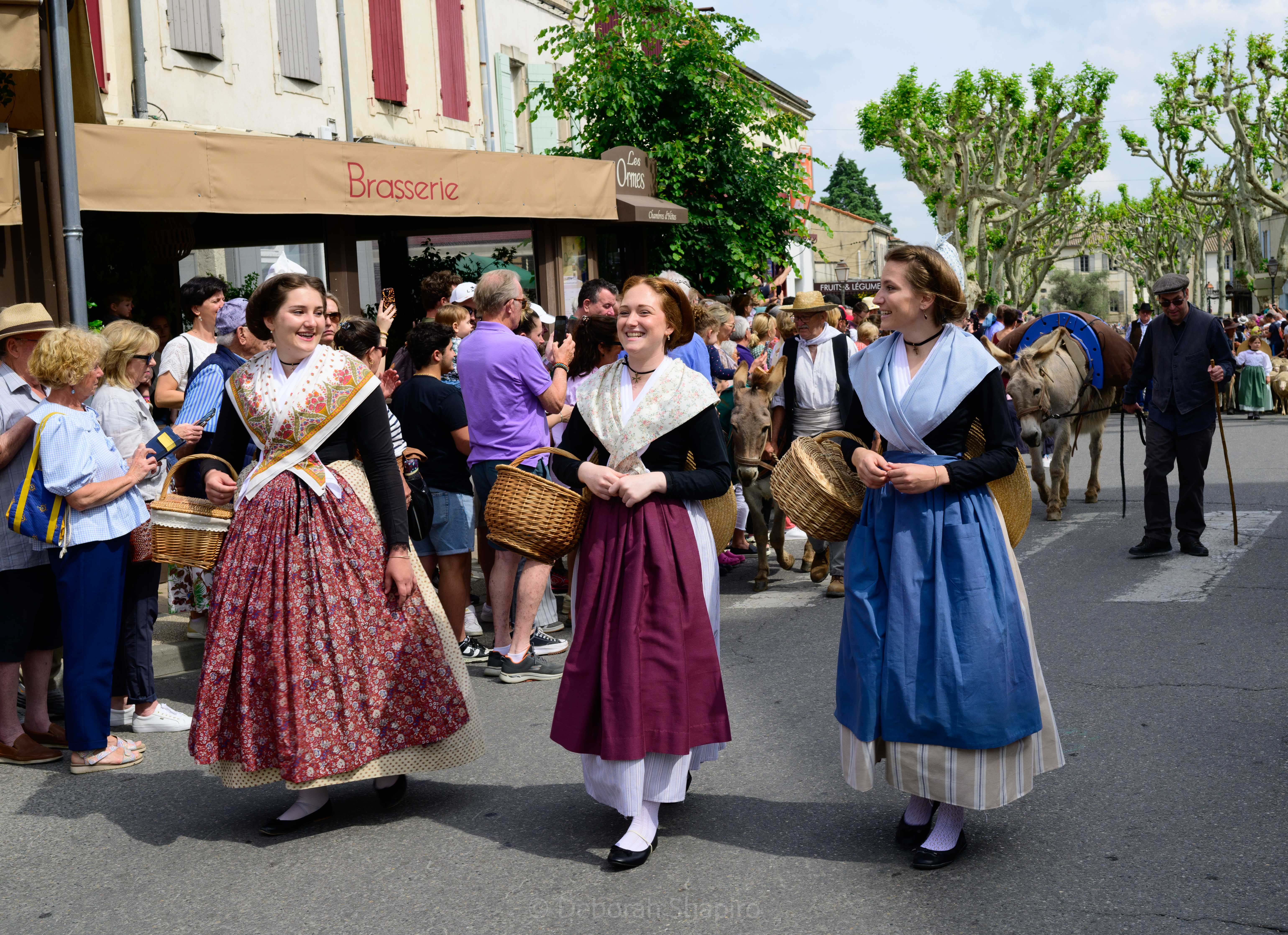
This year the blog went to St. Remy en Provence, France on a very special occasion: every year on Pentecost Monday, the Fete de la Transhumance is celebrated on the streets of the town. On this day, by tradition, the sheep are herded from their winter pastures in the lowlands up to the mountains for the summer to the delight of the townspeople. The Transhumance is also celebrated in Switzerland when cows are taken up to the Alps for the summer. These festivals are considered part of the Patrimoine Culturel Immateriel en France, or Intangible Cultural Heritage. It’s also a market day in the town and the crowds of mostly local people spend the rest of their holiday in the restaurants, brasseries, and plazas enjoying the fine spring weather and good meals.
Women in traditional dress head the procession
Next come the donkeys. They are not for show; they graze with the flock and are fierce protectors against wolves in the mountains, much more effective than the small sheepdogs.
The stars of the day arrive led by their shepherds.
It’s a river of sheep. The announcer with the microphone warned the spectators to stay on the sidewalks, and this is why.
The sheep are freshly shorn before the summer. Their wool is soft and highly prized and their milk is made into cheeses whose denominations (certifications of origin) are as closely regulated as wine.
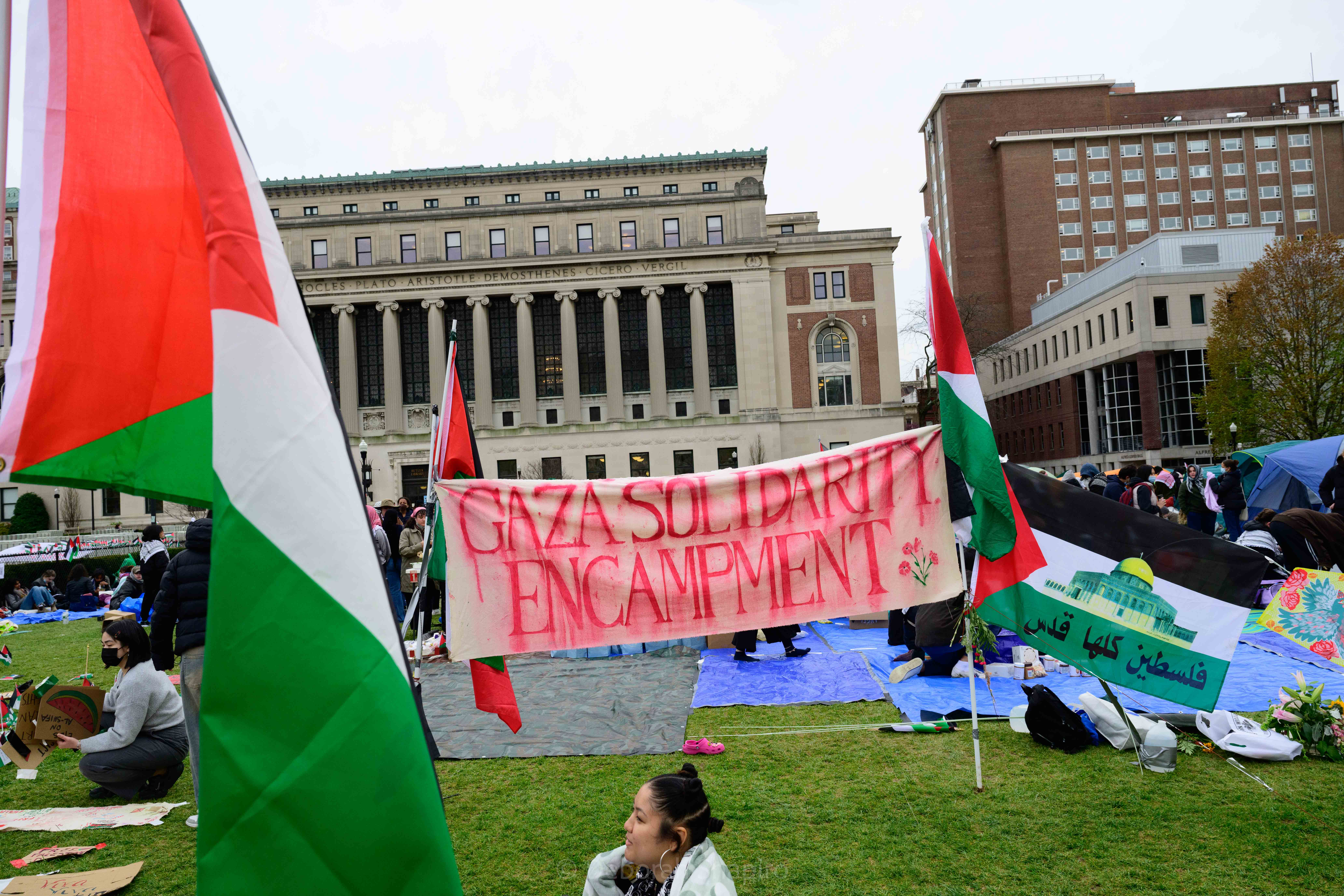
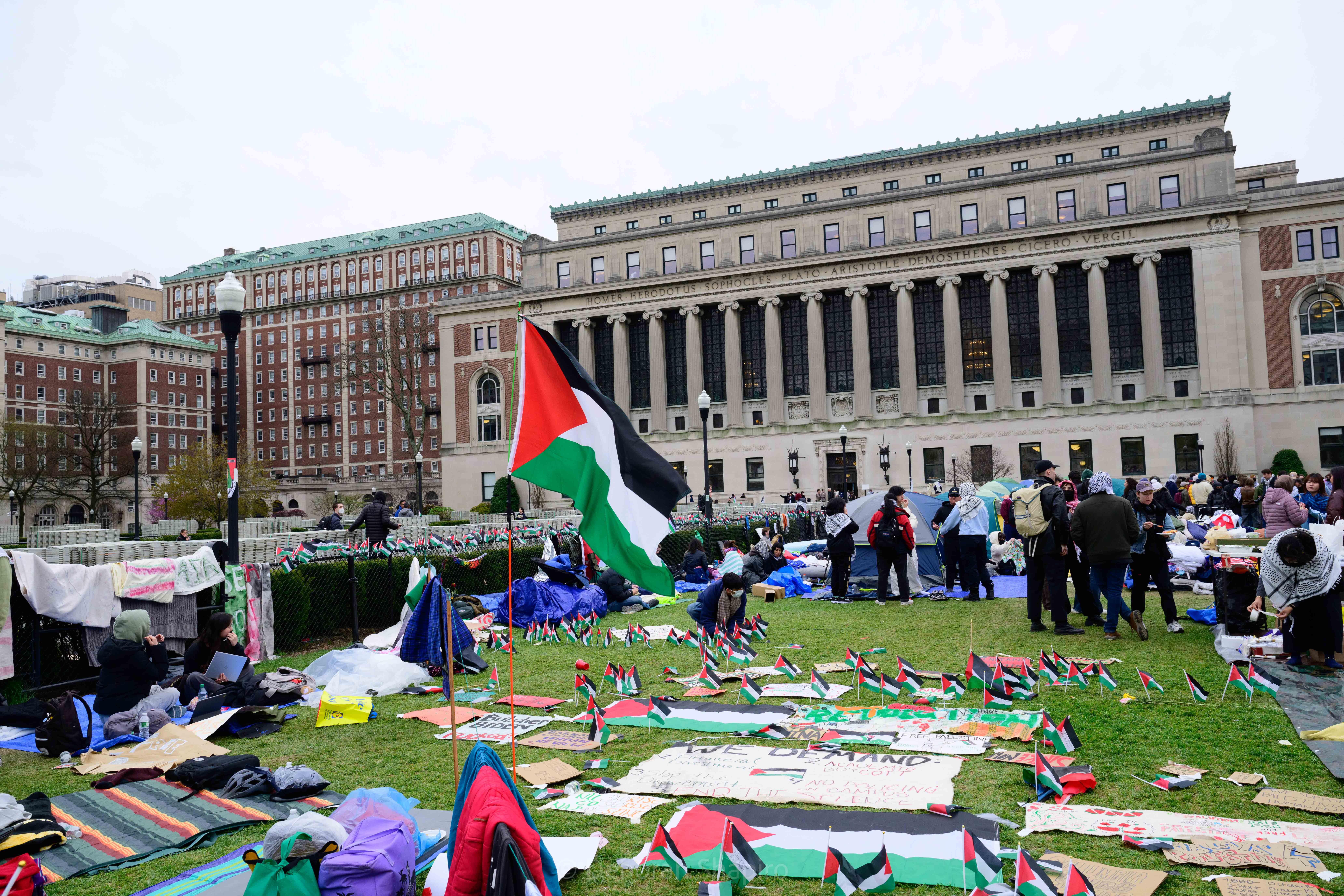
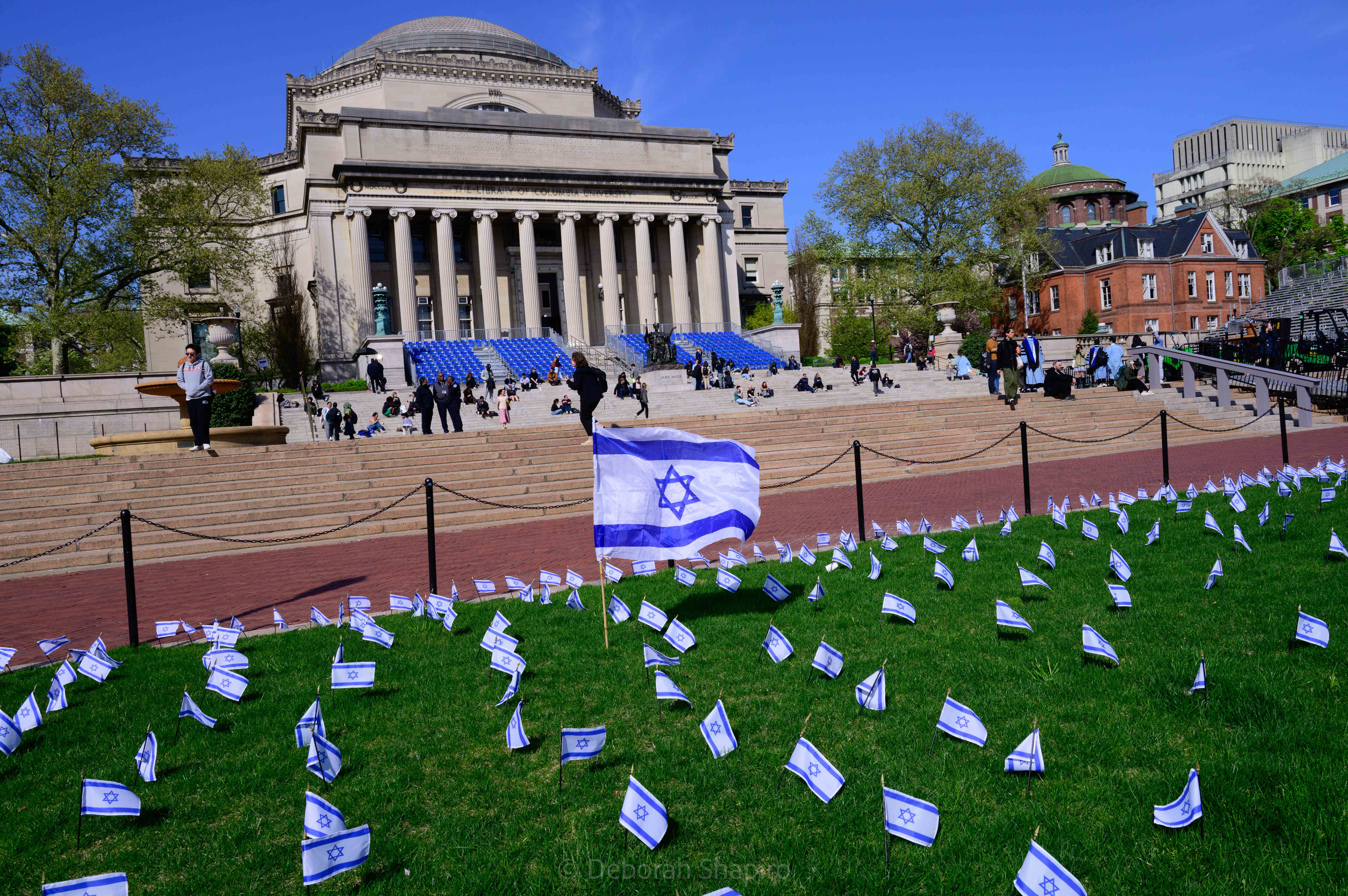
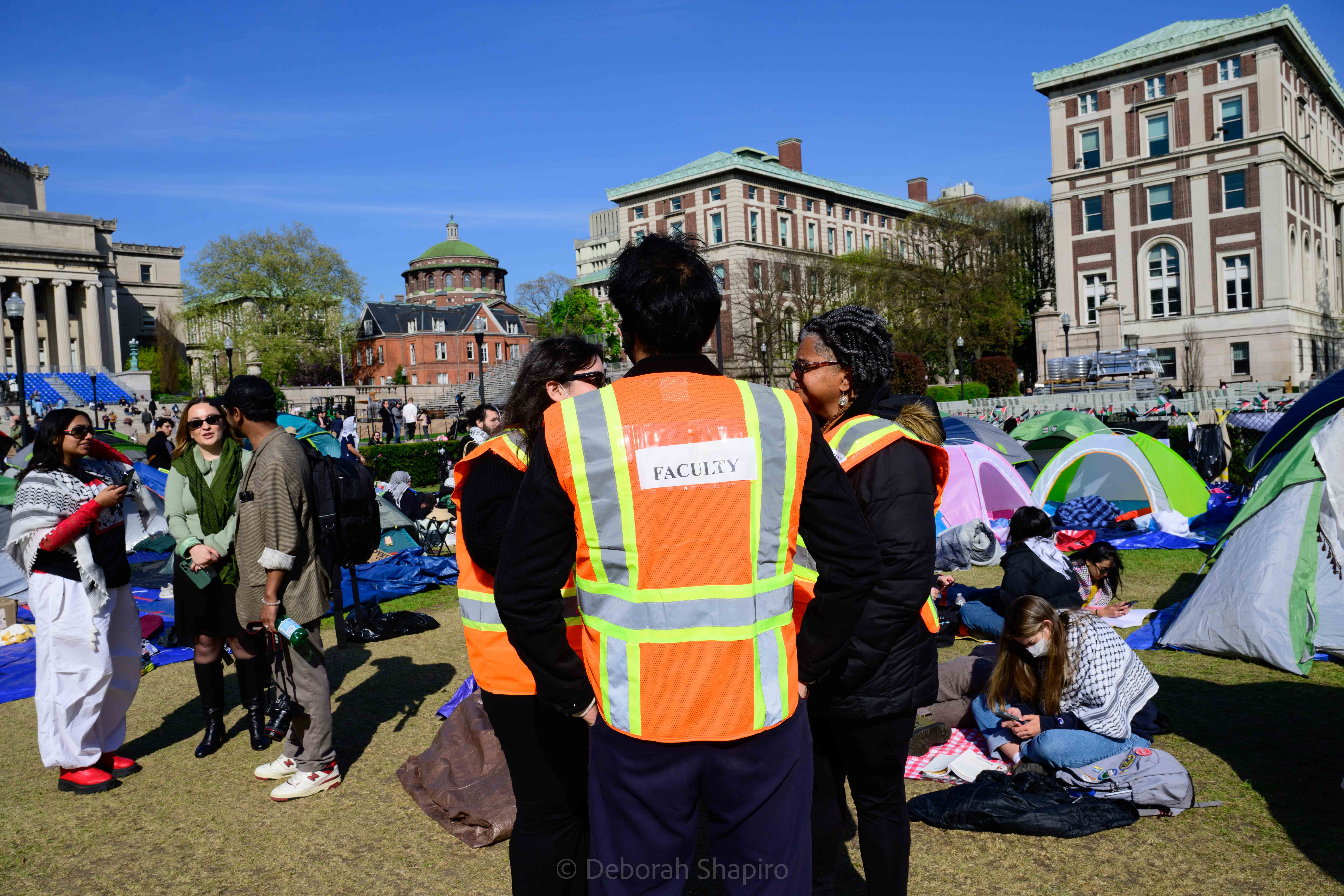
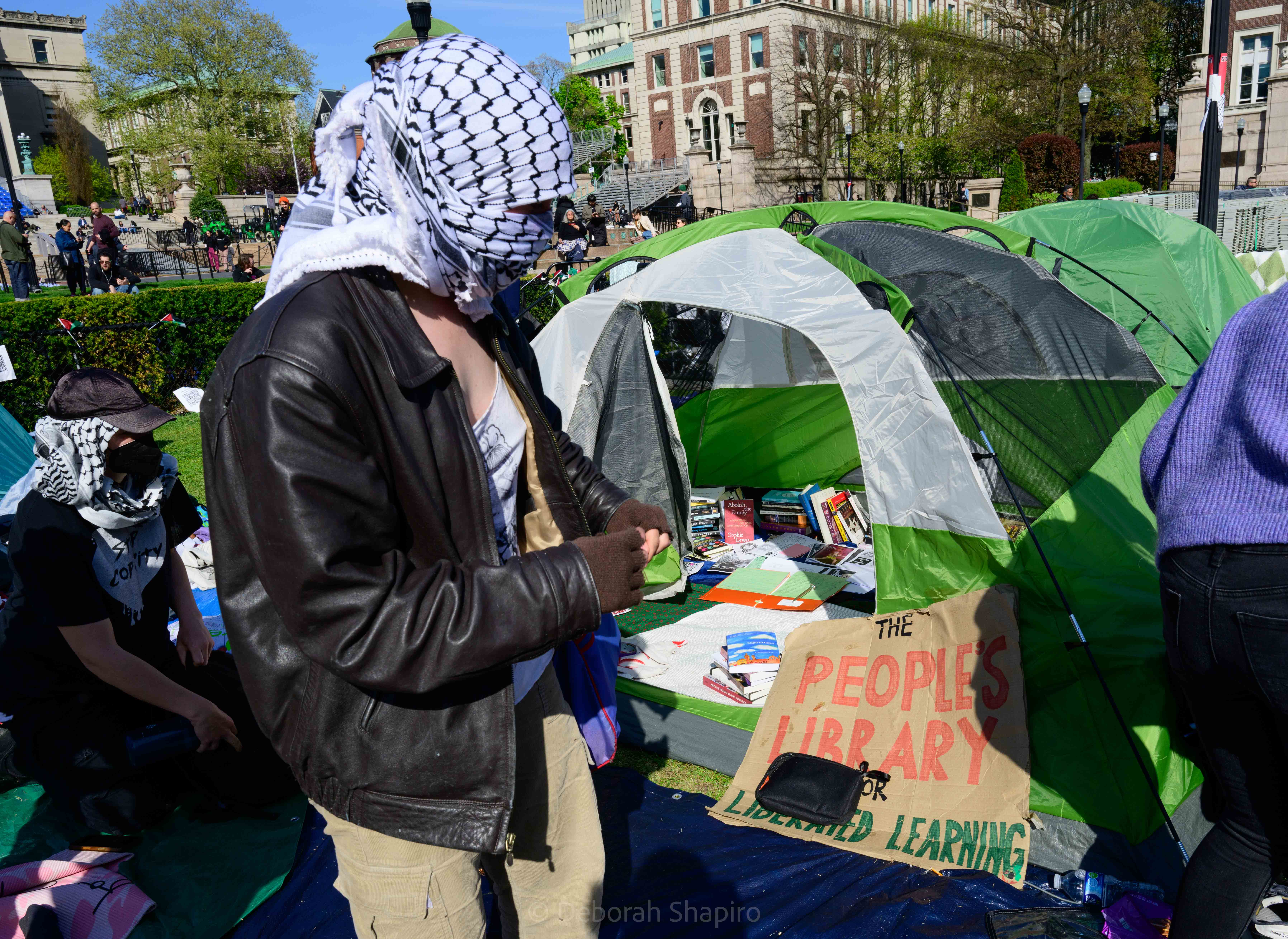
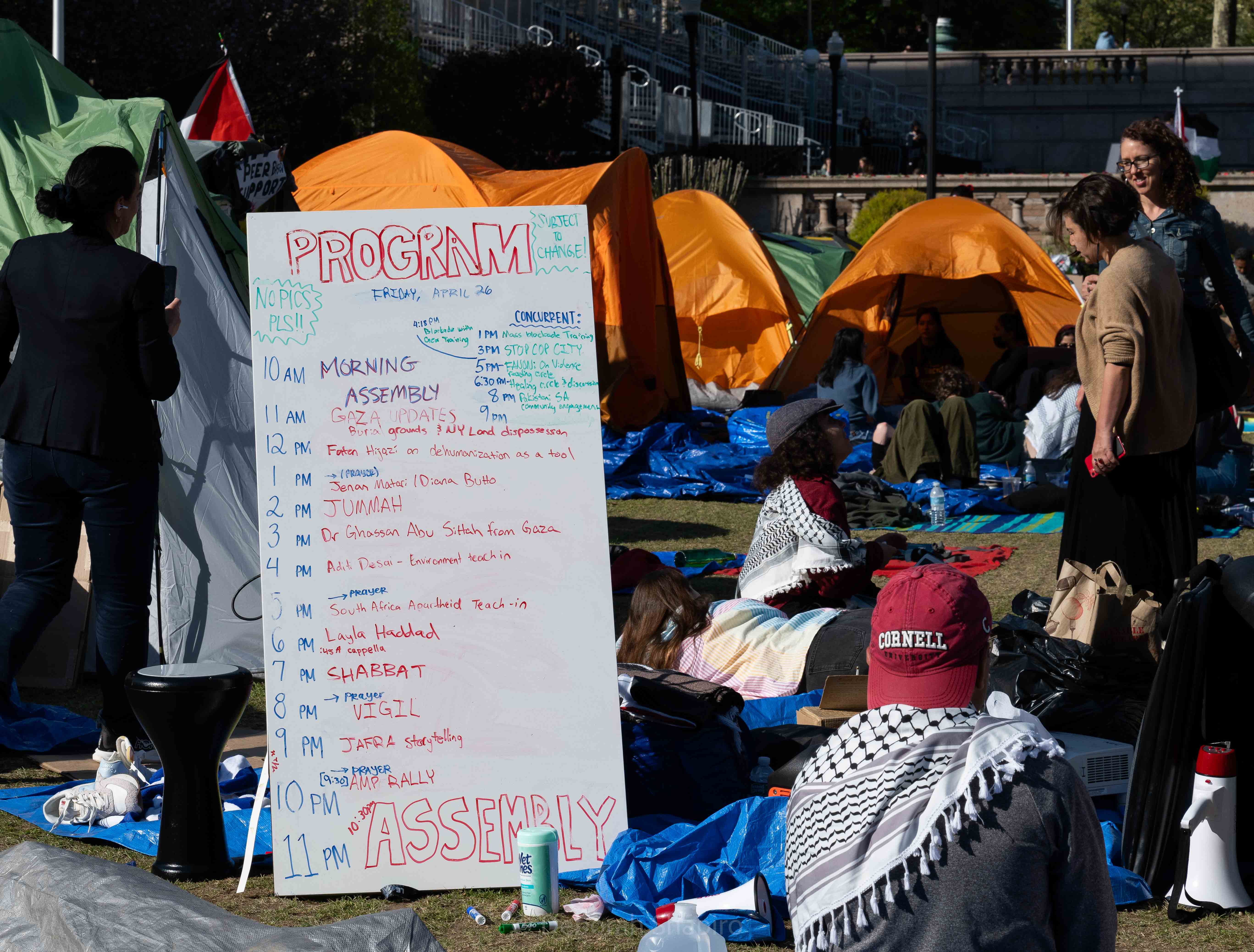
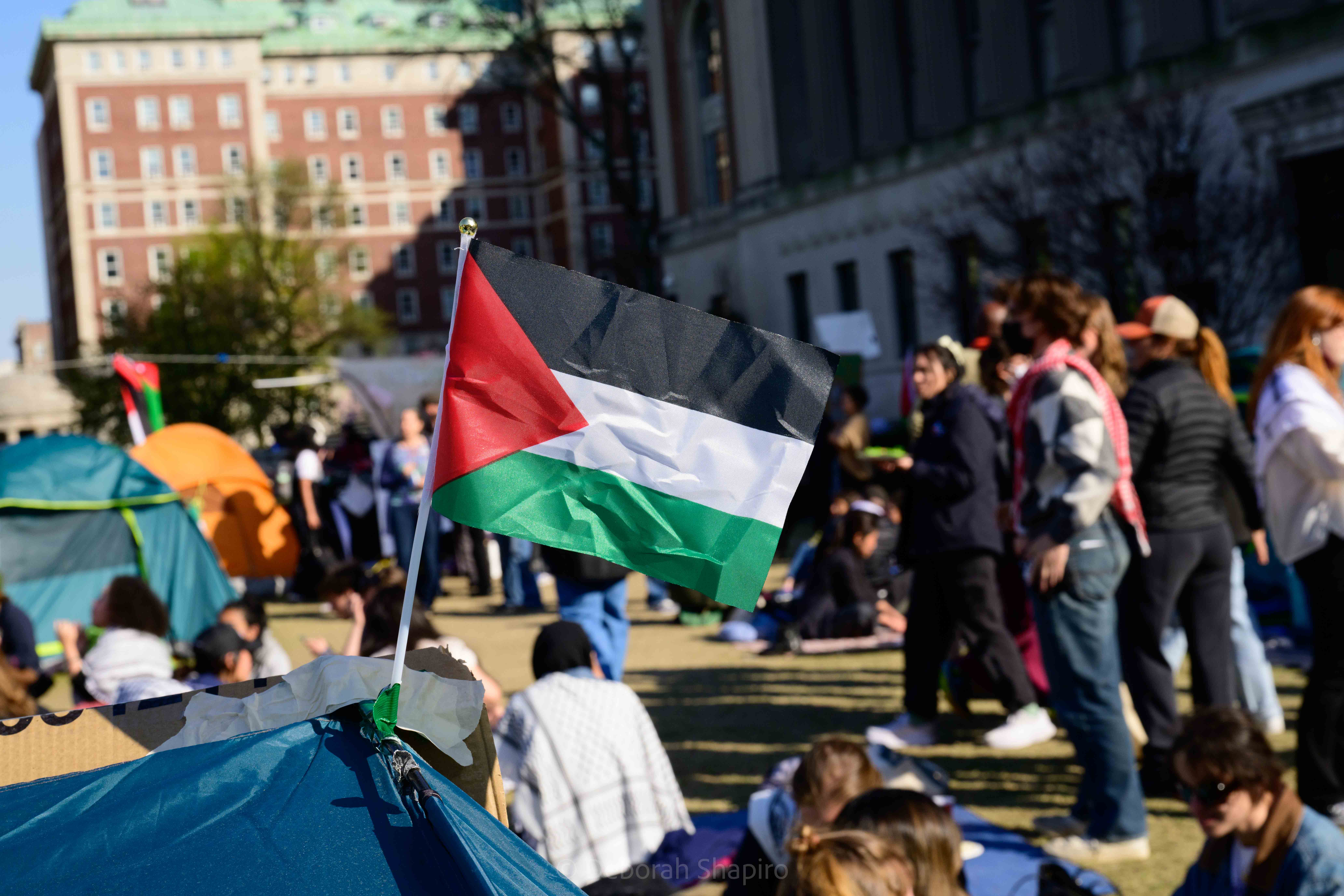
Protests against the Israeli attack on Gaza have continued for months and the protesters built an encampment of the Columbia University campus. The encampment was forcibly removed by the New York City Police Department after the president of the university, Nemat (Minouche) Shafik, asked them to enter the campus which is private property. Over 100 student protesters were arrested. The resulting outrage among faculty and students has resonated nationwide. The encampment was set up again the next day.
April 21, 2024:
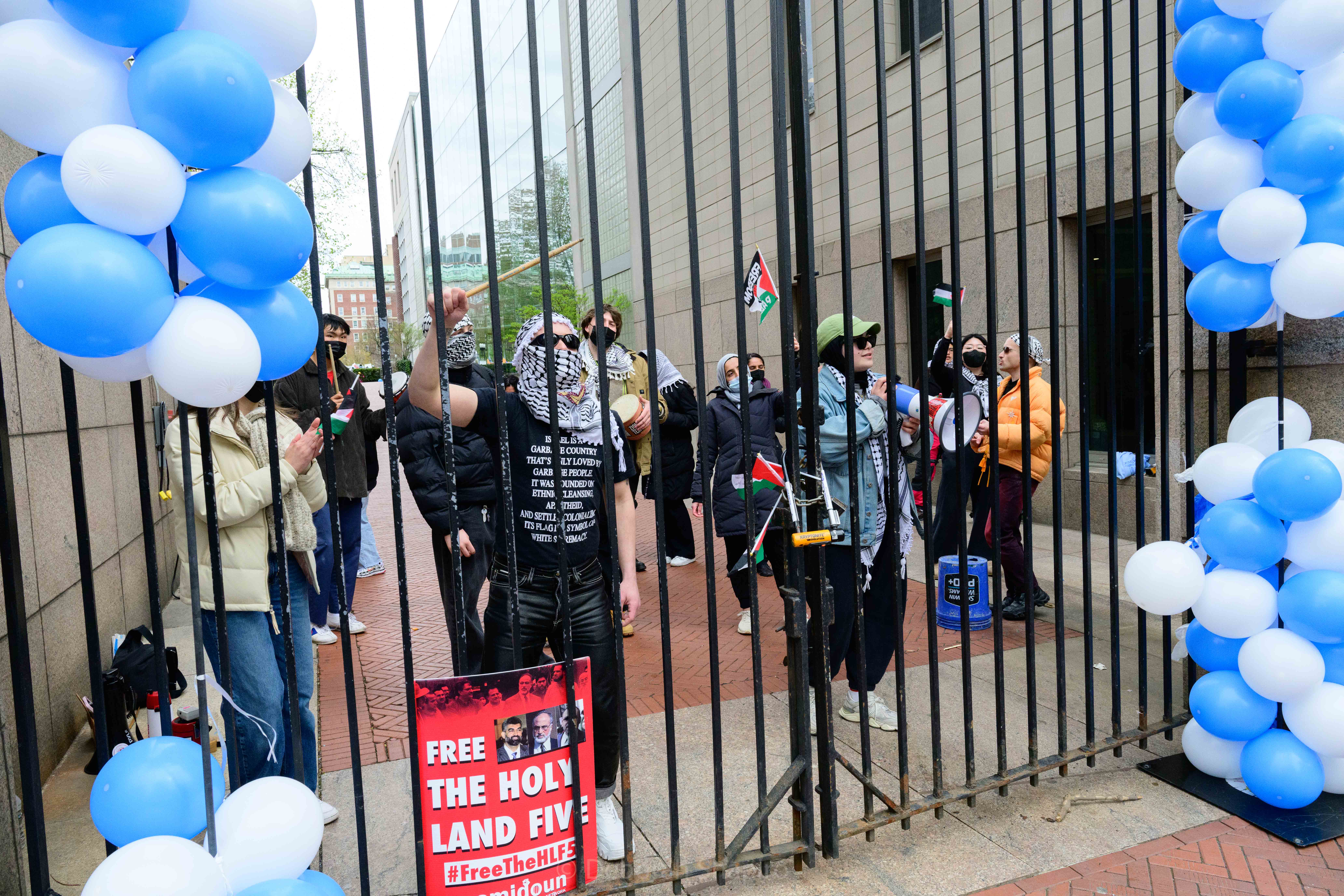
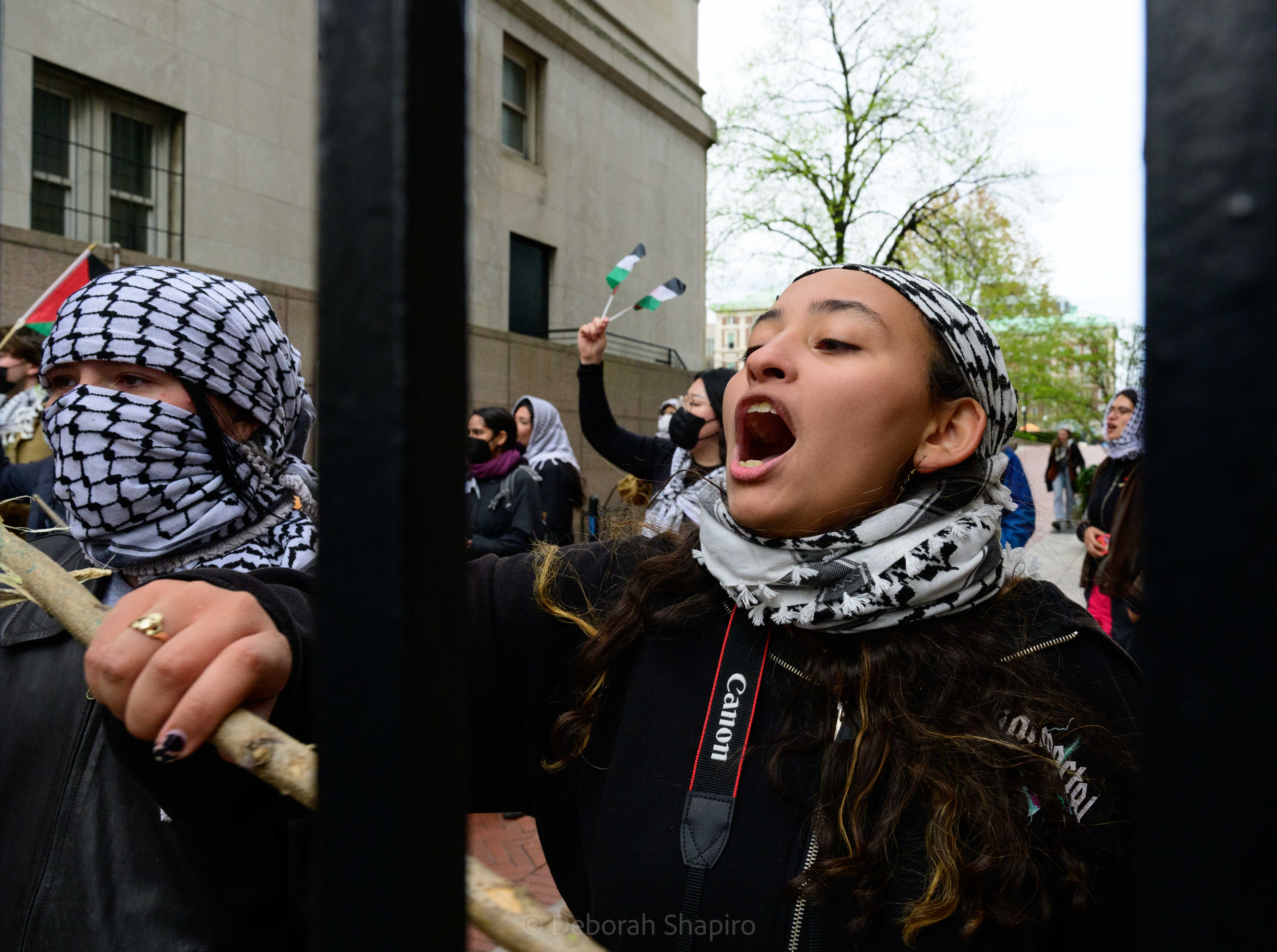
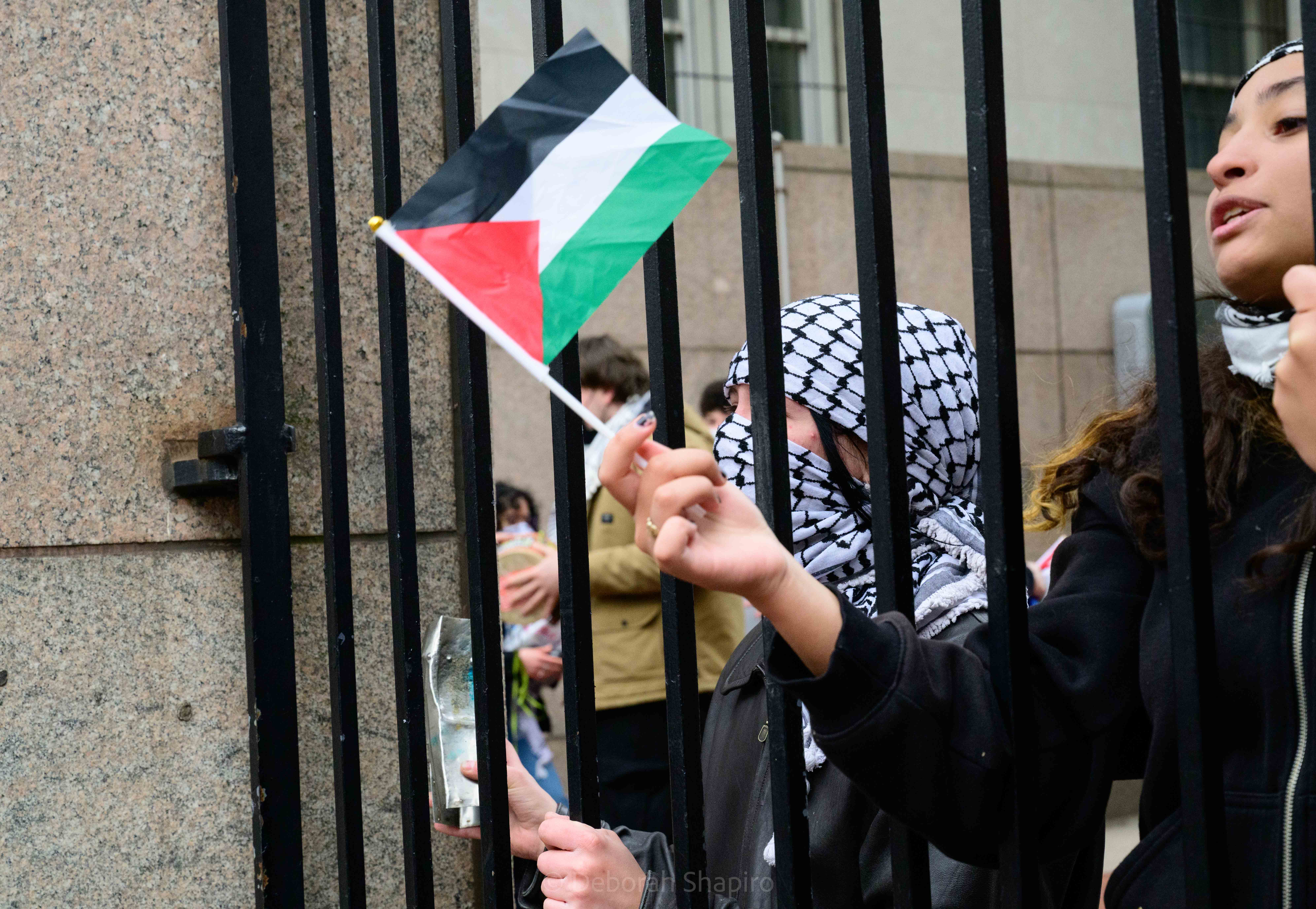
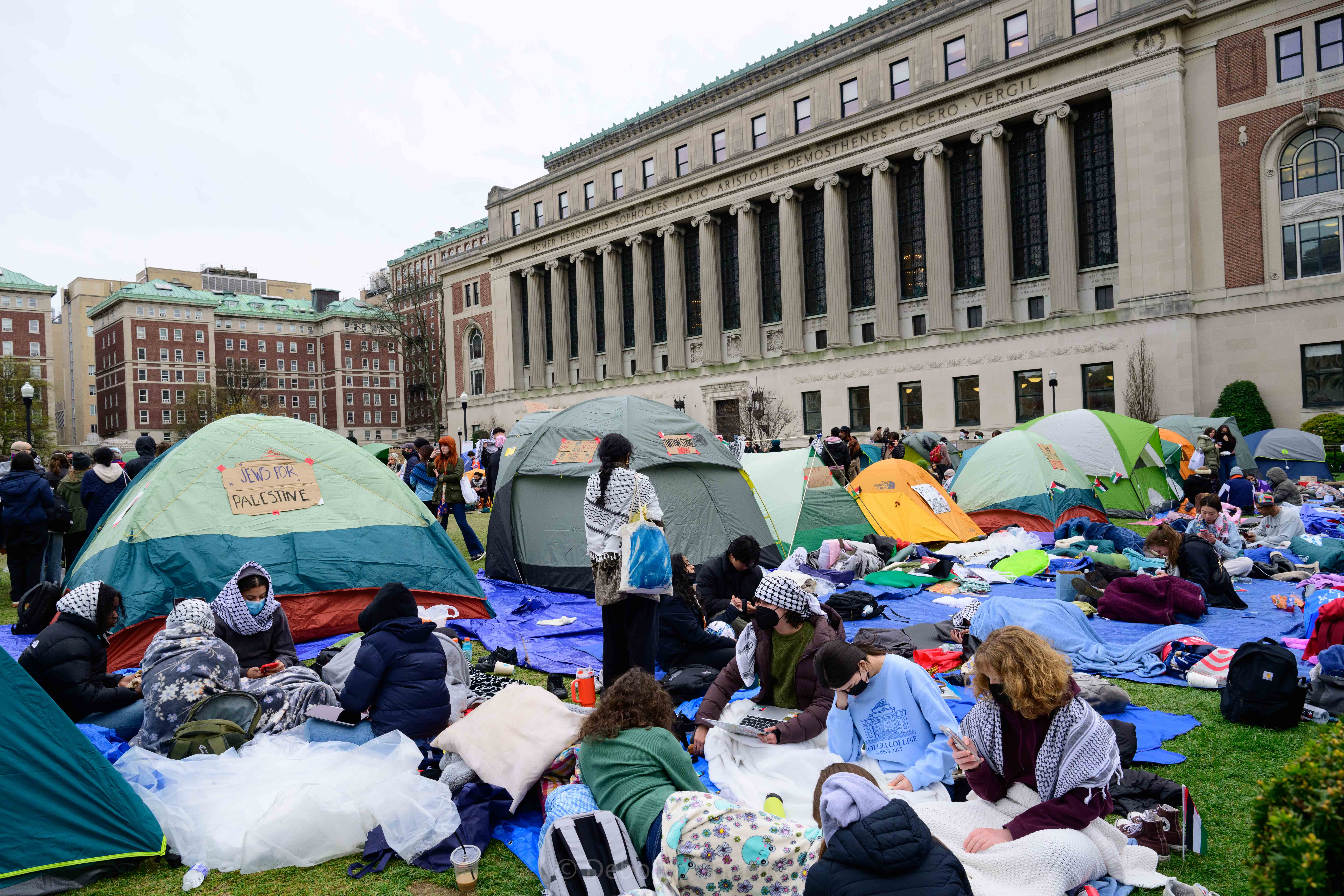
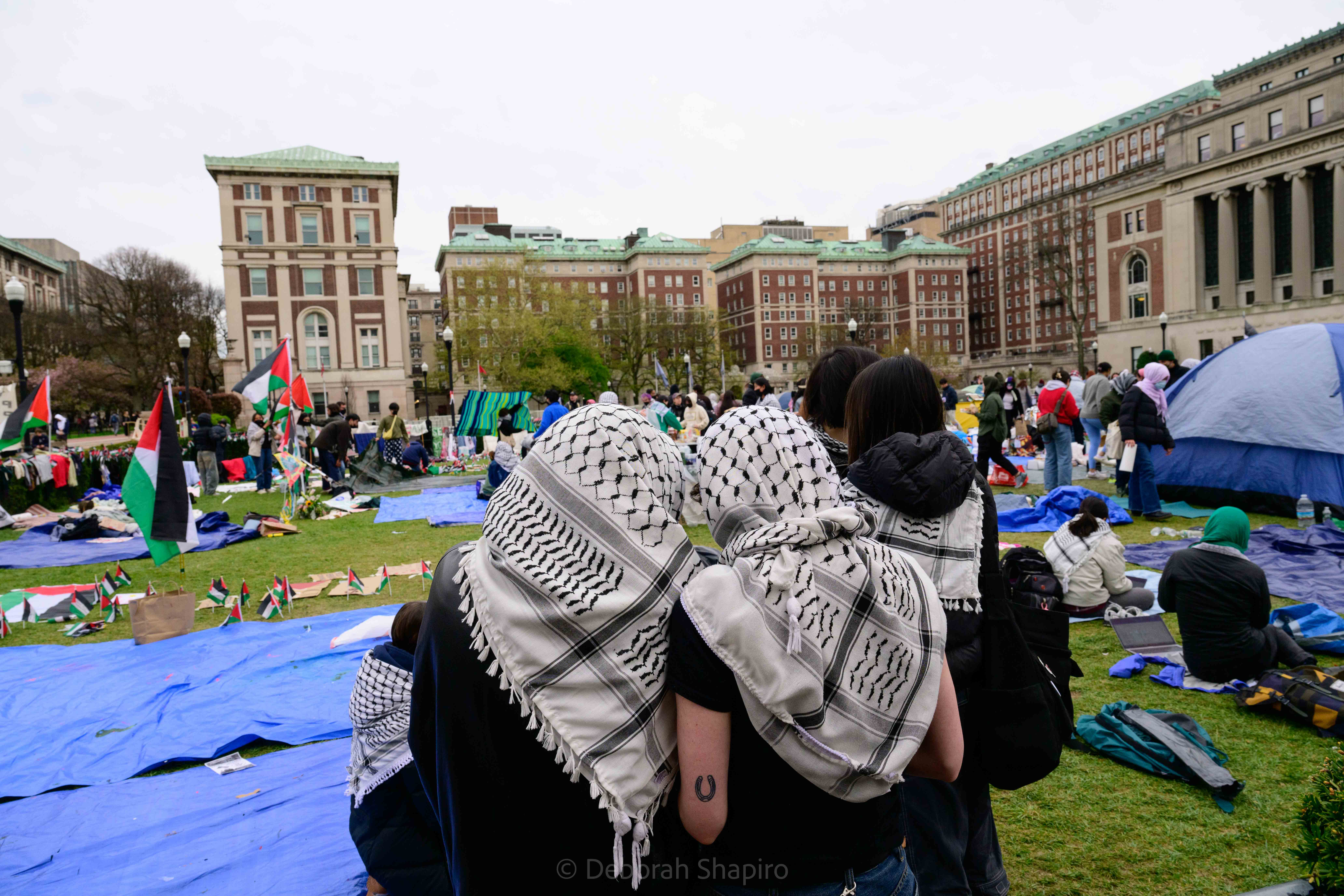
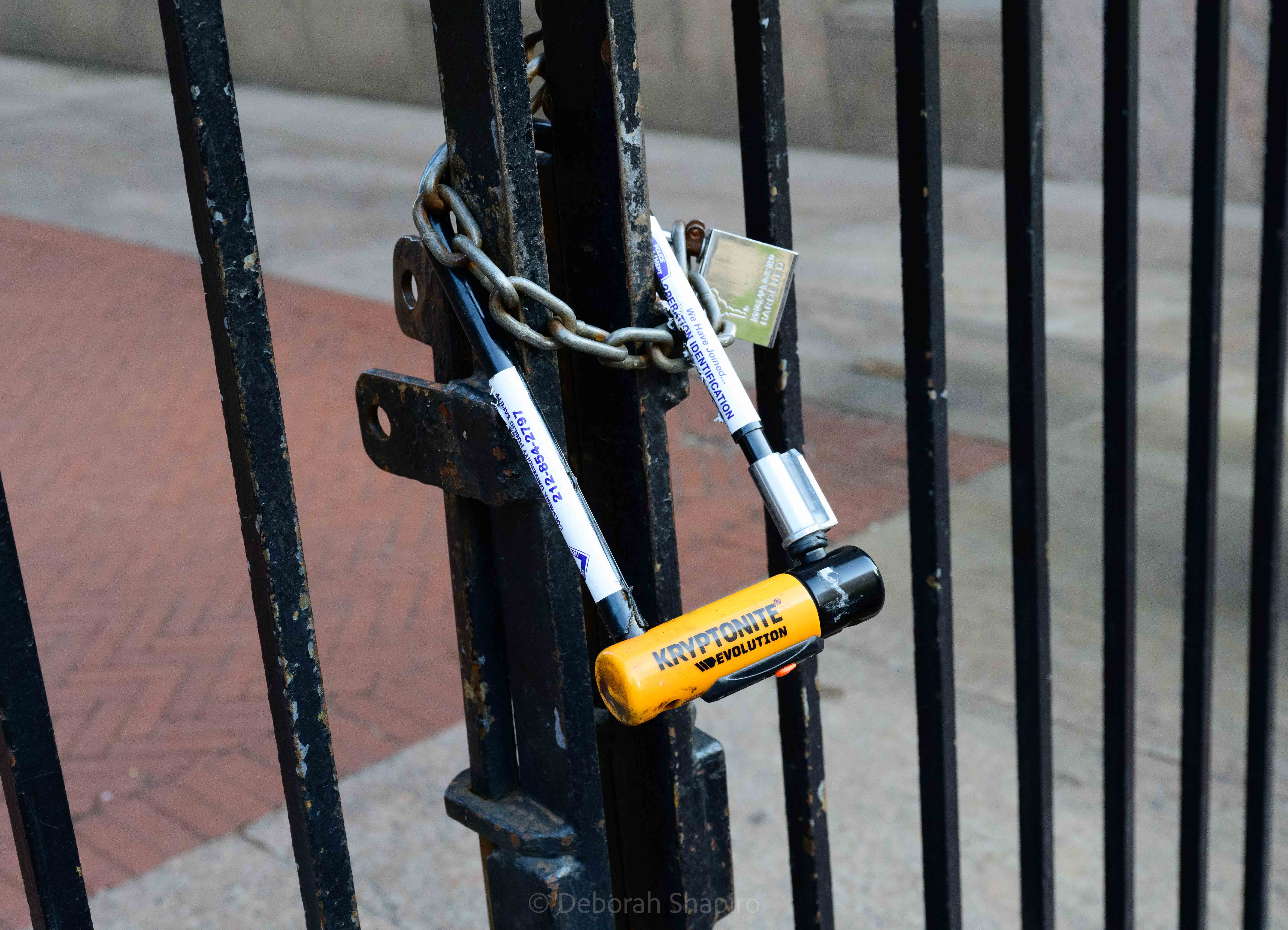
April 21, 2024: the “Gaza Solidarity Encampment” on the lawn in front of Butler LibraryApril 21: the main gate to the campus was locked and access to campus was restricted to Columbia ID holders. The blue and white balloons are the colors of Columbia and had been put up for Alumni Day at one of the schools.Behind the locked campus gates, students chanted slogans and beat drums while cheered by spectators on the sidewalk behind police lines.Student protesters behind the locked gatesDirectly opposite the students behind the gates, demonstrators gathered behind police barricades and joined the chants. These were not students and they were barred from entering the campus.The encampment, with students preparing to eat sandwiches and spend the nightStudents studying and settling into their tents for the night. The tent on the left belonged to some of the Jews For Palestine group.In the encampment, many students wore keffiyehs as symbols of the Palestinians whether or not they themselves were Palestinian. Most covered their faces and did not want to be photographed in order not to be identified and harassed on social media.
April 26, 2024:
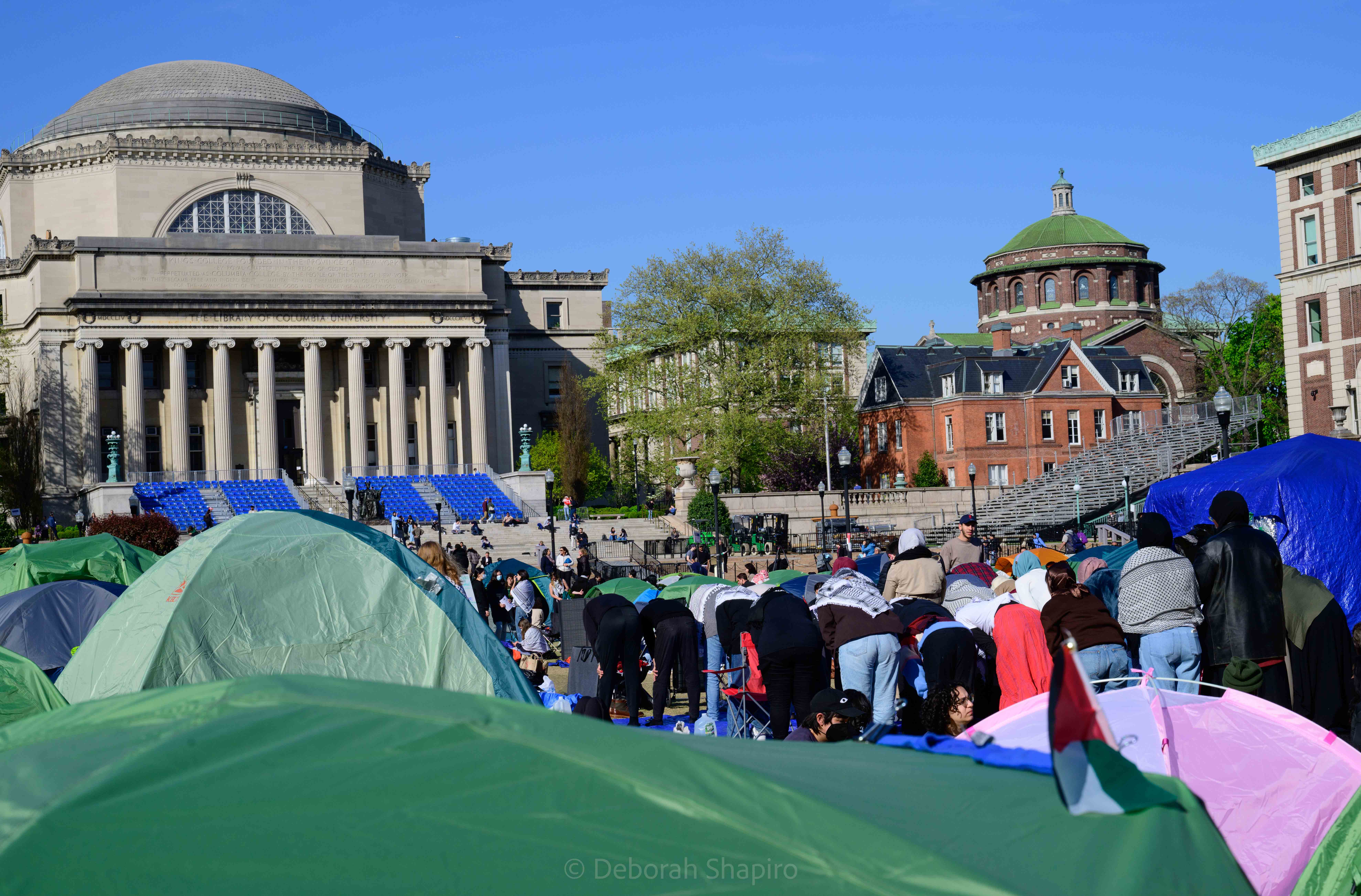
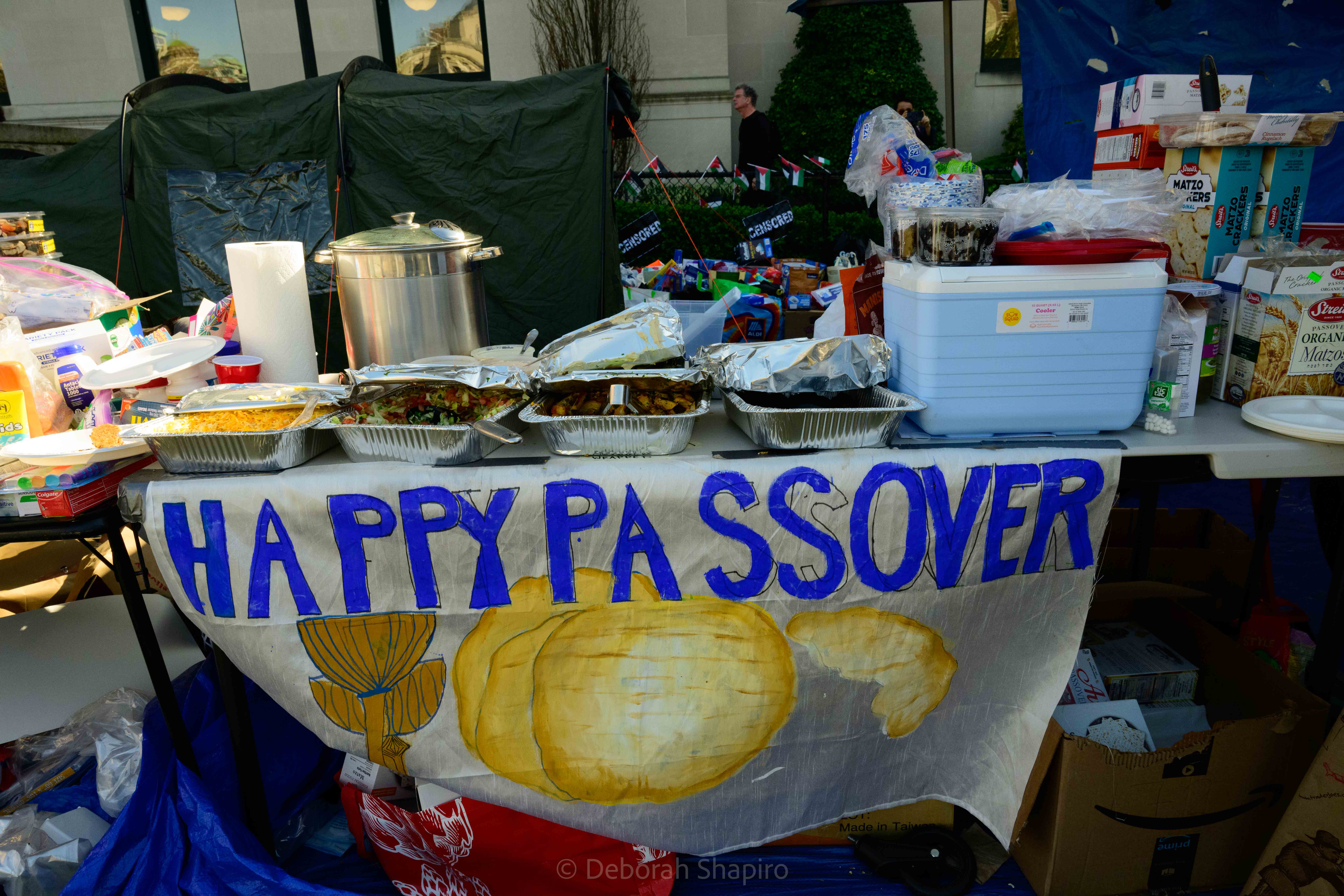
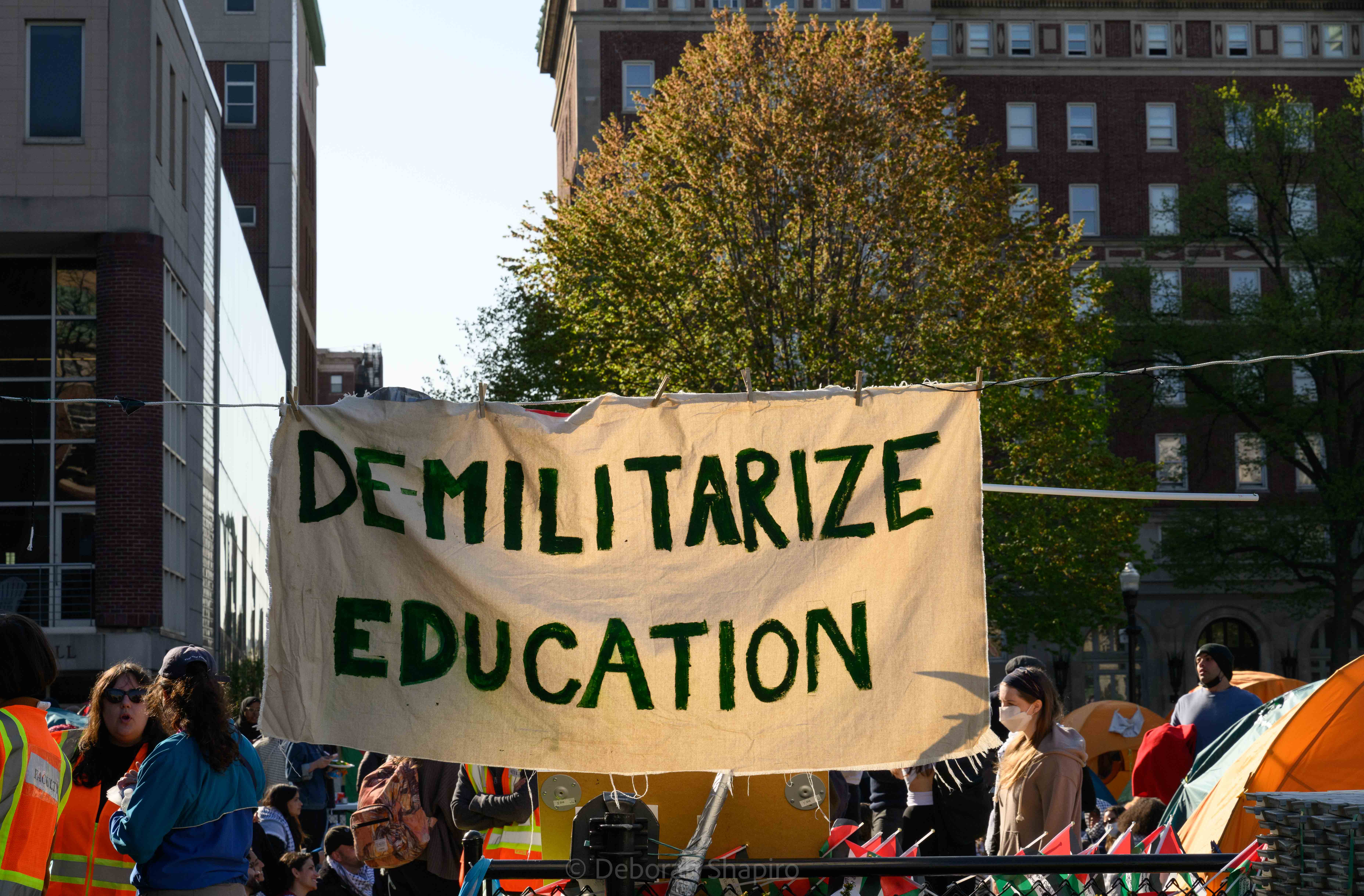
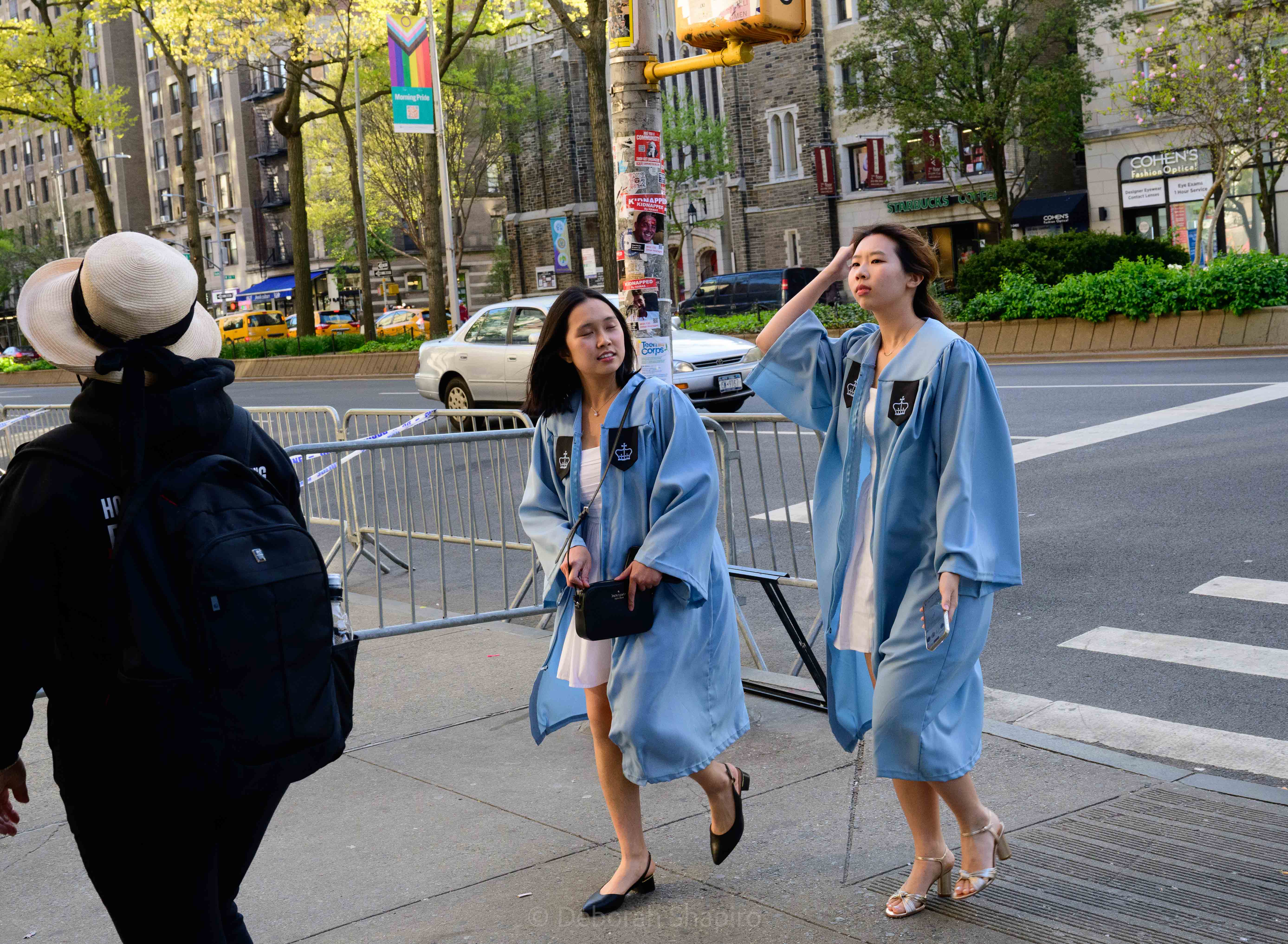
April 26: A pro-Israel demonstration demanding release of the Israeli hostages held in Gaza was held on the Columbia campus in front of Low Library (rear) where preparations are underway for the college graduation. April 26: Volunteer faculty monitors in the encampment formed a de-escalation team to prevent incidents of harassment from anyone inside or outside the protest. Multiple faculty members had gathered on the steps of Low Library, many in their academic gowns, to protest the actions of the president in inviting the police on to campus.At the “People’s Library for Liberated Learning,” protesters can borrow books or attend “learnings.”The busy schedule inside the encampment includes assemblies, Muslim prayer, and Jewish Shabbat services. During the last assembly the student negotiating team reports to the group about its daily talks with the Columbia administration. Muslim prayer, facing Low LibraryDonations of food and supplies flooded the encampment in the days after the arrests. This table features kosher food for Passover while the one next to it has halal food. A Passover Seder was held on the encampment with Jews and Muslims participating.The public is barred from the campus with strict security measures.A campus gateMany students came to campus in their graduation robes to take pictures in front of campus landmarks. Their graduation ceremony is scheduled for June 15 on the steps of the library opposite the encampment, which is occupying space needed for seating. No one knows whether the protesters will leave in time for graduation. These students graduated from high school four years ago during Covid and could not attend their own graduations then.
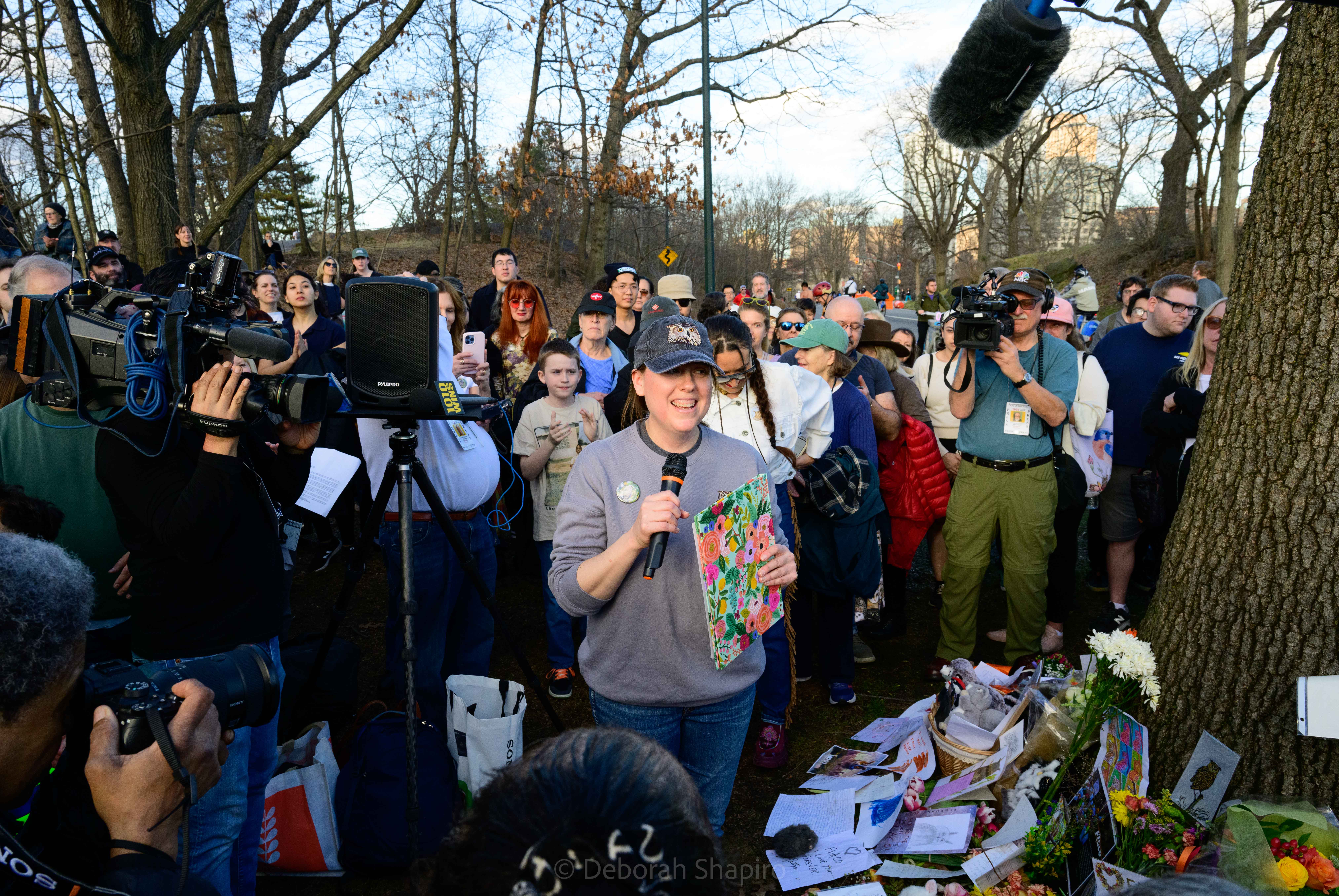
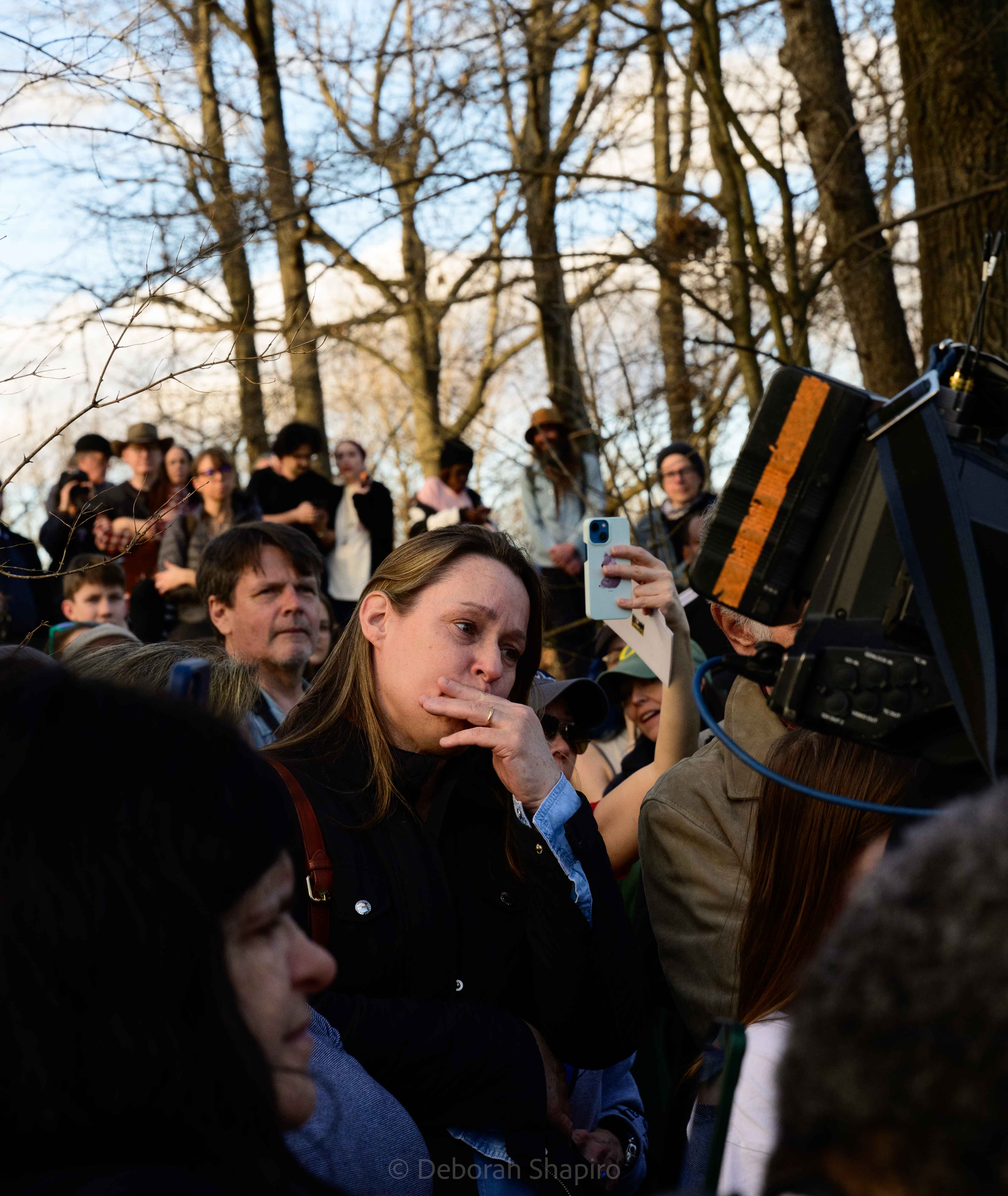
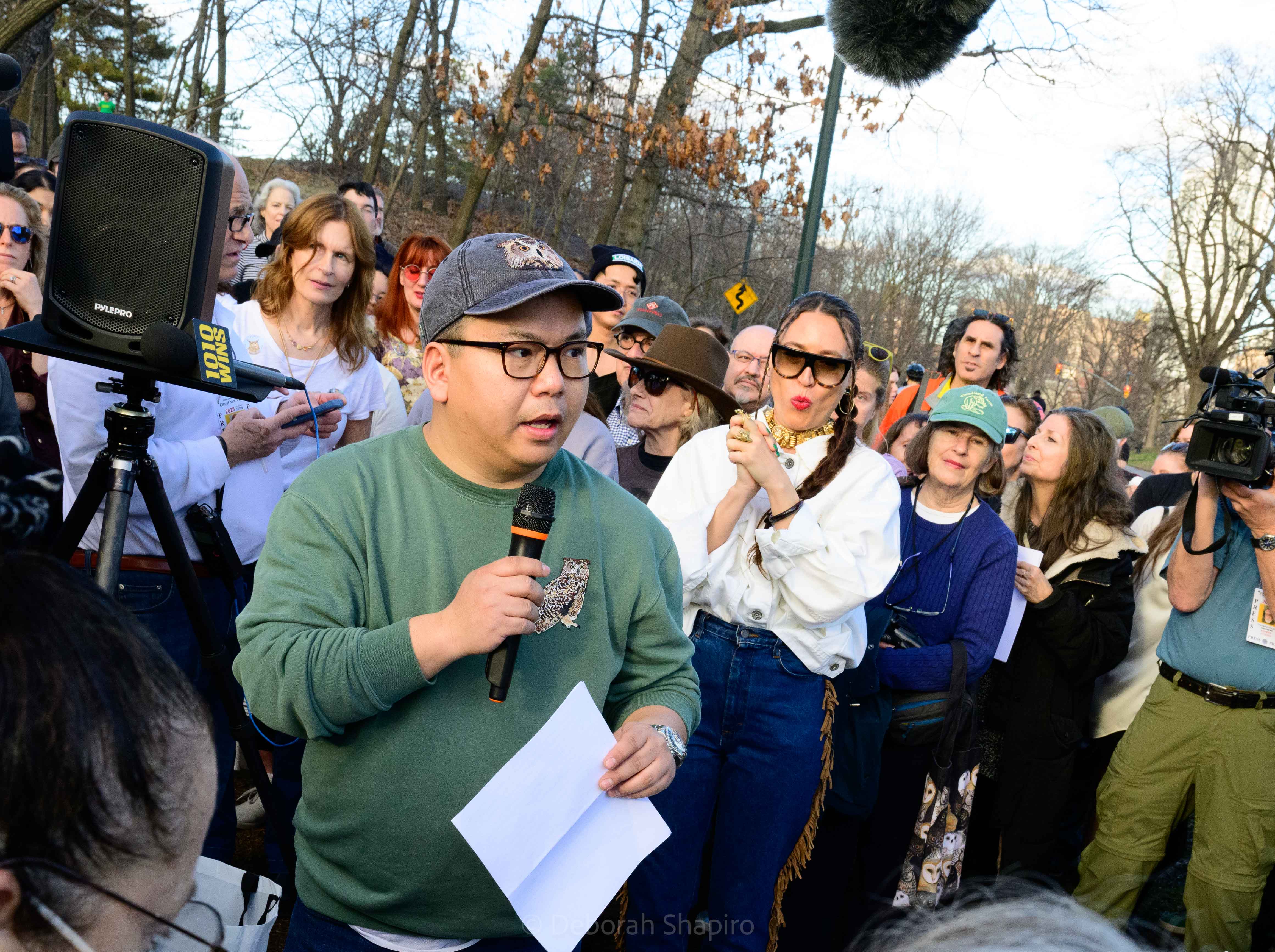
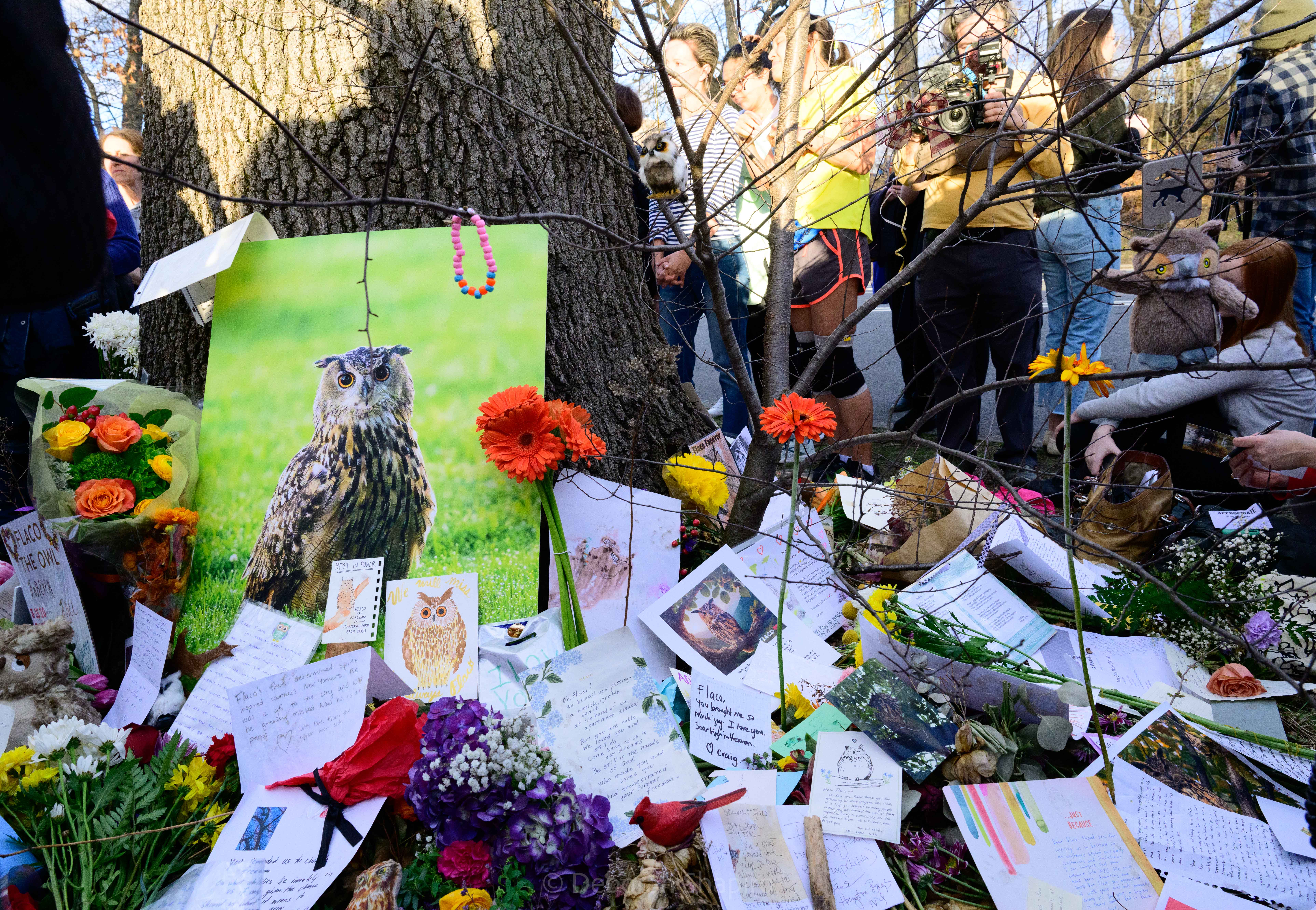
The story sped around the world. A male Eurasian Eagle-owl named Flaco, bred in captivity and confined in a small cage in the Central Park Zoo for the first thirteen years of his life, was suddenly freed when a vandal sneaked into the zoo at night and cut the wire on his cage. At first the drama centered on whether he would be recaptured, but he eluded nets and traps set by zoo workers. Then the city held its breath for a week until Flaco hunted and killed his first rat, proving that he was capable of survival outside the zoo. Controversy raged in New York about whether the zoo was to blame for his escape and whether he should remain free. He was a weak flier at first and crashed into branches as members of the New York birding community followed him day and night. Soon he became a confident and strong flier and a competent hunter, and the city fell in love with him. His story was captivating: a caged bird somehow becoming free and learning to survive on his own. For one year, expert photographers like David Lei, Jacqueline Emery, Anke Frohlich, and others documented Flaco’s behavior and habits. But the city is a hostile environment for birds in general and raptors like owls in particular, and after spending an entire year as a free bird, Flaco abruptly crashed into a building and was found dead on the ground. The city mourned. A memorial at one of his favorite trees in Central Park on Sunday, March 4 attracted hundreds of mourners who left tributes around the tree and heard from speakers. Children’s drawings and letters, heartfelt letters from adults inspired by his story, flowers, stuffed owls, and votive candles surrounded the tree. The ceremony was live-streamed around the world and covered by local media, all for one beloved and unique owl.
Photographer Jacqueline Emery addressed the crowd
A mourner is nearly overcome with emotion
Photographer David Lei, well known bird photographer who documented Flaco’s year of freedom, read a moving tribute
David Lei’s photograph of Flaco on the grass was the centerpiece of the tribute









 DeborahShapiroPhotos